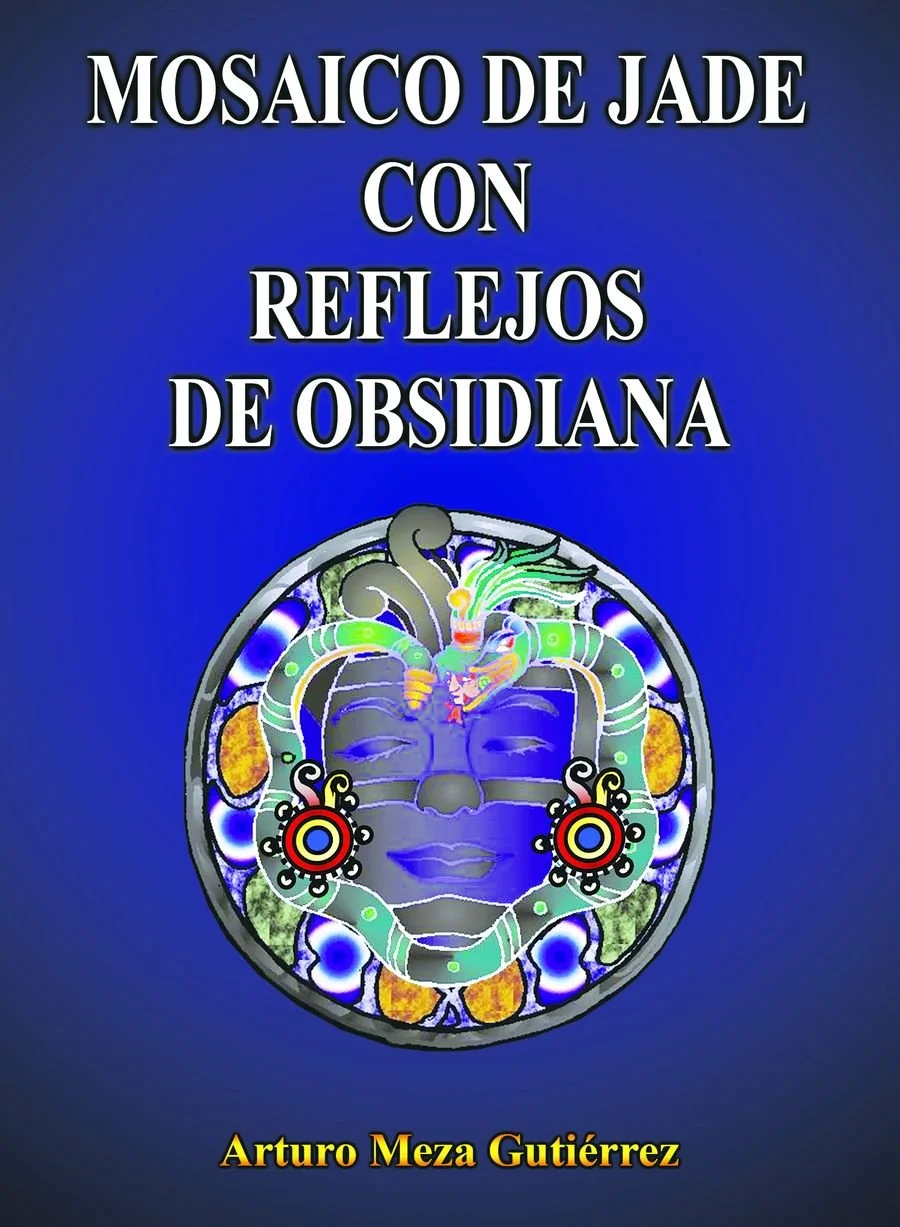
⚫ YAYAUHQUI TEZCATLIPOCA
THIS BOOK IS WRITTEN IN SPANISH. WORKING ON ENGLISH TRANSLATION.
Huey Tlahtokan Notes
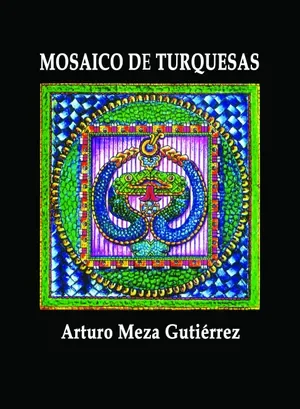
Mosaico de Turquesas is the foundational text of Mexica philosophical and scientific thought in the modern era. In twenty rigorously researched chapters, Maestro Arturo Meza Gutiérrez dismantles five centuries of colonial mistranslation and reveals the authentic cosmological framework of the ancient Mexica — not as mythology or religion, but as a complete and sophisticated science of existence. At its core is Ometeotl, the dual generating principle, and the Nahui Tezcatlipoca — the four cosmic functions that ancient Mesoamerican civilization studied, encoded, and applied across every field of human knowledge, from psychology and medicine to astronomy and mathematics.
The chapters move through this system piece by piece: the dual expression of Huehuetlahtolli (the ancient word), Tlaltecuhtli and Tlalcihuatl as Father-Mother Earth, the transmuting nature of duality itself, Mictlan and Moyocoyani as expressions of Ometeotl, Tloquenahuaque as the ordering of time and space, and the feminine essence carried through Xochiquetzalli, Chantico, and Mayahuel — closing on the mosaic of turquoise itself as the ancestral thread binding the whole system together. Written as a direct companion to Meza's earlier Cauhpohualli, the two works together form the fuller architecture underlying everything he wrote afterward, including Mosaico de Jade.
This is not an introductory text — it rewards the serious reader who is ready to encounter one of the most profound knowledge systems ever developed by human civilization, presented in its own language, its own logic, and its own scientific precision. Required reading for anyone seeking to understand the true intellectual heritage of Indigenous Mexico beyond the distortions of conquest.
From the Publisher
Mosaico de Turquesas reveals the essence of Nature and of the Human Being from the perspective of the native Philosophy of Duality. From this, Ometeotl is recognized as the Supreme Principle, masculine and feminine, the Father and Mother of all that exists, giving rise to the Laws of the Universe and the Laws of Life of the Prehispanic Peoples. From Ometeotl unfold the four Tezcatlipocas: the Dark, the Red, the Blue called Huitzilopochtli, and the White called Quetzalcoatl.
272 páginas.
Descripción (Español):
Notas de Huey Tlahtokan (Heading 4)
Mosaico de Turquesas es el texto fundacional del pensamiento filosófico y científico mexica en la era moderna. En veinte capítulos rigurosamente investigados, el Maestro Arturo Meza Gutiérrez desmonta cinco siglos de mala traducción colonial y revela el auténtico marco cosmológico de los antiguos mexicas — no como mitología ni religión, sino como una ciencia completa y sofisticada de la existencia. En su núcleo está Ometeotl, el principio dual generador, y el Nahui Tezcatlipoca — las cuatro funciones cósmicas que la antigua civilización mesoamericana estudió, codificó y aplicó a través de todos los campos del conocimiento humano, desde la psicología y la medicina hasta la astronomía y las matemáticas.
Los capítulos recorren este sistema pieza por pieza: la expresión dual del Huehuetlahtolli (la palabra antigua), Tlaltecuhtli y Tlalcihuatl como Padre-Madre Tierra, la naturaleza transmutadora de la dualidad misma, Mictlan y Moyocoyani como expresiones de Ometeotl, Tloquenahuaque como el ordenamiento del tiempo y el espacio, y la esencia femenina presente en Xochiquetzalli, Chantico y Mayahuel — cerrando con el mosaico de turquesas mismo como el hilo ancestral que une todo el sistema. Escrito como complemento directo del Cauhpohualli anterior de Meza, ambas obras forman en conjunto la arquitectura más completa que sustenta todo lo que escribió después, incluyendo Mosaico de Jade.
Este no es un texto introductorio — recompensa al lector serio que está listo para encontrarse con uno de los sistemas de conocimiento más profundos jamás desarrollados por la civilización humana, presentado en su propio idioma, su propia lógica y su propia precisión científica. Lectura obligada para quien busca comprender la verdadera herencia intelectual del México indígena más allá de las distorsiones de la conquista.
De la Editorial
La obra Mosaico de Turquesas revela la esencia de la Naturaleza y del Ser Humano desde el punto de vista de la Filosofía autóctona de la Dualidad. De ello, se reconoce que Ometeotl es el Principio Supremo masculino y femenino, es el Padre y la Madre de todo lo existente, dando origen a las Leyes del Universo y a las Leyes de la Vida de los Pueblos Prehispánicos. De Ometeotl se desdoblan los cuatro Tezcatlipoca: el Obscuro, el Rojo, el Azul llamado Huitzilopochtli y el Blanco llamado Quetzalcoatl.
NEW INVENTORY COMING SOON
The Black Tezcatlipoca
PSYCHOLOGY
The Obscure. Infinite and distant time — the genetic memory encoded in every living being. Yayauhqui governs the science of the interior world: consciousness, self-knowledge, the subconscious, and the depths of human perception. What you carry within you, what you cannot see but cannot escape — that is Yayauhqui.
When you look into him you see yourself. Tezcatlipoca looks back with your own eyes — because we are his own reflection. He is the mirror and the image of the human and their self-consciousness.
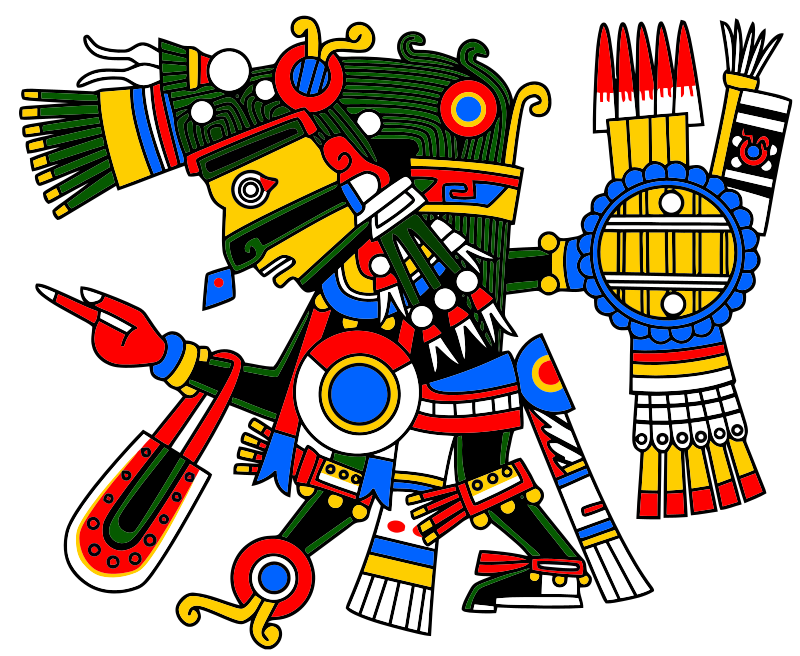
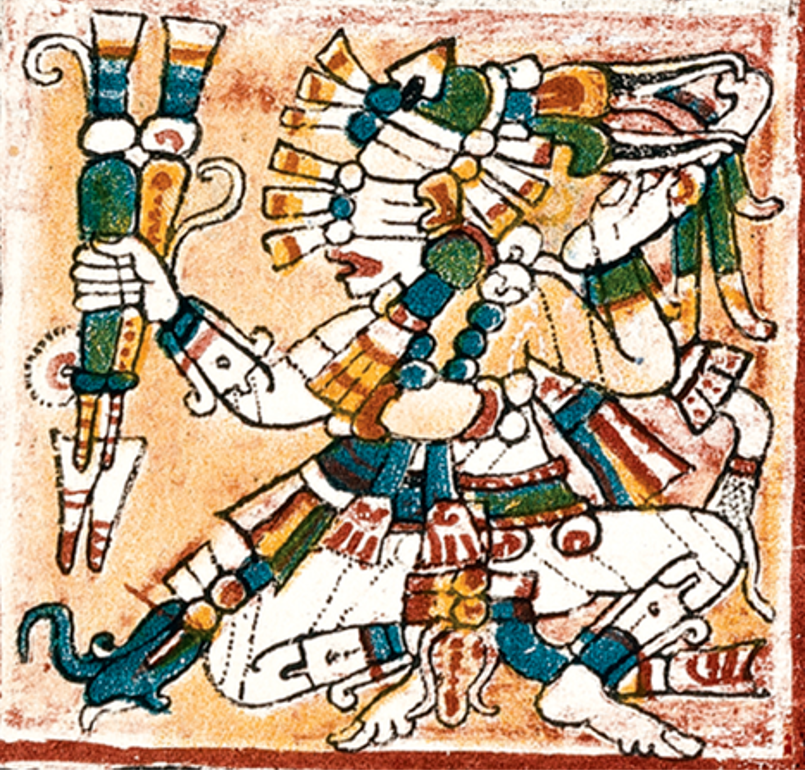
-
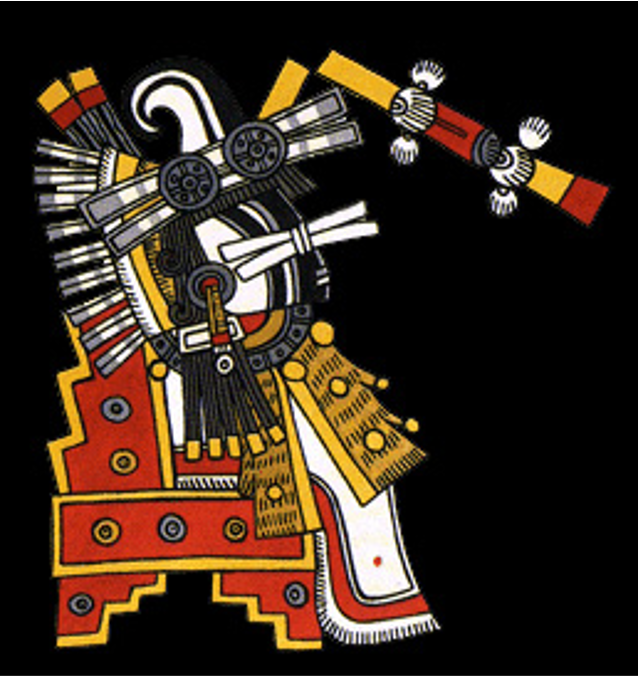
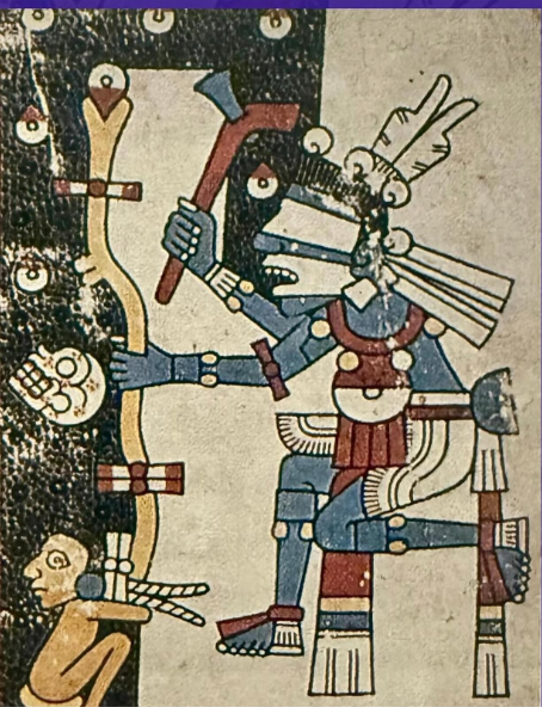
Yayauhqui Tezcatlipoca is the first son of Ometeotl — the Black Tezcatlipoca — the force of infinite and distant time. He is located inOmeyocan — the immeasurable space of the dual essence — dark, distant, and incomprehensible because he precedes human experience itself.
From the cosmic principle Yayauhqui Tezcatlipoca is defined as distant time, obscure, unmeasurable, and incomprehensible — located in Omeyocan, the incommensurable space of the dual essence. This is pre-human time — registered in the evolutionary record of every living being but impossible to pin down, locate, or define fully.
His field of action is the total space called Omeyocan. He represents the genetic memory encoded in every living being — the atavic record of a time so distant that the human species did not yet exist to experience it. Yet it lives within every one of us.
The name Tezcatlipoca itself means The Smoking Mirror — Tezcatl = mirror, Popoca = smokes or obscures. The mirror does not lie. But it shows you what you carry — your light and your shadow both. Yayauhqui is that mirror at its deepest — looking into the subconscious itself.
Unlike Quetzalcoatl whose grade-holders Ce Acatl Topiltzin and Huemac are documented in history — Yayauhqui's practitioners worked in the interior world, in darkness, in silence. Their work left no monuments. Only its effects — in the people they transformed.
The life-sized statue of Yayauhqui Tezcatlipoca stood in a cave in Chalma — a sacred site of pilgrimage since pre-Hispanic times. In 1537 Augustinian friars arrived determined to destroy it. The statue was found in pieces — replaced by a Black Christ. The pilgrimage never stopped. Millions still walk to Chalma every year. They believe they are visiting a Christian shrine. They are walking the same path their ancestors walked to honor the science of the interior world. The statue may be hidden. The knowledge never was.
-
When European religious authorities and zealots encountered Yayauhqui Tezcatlipoca — The Inner Darkness— they faced a crisis. The system was omnipresent, omnipotent, and described the totality of human consciousness — attributes they could only assign to their own God. Their solution was documented and deliberate and distorted.
"If it has all the attributes of God and is not God — then it must be the Devil."
From that moment one of the most sophisticated sciences of human consciousness ever developed was branded as demonic. Anyone who showed respect for this science was accused of a pact with the devil — and executed without further investigation. The censorship extended to all indigenous inhabitants of Nueva España in the name of their religion.
What they called the Devil was actually the complete science of the interior world — psychology, self-knowledge, the subconscious, sensory development, leadership training, and diagnostic medicine. Everything that lives within the human being and cannot be seen from the outside.
Modern psychologists are now connecting Tezcatlipoca not only to Psychology but also to Psychiatry. Others confirm that Tezcatlipoca contains the entire study and practice of Parapsychology. The door that was violently shut in the 16th century is being reopened — by science itself.
The remaining aspects not covered in this summary — the Monenequi, the Nahualpilli, the Tlamatzincatl, the Chalmecatecuhtli, the Ixnextli — are all inherent to the context of the Black Tezcatlipoca, from the cosmic forces that nourish the functions of the human mind and universal Consciousness.
-
Titlacahuan is the first and most fundamental sub-branch of Yayauhqui. The name was mistranslated by colonial chroniclers as "He of whom we are all slaves" — a translation with no etymological basis in the Nahuatl language. Speakers from the Sierra Norte de Puebla — living inheritors of the oral tradition — provided the correct translation:
Ti = nosotros (us/we) Tlacatl = personas (persons) Huan = poseemos (we possess)
Titlacahuan = Something that all persons possess within us.
Literally — something we all carry inside. The attitudes that emerge from our inner being. What Sahagún recorded from Book III describes it precisely: "Era invisible como obscuridad y aire, y sabía los secretos de los hombres que tenían en sus corazones." — Invisible like darkness and air, knowing the secrets that men held in their hearts.
This is the science of self-knowledge — the systematic study of what every human being carries within them. Not as confession or religious practice — but as scientific observation of the interior world. What modern psychology calls self-awareness, introspection, and the examined life — the Mexica encoded as a specialized field of science with dedicated practitioners studying for hundreds of years ago.
The mistranslation from "something we all possess" to "he of whom we are all slaves" is not accidental.
Making the interior self into a slave master served the colonial agenda perfectly — it transformed a science of human liberation into a symbol of oppression.
-
Yaotl means The Enemy — but not an external one. Yaotl refers to the human condition of constant dissatisfaction and nonconformity that lives within each one of us. Each person is, from their interior, their own worst enemy. This is not a curse or a punishment — it is a precise psychological observation. The recognition that the primary source of human suffering is internal.
Necoc Yaotl — The Adversary on Both Sides — takes this further. It means the human condition that seeks enmity with others — driven by hatred, resentment, envy, or nonconformity. It operates between persons, between human groups, and between nations.
What is extraordinary about this framework is its scale. The same principle — inner conflict externalizing as aggression — operates at every level:
Individual — the person at war with themselves
Interpersonal — conflict between individuals
Social — conflict between groups
International — conflict between nations
This is not mythology. This is a complete model of human conflict psychology — from the individual shadow to geopolitical warfare — all traced back to the same root: what lives within us unexamined and unresolved.
Modern psychology calls this projection — the unconscious transfer of inner conflict onto external targets. The Mexica had a scientific name for it hundreds of years ago. Two names in fact — one for the inner state, one for its social expression.
-
Ixquimilli means The Blindfolded One — but the blindfold is not a punishment or a limitation. It is a scientific methodology.
The name describes the special condition in which the primary non-visual perceptors develop beyond their ordinary capacity:
Hearing — oído
Touch — tacto
Hand sensitivity — the ability to perceive through the palms
Facial skin sensitivity — perceiving temperature changes in the surrounding environment
The observation behind this science is precise: a blind person activates these senses more easily than a sighted person because vision dominates and suppresses the others. But through special training — disciplined and systematic — any person can develop the capacity to perceive forms and colors through the palms of their hands.
This is not mysticism. This is neuroscience — the systematic development of non-visual sensory pathways through dedicated practice. What modern science calls neuroplasticity — the brain's ability to reorganize and strengthen alternative neural pathways — the Mexica encoded in the image of Ixquimilli hundreds of years ago.
The practitioners of this science were not magicians. They were scientists of perception — working systematically to expand the boundaries of human sensory capacity beyond what ordinary experience provides.
-
Oztoc = cueva o caverna (cave/cavern) Teotl = the active principle — the generating essence Oztohteotl = What activates in the interior of caves — by means of Tepeyolohtli
This sub-branch of Yayauhqui represents a special condition for achieving the integration of the human being with the subconscious. The Códice Florentino documents precisely how the disciplines were carried out:
Specially selected persons were recruited for four days and four nights in closed rooms called Tlilancalco — rooms with walls painted black and heavy dark curtains simulating cave conditions within populated areas. During this entire period: no seeing, no hearing — absolutely nothing. No food. No water.
This is not punishment. This is a precisely designed sensory deprivation protocol — a scientific method for accessing the subconscious through the systematic removal of all external stimulation.
What the Mexica understood — and what modern neuroscience is confirming — is that the subconscious becomes accessible when the conscious mind is deprived of its constant stream of sensory input. The cave or the dark room creates the conditions. Oztohteotl is what activates in that silence.
Modern practices of flotation therapy, isolation tanks, extended meditation retreats, and sensory deprivation research all operate on the same principle — arrived at independently by modern science. The Mexica had a name for it, a protocol for it, and dedicated facilities for it thousands of years ago.
-
Itztlacoliuhqui — The Curved Obsidian — represents the principle of cold and cutting indifference as both a natural phenomenon and a human psychological state.
In nature: The intense cold that covers plains white with ice in freezing temperatures and snowfall of highland regions. The cutting wind sharp as obsidian blades that wounds the skin of field workers. Cold that is precise, indiscriminate, and total.
At the human level: Being cold and insensitive to what happens around you. Described as indifferent and dispassionate — like winter cold. Emotional detachment, numbness, disconnection from others and from one's own inner life.
What is scientifically remarkable about this sub-branch is that it operates on the same principle at both scales — the same function expressing itself in nature as extreme cold and in human psychology as emotional coldness. One force. Two manifestations.
This is not simply a description of a personality flaw. It is the identification of a psychological state — the freezing of emotional response — as a recognized condition with specific characteristics, causes, and effects. The Mexica gave it a name, described it precisely, and placed it within a complete system of psychological understanding.
Modern psychology recognizes this as emotional blunting, alexithymia, or dissociation — the inability to feel or respond to emotional stimuli. The Mexica named it after obsidian cold — precise, cutting, and capable of covering everything in white silence.
COMPLETE YOUR LIBRARY
Everything on this page comes from the original research of Maestro Arturo Meza Gutierrez.
Learn the Real Truth — available exclusively through Chicagotitlan.com
THIS BOOK IS WRITTEN IN SPANISH. WORKING ON ENGLISH TRANSLATION.
Huey Tlahtokan Notes
Mosaico de Turquesas is the foundational text of Mexica philosophical and scientific thought in the modern era. In twenty rigorously researched chapters, Maestro Arturo Meza Gutiérrez dismantles five centuries of colonial mistranslation and reveals the authentic cosmological framework of the ancient Mexica — not as mythology or religion, but as a complete and sophisticated science of existence. At its core is Ometeotl, the dual generating principle, and the Nahui Tezcatlipoca — the four cosmic functions that ancient Mesoamerican civilization studied, encoded, and applied across every field of human knowledge, from psychology and medicine to astronomy and mathematics.
The chapters move through this system piece by piece: the dual expression of Huehuetlahtolli (the ancient word), Tlaltecuhtli and Tlalcihuatl as Father-Mother Earth, the transmuting nature of duality itself, Mictlan and Moyocoyani as expressions of Ometeotl, Tloquenahuaque as the ordering of time and space, and the feminine essence carried through Xochiquetzalli, Chantico, and Mayahuel — closing on the mosaic of turquoise itself as the ancestral thread binding the whole system together. Written as a direct companion to Meza's earlier Cauhpohualli, the two works together form the fuller architecture underlying everything he wrote afterward, including Mosaico de Jade.
This is not an introductory text — it rewards the serious reader who is ready to encounter one of the most profound knowledge systems ever developed by human civilization, presented in its own language, its own logic, and its own scientific precision. Required reading for anyone seeking to understand the true intellectual heritage of Indigenous Mexico beyond the distortions of conquest.
From the Publisher
Mosaico de Turquesas reveals the essence of Nature and of the Human Being from the perspective of the native Philosophy of Duality. From this, Ometeotl is recognized as the Supreme Principle, masculine and feminine, the Father and Mother of all that exists, giving rise to the Laws of the Universe and the Laws of Life of the Prehispanic Peoples. From Ometeotl unfold the four Tezcatlipocas: the Dark, the Red, the Blue called Huitzilopochtli, and the White called Quetzalcoatl.
272 páginas.
Descripción (Español):
Notas de Huey Tlahtokan (Heading 4)
Mosaico de Turquesas es el texto fundacional del pensamiento filosófico y científico mexica en la era moderna. En veinte capítulos rigurosamente investigados, el Maestro Arturo Meza Gutiérrez desmonta cinco siglos de mala traducción colonial y revela el auténtico marco cosmológico de los antiguos mexicas — no como mitología ni religión, sino como una ciencia completa y sofisticada de la existencia. En su núcleo está Ometeotl, el principio dual generador, y el Nahui Tezcatlipoca — las cuatro funciones cósmicas que la antigua civilización mesoamericana estudió, codificó y aplicó a través de todos los campos del conocimiento humano, desde la psicología y la medicina hasta la astronomía y las matemáticas.
Los capítulos recorren este sistema pieza por pieza: la expresión dual del Huehuetlahtolli (la palabra antigua), Tlaltecuhtli y Tlalcihuatl como Padre-Madre Tierra, la naturaleza transmutadora de la dualidad misma, Mictlan y Moyocoyani como expresiones de Ometeotl, Tloquenahuaque como el ordenamiento del tiempo y el espacio, y la esencia femenina presente en Xochiquetzalli, Chantico y Mayahuel — cerrando con el mosaico de turquesas mismo como el hilo ancestral que une todo el sistema. Escrito como complemento directo del Cauhpohualli anterior de Meza, ambas obras forman en conjunto la arquitectura más completa que sustenta todo lo que escribió después, incluyendo Mosaico de Jade.
Este no es un texto introductorio — recompensa al lector serio que está listo para encontrarse con uno de los sistemas de conocimiento más profundos jamás desarrollados por la civilización humana, presentado en su propio idioma, su propia lógica y su propia precisión científica. Lectura obligada para quien busca comprender la verdadera herencia intelectual del México indígena más allá de las distorsiones de la conquista.
De la Editorial
La obra Mosaico de Turquesas revela la esencia de la Naturaleza y del Ser Humano desde el punto de vista de la Filosofía autóctona de la Dualidad. De ello, se reconoce que Ometeotl es el Principio Supremo masculino y femenino, es el Padre y la Madre de todo lo existente, dando origen a las Leyes del Universo y a las Leyes de la Vida de los Pueblos Prehispánicos. De Ometeotl se desdoblan los cuatro Tezcatlipoca: el Obscuro, el Rojo, el Azul llamado Huitzilopochtli y el Blanco llamado Quetzalcoatl.
NEW INVENTORY COMING SOON
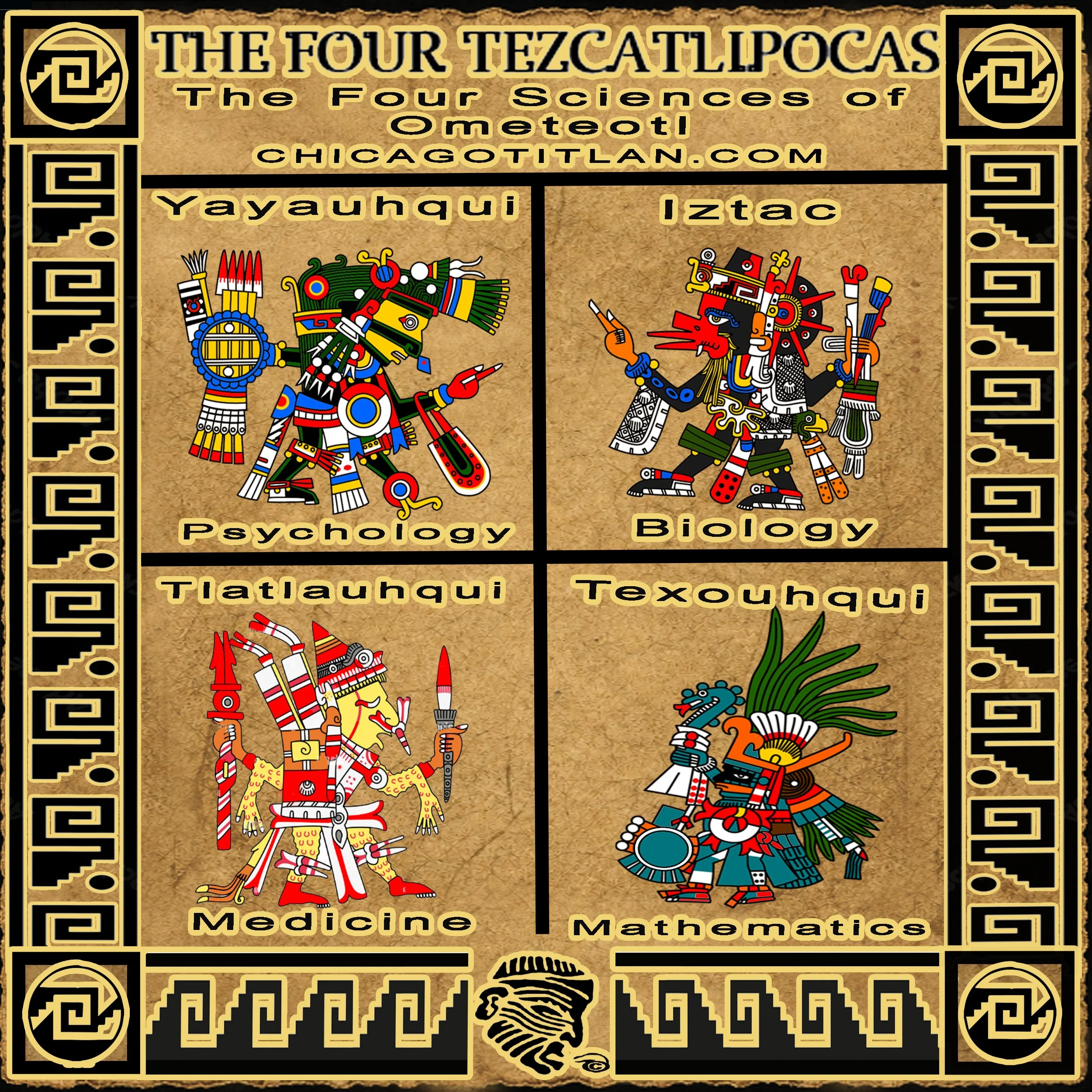
Biology, Psychology, Medicine, and Mathematics — the four sciences the Mexihca encoded into every direction of life, expanded far beyond what any single page can hold.
This booklet is the full research behind the Four Tezcatlipocas: Iztac (Biology), Yayauhqui (Psychology), Tlatlauhqui (Medicine), and Texouhqui (Mathematics). Drawing on the scholarship of Maestro Meza Gutiérrez and cross-referenced against the codices — Borgia, Borbónico, Vaticano B, Cospi — this is the source material, not a summary of it.
Inside, each Symbol gets its own deep breakdown: its color, its direction, its function, and the science behind it — from the biology of Quetzalcoatl to the astronomy of Mixcoatl to the birth of dentistry under Tlatlauhqui. No mistranslations, no "gods" — this is the scientific framework as the Mexihca built it, restored.
Delivered instantly as a PDF download. 38 pages. ENGLISH VERSION. Download and save your file right away. Your link expires 24 hours after your first download.
By Alberto A. Cuauhtlequezqui Lopez, Huey Tlahtokan · La Gran Palabra · ChicagoAztlan © 2004–2026
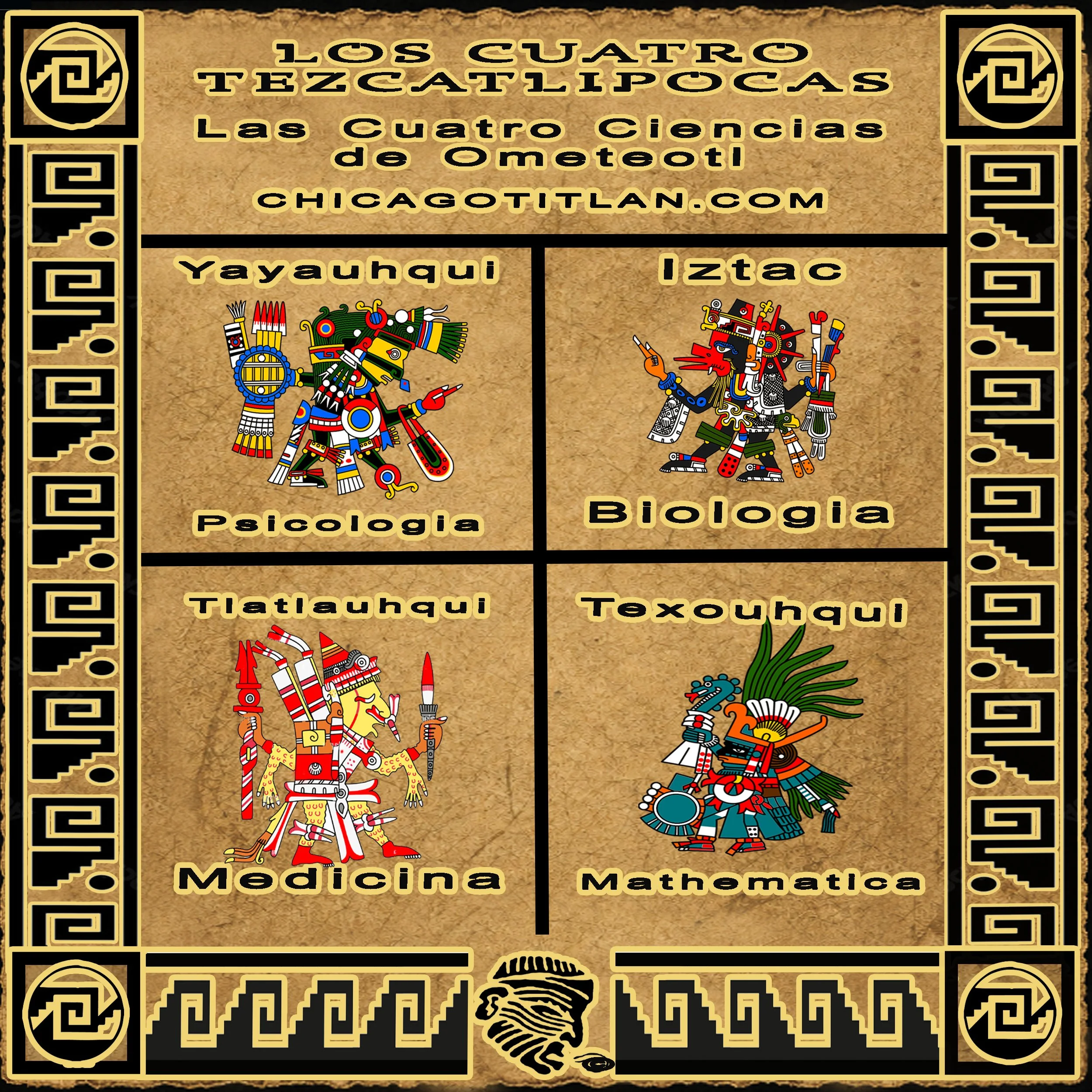
Biología, Psicología, Medicina y Matemáticas — las cuatro ciencias que los Mexihcas codificaron en cada dirección de la vida, ampliadas mucho más allá de lo que cabe en una sola página.
Este folleto es la investigación completa detrás de los Cuatro Tezcatlipocas: Iztac (Biología), Yayauhqui (Psicología), Tlatlauhqui (Medicina) y Texouhqui (Matemáticas). Basado en la erudición del Maestro Meza Gutiérrez y contrastado con los códices — Borgia, Borbónico, Vaticano B, Cospi — este es el material fuente, no un resumen del mismo.
Adentro, cada Símbolo tiene su propio desglose profundo: su color, su dirección, su función y la ciencia detrás de él — desde la biología de Quetzalcoatl hasta la astronomía de Mixcoatl y el nacimiento de la odontología bajo Tlatlauhqui. Sin traducciones erróneas, sin "dioses" — este es el marco científico tal como lo construyeron los Mexihcas, restaurado.
Entrega instantánea como descarga en PDF. 38 páginas. VERSIÓN EN ESPAÑOL.
Descarga y guarda tu archivo de inmediato. Tu enlace vence 24 horas después de la primera descarga.
Por Alberto A. Cuauhtlequezqui Lopez, Huey Tlahtokan · La Gran Palabra · ChicagoAztlan © 2004–2026