The Ancient Word - The Voice of Our Ancestors
La Palabra Antigua - La Voz de Nuestros Ancestros
These are not dead languages. Each is a way the cosmos understands itself — a living current of Teotl, the generating essence, moving through human breath. They carry sciences, philosophies, and ways of seeing that have no equivalent in Spanish or English. To learn even a few of their words is to let the Ancient Word move again — to open a door deliberately closed for five hundred years.
Estas no son lenguas muertas. Cada una es una forma en que el cosmos se comprende a sí mismo — una corriente viva de Teotl, la esencia generadora, que se mueve a través del aliento humano. Llevan ciencias, filosofías y maneras de ver que no tienen equivalente en español o inglés. Aprender aunque sea unas pocas de sus palabras es dejar que la Palabra Antigua se mueva de nuevo — abrir una puerta deliberadamente cerrada durante quinientos años.
IN HUEHUETLAHTOLLI
NAHUATL — NAHUATLAHTOLLI
IN XOCHITL IN CUICATL ~ FLOWER AND SONG
Nahuatl is NOT a dead language. It is spoken today by more than 1.7 million people — and it still lives & breathes. It is the tongue in which the cosmos was philosophized — the language that carries the science of the Tezcatlipocas, of Teotl, of Ollin.
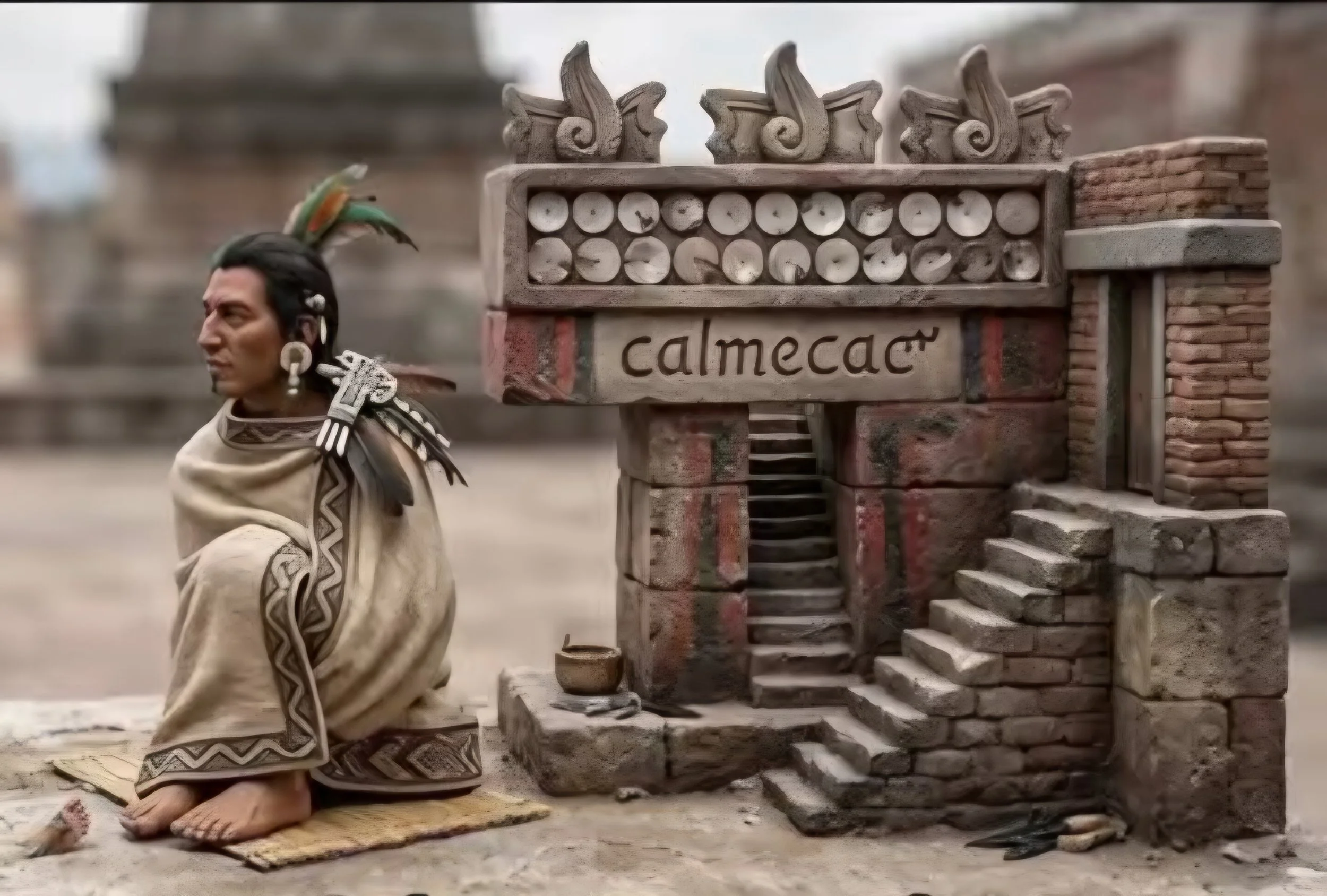
Every term we have recovered lives first in Nahuatl: Teotl, the generating essence; Quetzalcoatl, the Precious Knowledge; Ollin, the law of movement. To learn it is to read the philosophy in its original breath, before any translation could bury it. From the Calmecac to the codices, this was the language of knowledge itself.
IN XOCHITL IN CUICATL ~ FLOR Y CANTO
El náhuatl NO es una lengua muerta. Lo hablan hoy más de 1.7 millones de personas — y todavía viva y respira. Es la lengua en que se filosofó el cosmos — el idioma que lleva la ciencia de los Tezcatlipocas, de Teotl, de Ollin.
Cada término que hemos recuperado vive primero en náhuatl: Teotl, la esencia generadora; Quetzalcoatl, el Conocimiento Precioso; Ollin, la ley del movimiento. Aprenderlo es leer la filosofía en su aliento original, antes de que cualquier traducción pudiera enterrarla. Del Calmecac a los códices, esta fue la lengua del conocimiento mismo.
PUREPECHA — THE TONGUE THAT STANDS ALONE
The Mexihca empire never conquered them. Their language answers to no other on Earth.
P'urhépecha is a language isolate — with no known relatives anywhere in the world.
The people of Michoacán built a kingdom the Aztecs could not break, and their tongue stands just as unbroken — related to no other living language. To learn P'urhépecha is to hear a voice that is wholly its own. Spoken today by more than 100,000 people in Michoacán. From Tzintzuntzan, their capital on Lake Pátzcuaro — crowned by the yácatas, the round-fronted pyramids found nowhere else — they kept their borders, their craft, and their tongue wholly their own.
LA LENGUA QUE SE SOSTIENE SOLA
El imperio Mexihca nunca los conquistó. Su lengua no responde a ninguna otra en la Tierra. El P'urhépecha es una lengua aislada — sin parientes conocidos en ningún lugar del mundo. Desde Tzintzuntzan, su capital a orillas del Lago de Pátzcuaro — coronada por las yácatas, las pirámides de frente redondo que no existen en ningún otro lugar — mantuvieron sus fronteras, su arte y su lengua enteramente suyos.
El pueblo de Michoacán construyó un reino que los aztecas no pudieron quebrar, y su lengua permanece igual de intacta — emparentada con ninguna otra lengua viva. Aprender el P'urhépecha es escuchar una voz que es enteramente suya. Hablado hoy por más de 100,000 personas en Michoacán.
Sahin Sau: Curso de Lengua Mixteca
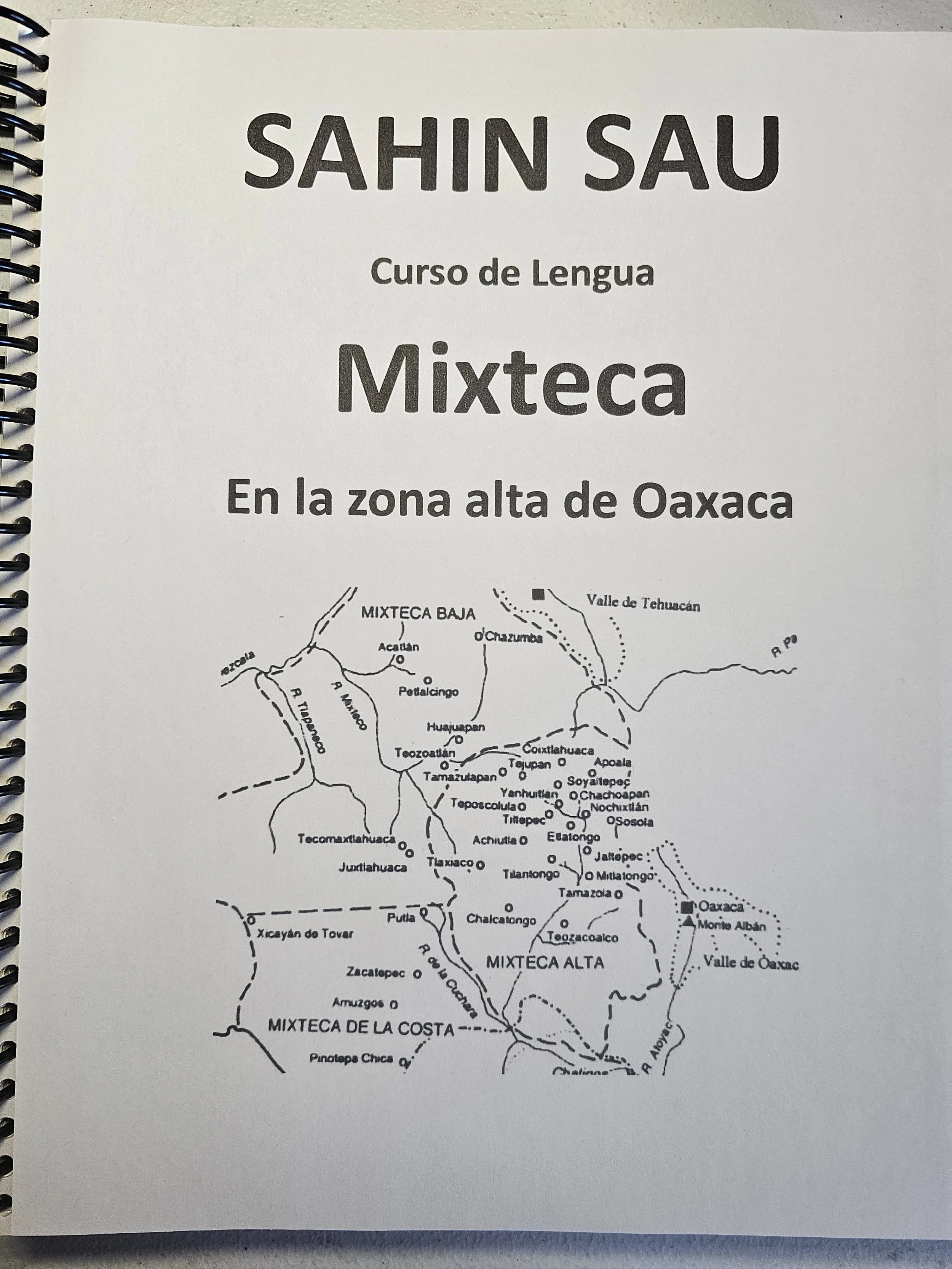
Learn Mixtec (Sahìn Sàu), the "Language of the Rain," as spoken in the Mixteca Alta of Oaxaca
Sahìn Sàu, the Language of the Rain, is the language of the Ñuù Sàu, the People of the Rain, and it is still spoken across the highlands of Oaxaca. The Mixtec were master artists, goldsmiths, and codex painters, and their language carries that history. This spiral-bound course teaches it in Spanish, using the writing system of the Mixteca Alta, with a regional map on the cover.
How the course is built:
The book is organized into two parts, built around 22 lessons. Each lesson has a Mixtec title with its Spanish translation, so you learn the language through real speech, stories, and everyday scenes instead of dry drills.
Part I: Everyday language and community
Tùhun: the word, plus spelling, the six vowels (including the special vowel), and short vs. long vowels
Tanìndíí: greetings
Yahu ñuù: the village market
Vehe jíín itù: houses and cornfields
Lessons on naming your town, the importance of your language, and telling an old story
Lessons drawn from village life, food, poverty and hardship, care from the gods, and dreams
Part II: History, tradition, and worldview
Tiun tatá: work for the cacique
Ihà Nacuaa: Lord 8 Deer
Lessons on community decisions, healing (Sáha Tanà), and the origin story Shránúú ("In the beginning")
Also includes:
The Mixtec counting system, which is vigesimal (base 20), with numbers and examples
Translations of the exercises
Bibliography
Details: Spanish-language instruction · Spiral-bound print edition · Mixteca Alta (Oaxaca) variety
Perfect for: language learners, cultural educators, Mixtec families reconnecting with their language, and students of Mesoamerican history and codices.
Curso de Lengua P'urépecha y Vocabulario del Idioma Purépecha
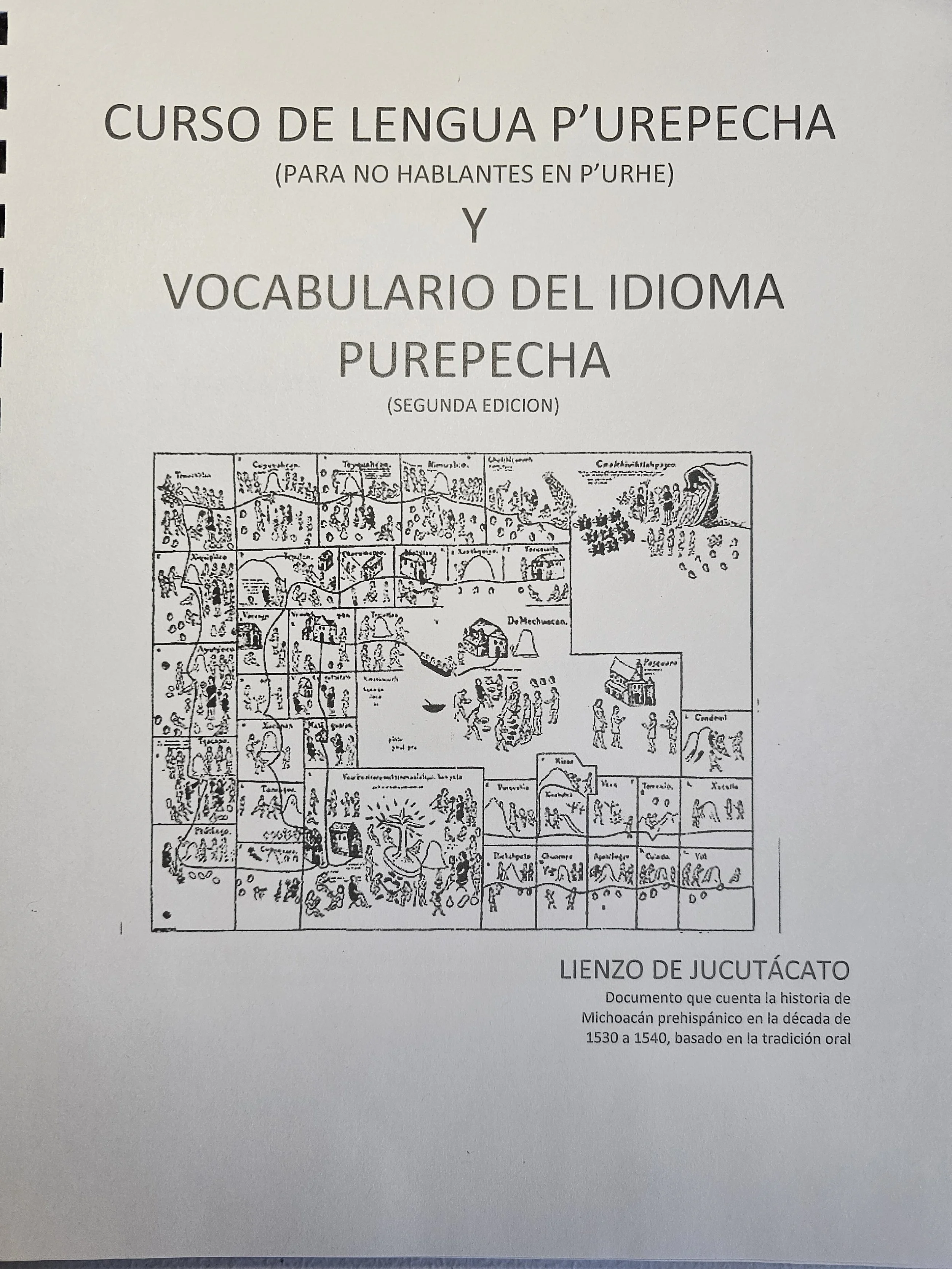
Segunda Edición: Language course for non-speakers of P'urhe + two-way dictionary
P'urhépecha is one of the great living languages of Mesoamerica, still spoken today in the highlands and lake region of Michoacán. The Purépecha were the Mexica's powerful western neighbors, and their state held its ground against the Aztec empire. Their language, and the knowledge carried in it, is still here.
This spiral-bound study guide gives you two resources in one: a structured beginner's course built for people who don't speak P'urhe, and the Lathrop Vocabulario del Idioma Purepecha (2nd ed., 2007) with dictionary sections in both directions.
The course covers:
El Alfabeto: the 6 vowels and 21 consonants, with example words for every letter
La Palabra and La Estructura del Verbo
Clíticos Nominales
El Sustantivo and its determinantes
Ejemplos de Conjugaciones
Ejercicios Generales for practice
Pequeño Vocabulario P'urhépecha
The vocabulary includes:
Prefacio and Ortografía del Purépecha (the writing system)
Purépecha → Español and Español → Purépecha, with phonetic transcriptions, usage notes, and illustrations
The cover features the Lienzo de Jucutácato, a pictorial record of pre-Hispanic Michoacán from the 1530s–1540s, drawn from oral tradition.
Details: Spanish-language instruction · Spiral-bound print edition · Beginner level, no prior P'urhe needed
Perfect for: language learners, cultural educators, students of Mesoamerican languages, and anyone reconnecting with their Michoacán roots.
MIXTECO — SAHIN SAU
THE WORD OF THE RAIN
The Mixtec did not merely speak — they painted. The great codices that survived the burning were written in their hand.
Sahin Sau is the living tongue of the Ñuu Savi, the People of the Rain — the language of the Oaxacan highlands.
To learn Sahin Sau is to read the clouds — to enter the way of seeing that produced the Codex Nuttall and the Codex Vindobonensis. Spoken today by more than 500,000 people across Oaxaca, Guerrero, and Puebla, it carries a history written not in letters but in color and image.
LA PALABRA DE LA LLUVIA
El mixteco no solo se hablaba — se pintaba. Los grandes códices que sobrevivieron a la quema fueron escritos por su mano. El Sahin Sau es la lengua viva del Ñuu Savi, el Pueblo de la Lluvia — el idioma de la zona alta de Oaxaca.
Aprender el Sahin Sau es leer las nubes — entrar en la forma de ver que produjo el Códice Nuttall y el Códice Vindobonensis. Hablado hoy por más de 500,000 personas en Oaxaca, Guerrero y Puebla, lleva una historia escrita no en letras sino en color e imagen.
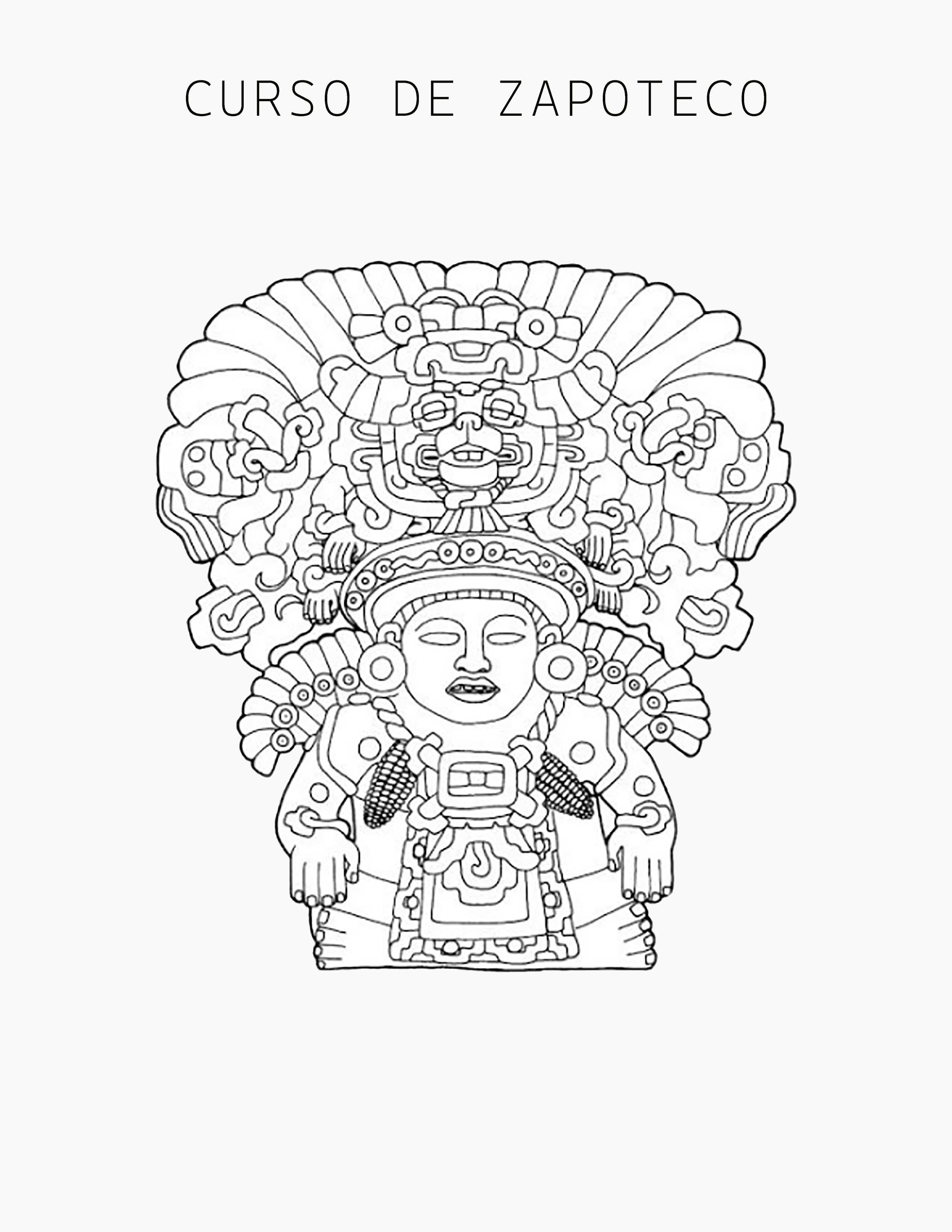
ZAPOTECO — DIIDXAZA BINNIZA
THE VOICE OF THE CLOUD PEOPLE
The Zapotec carved their words in stone two thousand years ago — one of the oldest writing systems in all the Americas.
This is the tongue of the Binnizá, the Cloud People — and one of the oldest languages still spoken on this continent.
The people who raised Monte Albán wrote their language in glyphs while Rome was still a village, and their descendants speak it still. To learn Zapoteco is to touch one of the deepest unbroken threads of human language in the Americas. Spoken today by more than 400,000 people in Oaxaca.
LA VOZ DEL PUEBLO DE LAS NUBES
Los zapotecos tallaron sus palabras en piedra hace dos mil años — uno de los sistemas de escritura más antiguos de todas las Américas. Esta es la lengua del Binnizá, el Pueblo de las Nubes — y una de las lenguas más antiguas que aún se hablan en este continente.
El pueblo que levantó Monte Albán escribió su lengua en glifos cuando Roma todavía era una aldea, y sus descendientes la hablan aún. Aprender el zapoteco es tocar uno de los hilos continuos más profundos del lenguaje humano en las Américas. Hablado hoy por más de 400,000 personas en Oaxaca.