CODICES - AMOXTLACUILO
MEXIHCA, MIXTECO & MAYA CODICES
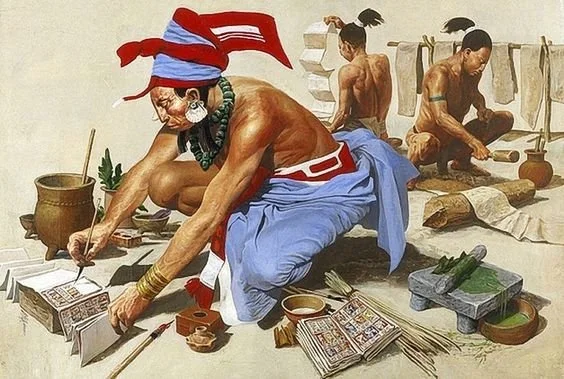
Amoxtlacuilo: from Amoxtli, book, and Tlacuilo, the painter-scribe who wrote in images.
Before the Invasion, the peoples of Anahuac kept libraries. Thousands of painted books recorded the sacred count of days, the movements of the stars, the histories of ruling families, the tribute of nations, and the passage of the soul into Mictlan. The Tlacuiloque trained for years to paint them, and the Tlamatinime knew how to read them.
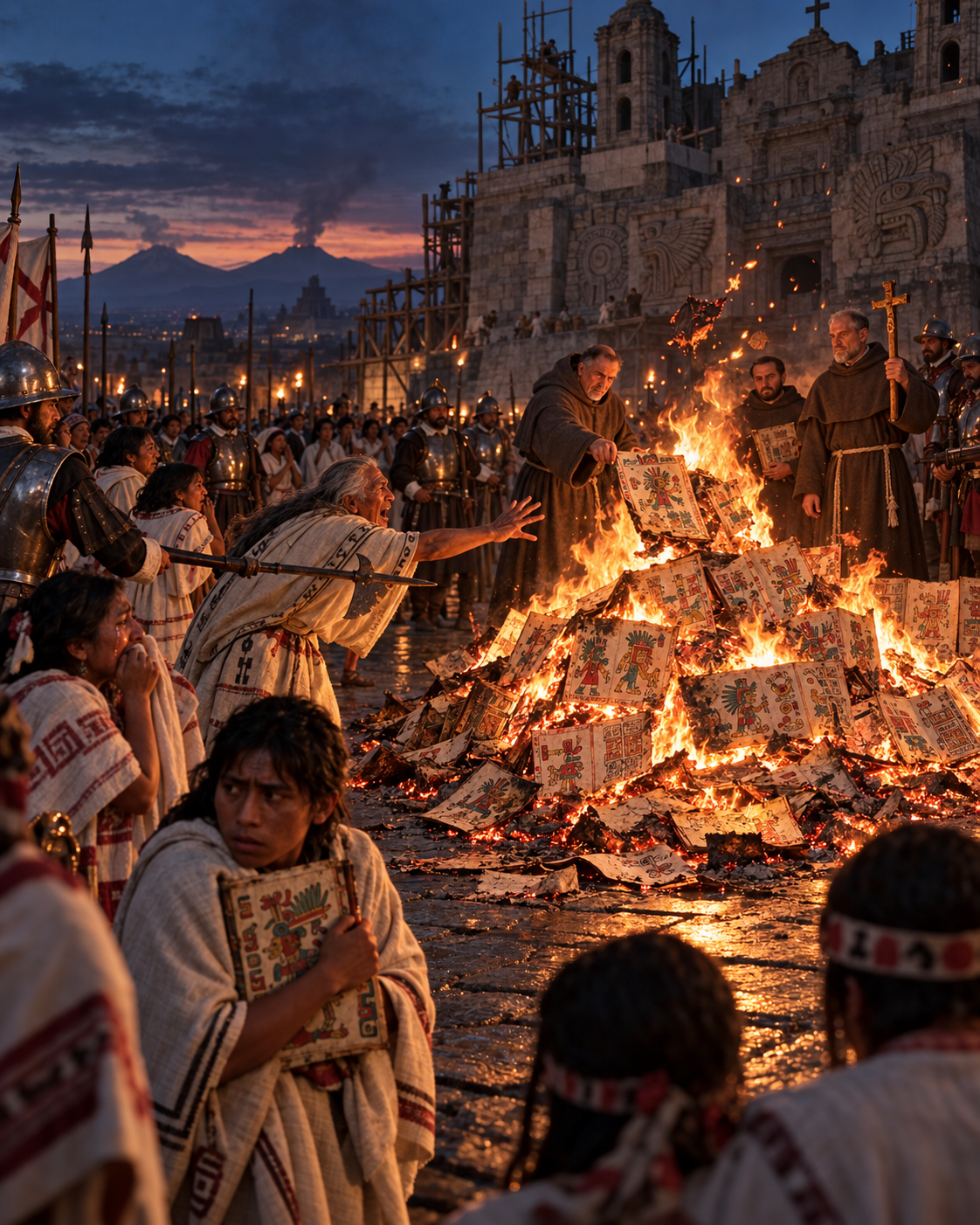
Then the books were Burned. In Mexihco, Bishop Juan de Zumárraga is remembered for burning our codices by the pile. In Yucatán in 1562, Fray Diego de Landa Burned every Maya book he could find at Maní. What survived did so by accident, by theft, or by being carried off to Europe as a curiosity. Today only a few dozen pre-Invasion codices remain, and nearly all of them are held in libraries in Oxford, Paris, Vienna, Dresden, and Madrid, far from the land and the people who made them.
These facsimile editions bring them home. Many are out of print and hard to find, and we pair them with the scholarly studies that teach you to read them, so they become books you can study and not just images to admire. They’re for scholars, students, and anyone who wants to know what our ancestors wrote in their own hand.
CODEX LAUD
RARE. OUT OF PRINT. LAST FEW COPIES.
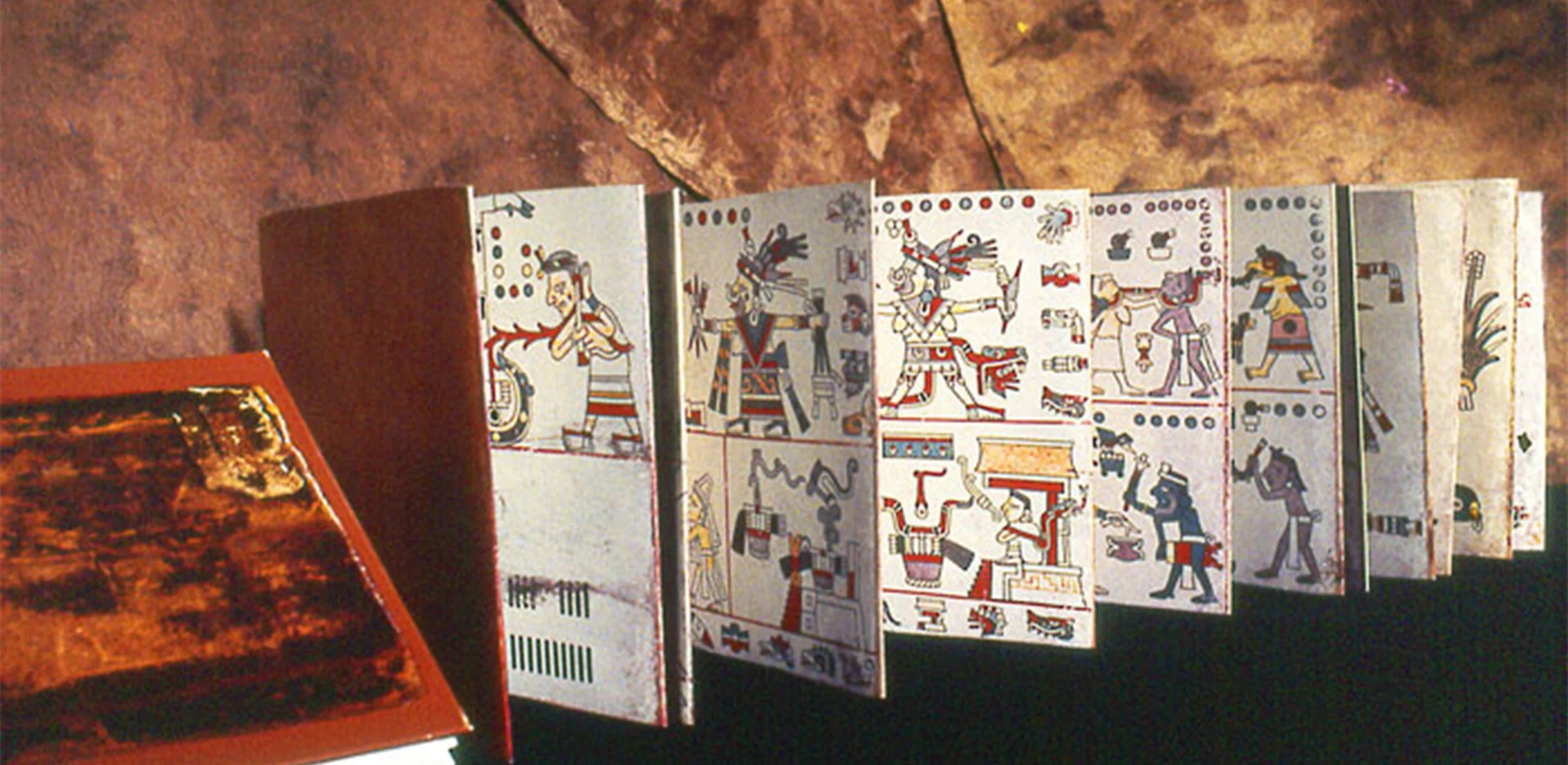
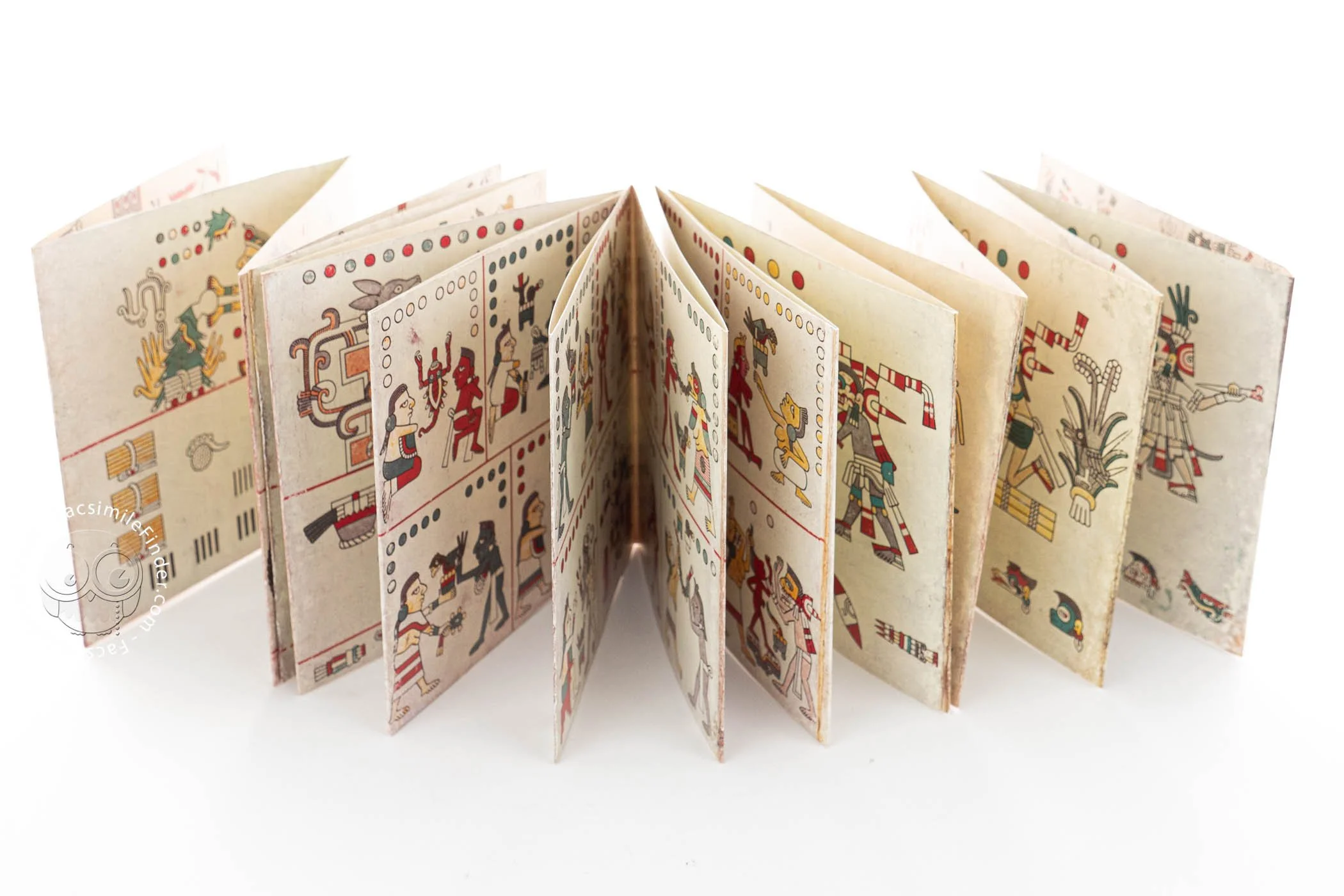
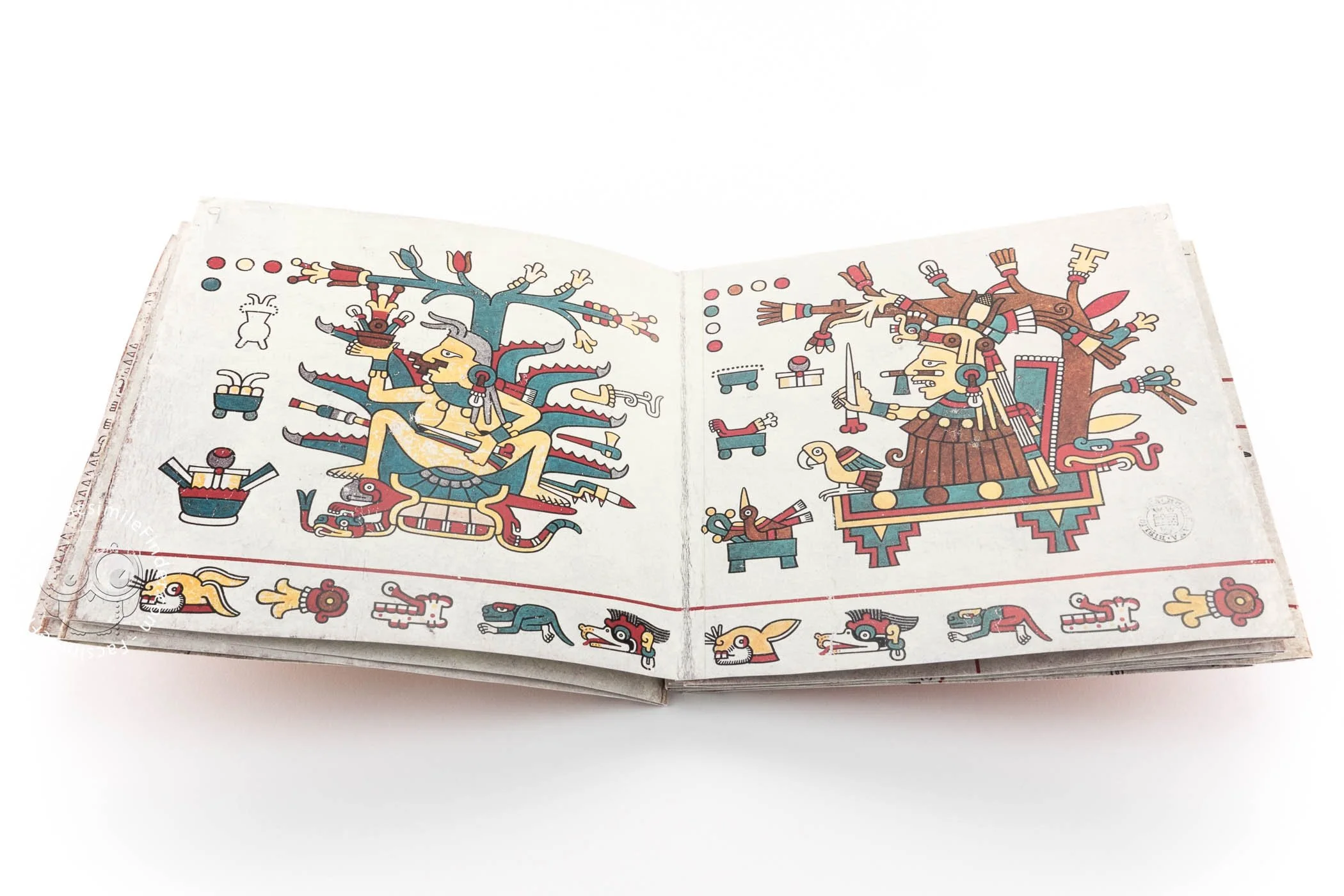
One of the very few painted books of our ancestors to survive the burning. A screenfold of 24 deerskin leaves from the Borgia Group, a Pre-Cuauhtemoc Nahua book of the Borgia Group, painted before the invasion, and kept in near-flawless condition: never burned, never water-damaged.
The Laud is a book of the tonalpohualli, the 260-day count, with its day signs, its forces, the initiation of priests, and the passage into Mictlan. That’s why it’s also called the Libro de la Muerte. It was taken to England, where Archbishop William Laud gave it to Oxford in 1636. It is held today at the Bodleian Library.
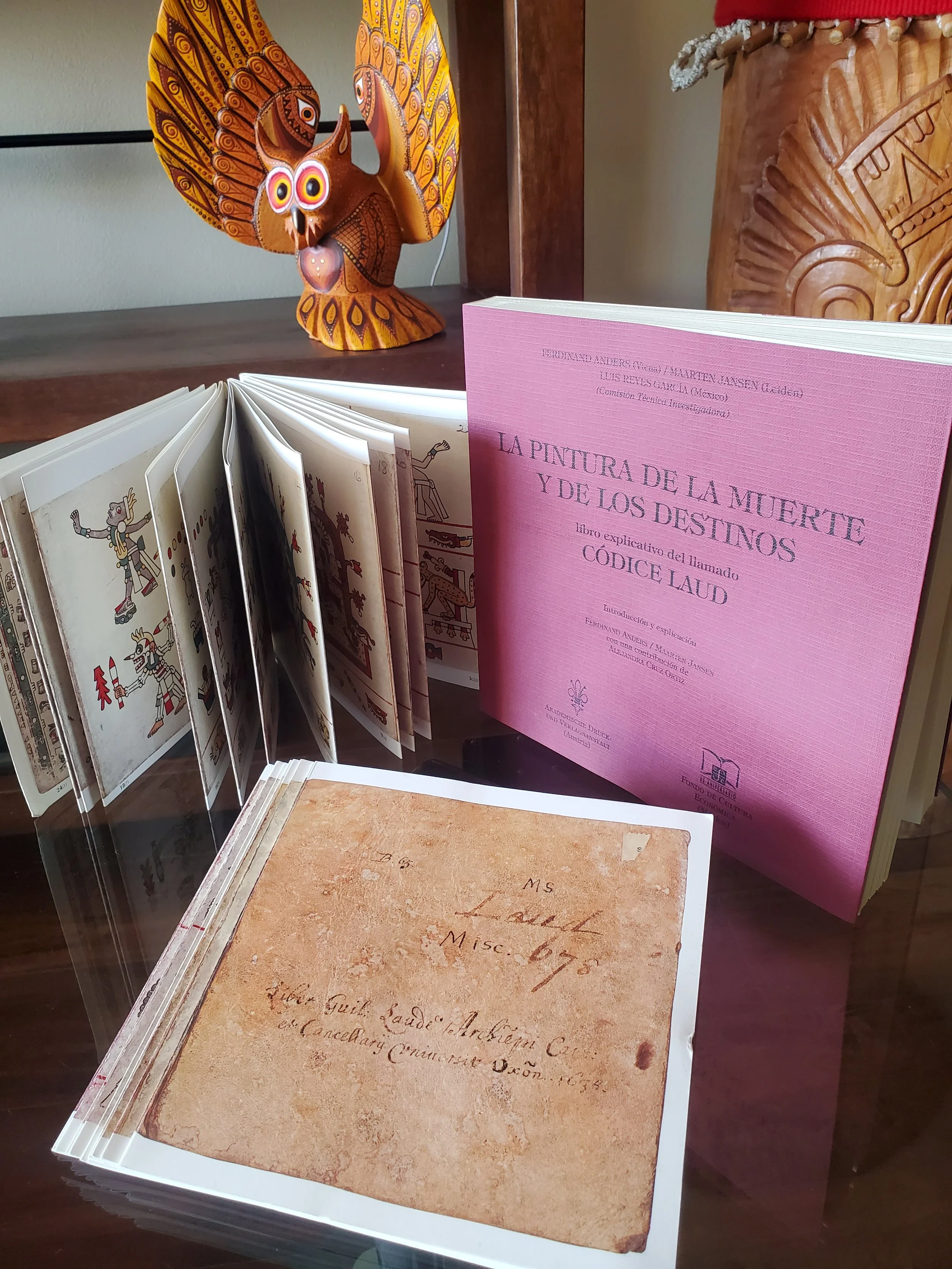
This edition: full-size color facsimile by the Fondo de Cultura Económica, trimmed and folded to the original format, with the explanatory book La pintura de la muerte y de los destinos (Spanish).
RARE. OUT OF PRINT. LAST FEW COPIES.
One of the very few painted books of our ancestors to survive the burning. A Pre-Cuauhtemoc book of the Borgia Group, painted on 24 deerskin leaves before the Invasion, and preserved in near-flawless condition, never burned and never water-damaged.
The Laud is a book of the tonalpohualli, the 260-day count. It holds the day signs and their forces, the initiation of priests, and the passage into Mictlan, which is why it’s also known as the Libro de la Muerte. It was taken to England, where Archbishop William Laud gave it to Oxford in 1636. It is held today at the Bodleian Library.
This edition: a full-size color facsimile by the Fondo de Cultura Económica, trimmed and folded to the original format, with the explanatory book La pintura de la muerte y de los destinos (Spanish).
Free shipping. Signature required.
The Explanatory Book
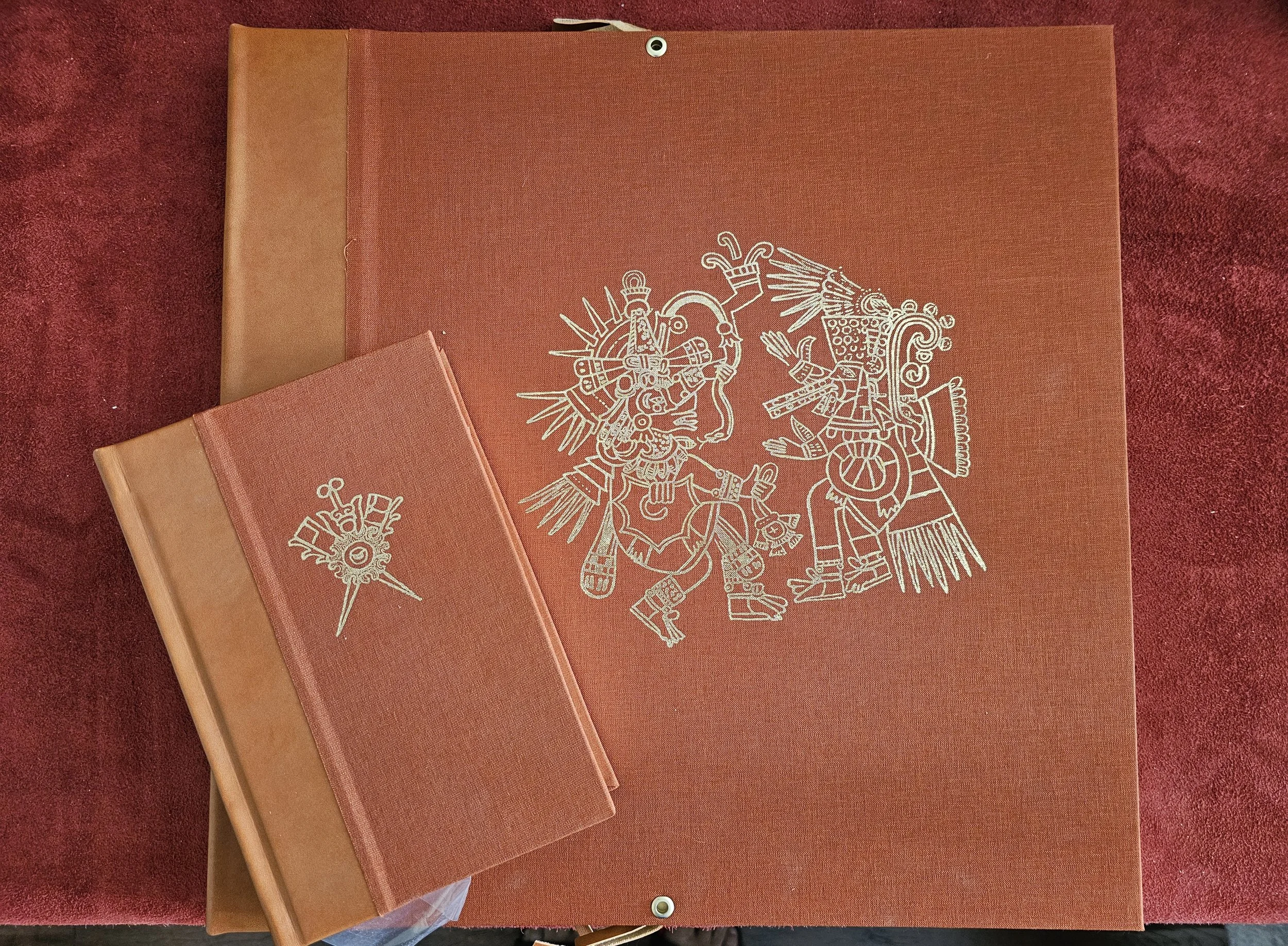
La pintura de la muerte y de los destinos: Libro explicativo del llamado Códice Laud (The Painting of Death and Destinies), the full Spanish commentary that comes with this edition. It was written by Ferdinand Anders (Vienna) and Maarten Jansen (Leiden), two of the leading codex scholars of the last century, with a contribution by Alejandra Cruz Ortiz, and prepared with Nahua scholar Luis Reyes García (México) on the research commission. It was published in 1994 by the Fondo de Cultura Económica together with Akademische Druck- u. Verlagsanstalt of Graz, Austria, the publishers behind the finest codex facsimiles ever made.
The book walks through the Laud page by page: the day signs and their destinies, the forces of each count, the paintings of Mictlan, and the ceremonies the book was made to guide. Even Oxford’s own Bodleian catalogue points readers to it as a key interpretation of the codex. With it, the facsimile becomes a book you can actually read.
CODICE BORBONICUS
History of the Manuscript
Painted in the Valley of Mexico around the 1520s, the Codex Borbonicus shows how our Mexihca ancestors counted, recorded, and lived by time.
In their impatience & ignorance to convert the people of Anahuac to Christianity, Spanish Inquisitors burned entire libraries of our books — one of the great cultural atrocities in history, and a loss of knowledge that can never be recovered.
The Borbonicus was one of the few to escape the fire. How it reached Europe is unknown. It first appears in the El Escorial library in Spain in 1778, was stolen in the early 1800s, and resurfaced at a French auction in 1826, where the library of the French National Assembly bought it for 1,300 gold francs. In 1960 France declared it a National Treasure — a Mexihca book, still held hostage in Paris today.
What the Borbonicus Holds
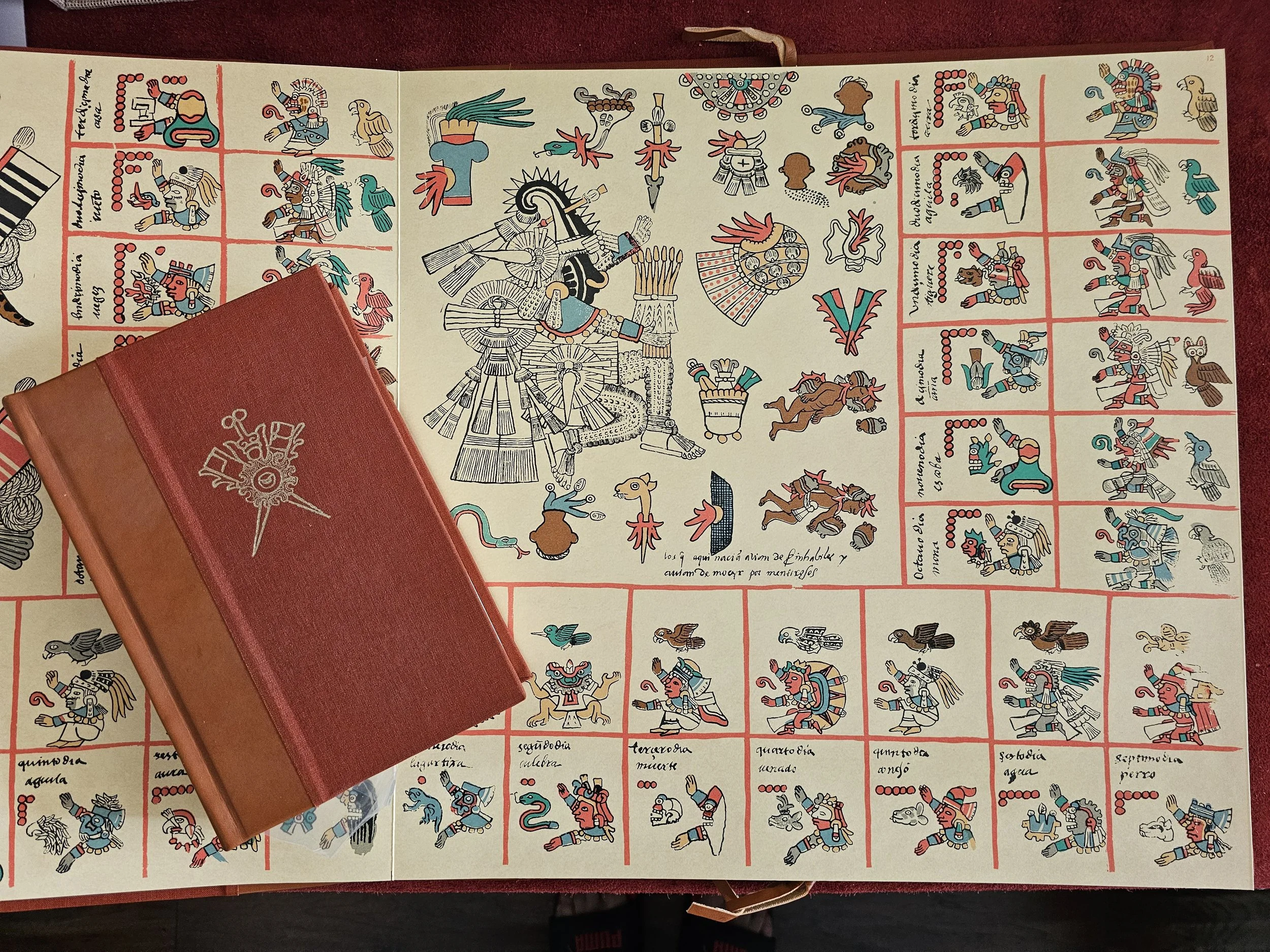
The book opens with the tonalamatl: the 20 trecenas, each on its own page with its guiding force, its 13 days, the Nine Lords of the Night and the 13 winged companions. (The first two pages were lost.) It then lays out the full 52-year count, guarded by Oxomoco and Cipactonal, and closes with the 18 veintenas of the Xiuhpohualli and their ceremonies, including the great New Fire, the Toxiuhmolpilia that bound the years in 1507, the last one held before the invasion. Few books anywhere show all three layers of our count together in one place.
A Book Painted by Our Own Hands
The Borbonicus is painted on a single long strip of amate paper, over fourteen meters long, folded into pages like a screen. Each page of the tonalamatl is a world of its own. The guiding force of the trecena fills the largest panel, and the days, the Lords of the Night, and the winged companions march around it in their own boxes, so a reader could take in a full thirteen-day period at a glance. Scholars still argue over whether it was painted just before or just after the Invasion. Empty spaces were left beside the images, and Spanish notes were later written into them, as if the conquerors were trying to understand what they had taken. But the hand, the style, and the knowledge are all Mexihca. Very few ritual books from the Valley of Mexico survived at all, and none show the count of our ancestors as completely as this one. To study the Borbonicus is to see the calendar the way the tlamatinime saw it, not through the eyes of a friar.
LAST ONE IN THIS FORMAT
COLLECTOR’S ITEM
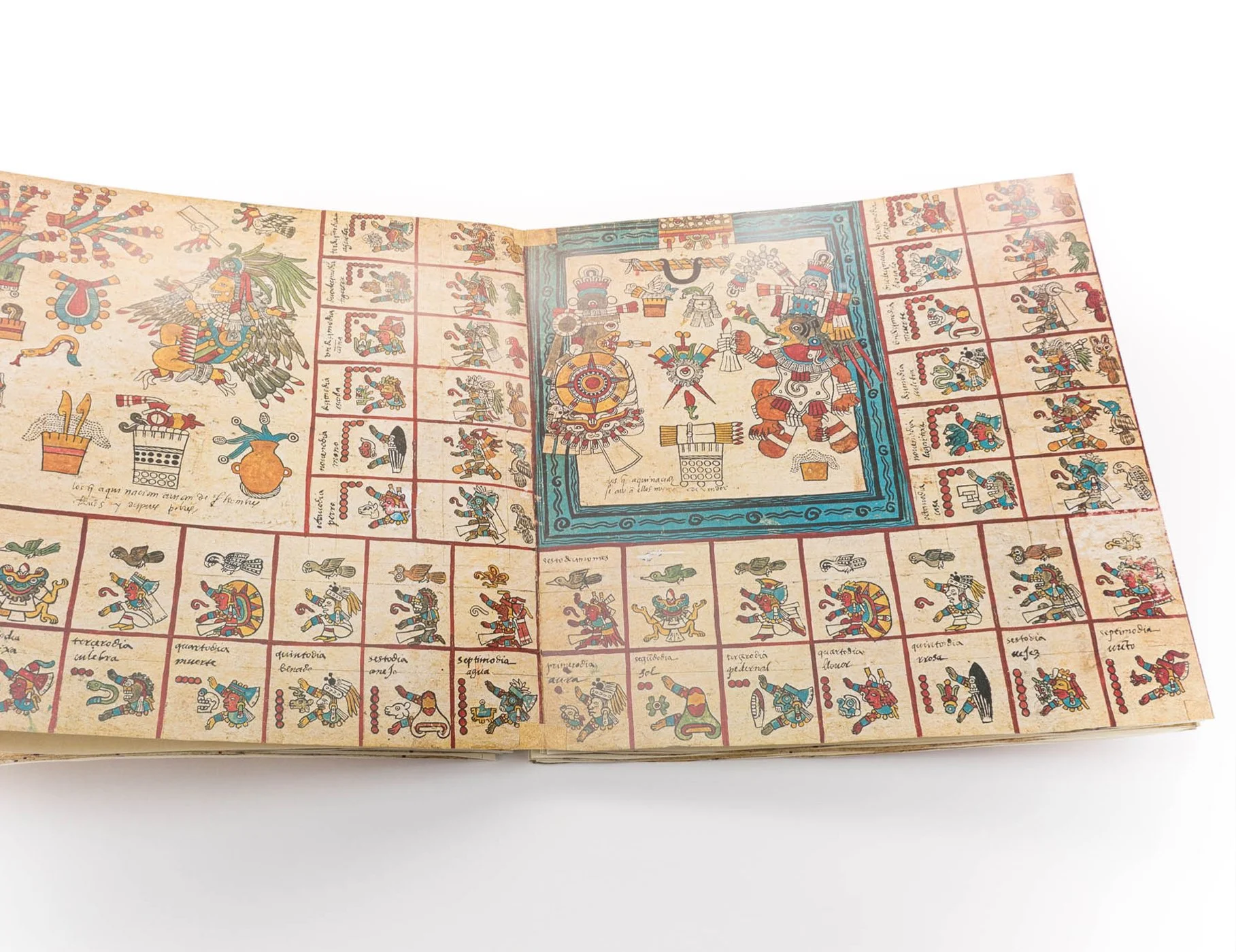
Codex Borbonicus — Códice Borbónico
Painted in the Valley of Mexico around the 1520s, the Codex Borbonicus shows how our Mexihca ancestors counted, recorded, and lived by time.
What the Borbonicus Holds
The book opens with the tonalamatl: the 20 trecenas, each on its own page with its guiding force, its 13 days, the Nine Lords of the Night and the 13 winged companions. (The first two pages were lost.) It then lays out the full 52-year count, guarded by Oxomoco and Cipactonal, and closes with the 18 veintenas of the Xiuhpohualli and their ceremonies, including the great New Fire, the Toxiuhmolpilia that bound the years in 1507, the last one held before the invasion. Few books anywhere show all three layers of our count together in one place.
History of the Manuscript
In their impatience & ignorance to convert the people of Anahuac to Christianity, Spanish Inquisitors burned entire libraries of our books — one of the great cultural atrocities in history, and a loss of knowledge that can never be recovered.
The Borbonicus was one of the few to escape the fire. How it reached Europe is unknown. It first appears in the El Escorial library in Spain in 1778, was stolen in the early 1800s, and resurfaced at a French auction in 1826, where the library of the French National Assembly bought it for 1,300 gold francs. In 1960 France declared it a National Treasure — a Mexihca book, still held in Paris today.
This Edition Includes
Full color facsimile of the complete codex, [PUBLISHER / YEAR]
Explanatory volume (included with the facsimile)
PDF of the 474-page Fondo de Cultura Económica explanatory book
PDF of the complete codex
PDFs are emailed after purchase.
Free shipping. Signature required.
Dresden Codex Facsimile — Collector's Edition Set + Free DVD
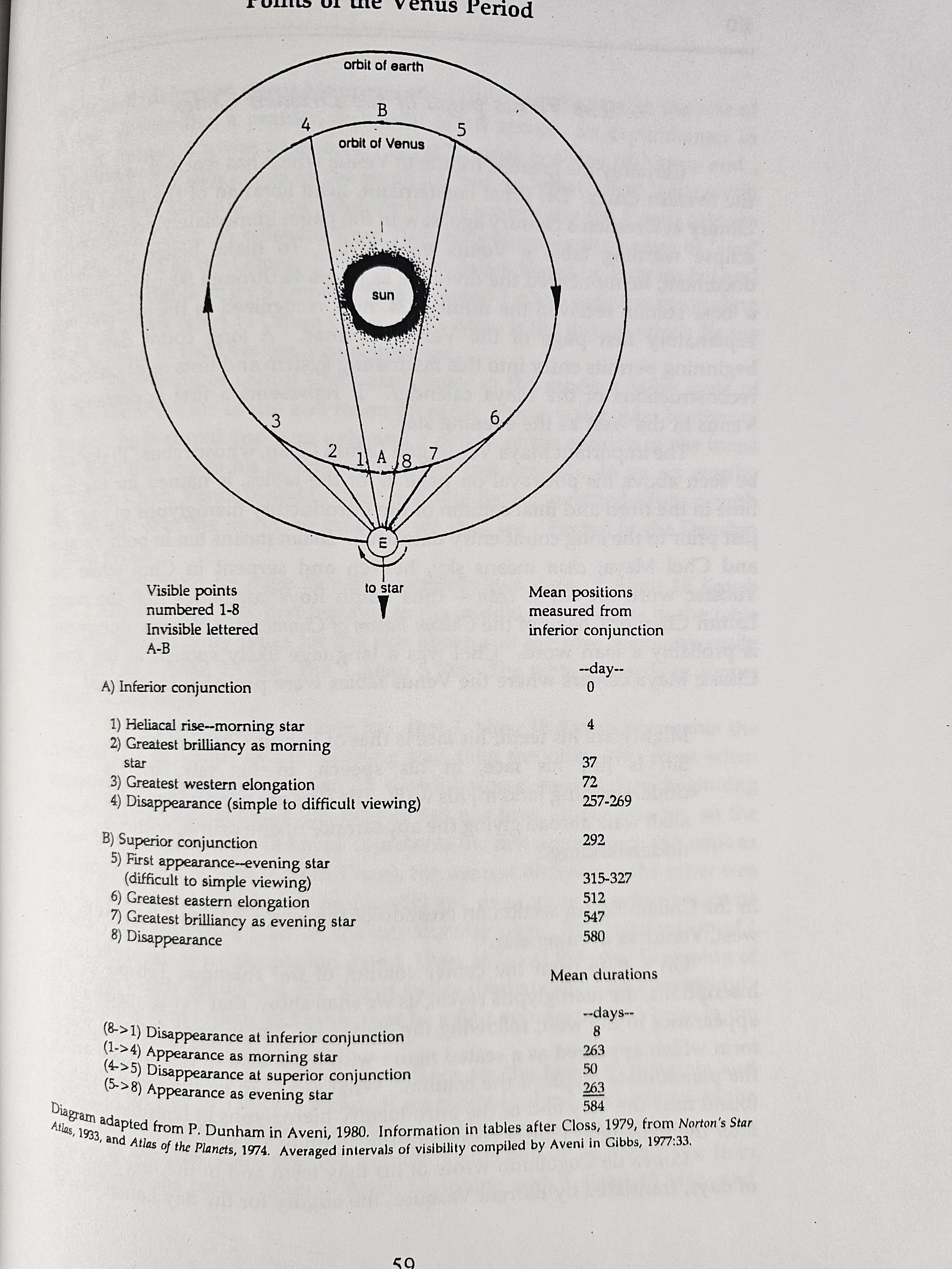
The most sophisticated of the only four Maya books that survived the invasion. Painted by several Maya scribes on amatl coated with fine lime plaster, the Dresden holds the knowledge Spanish priests tried to erase: the 260-day count, the Venus table that tracked the planet’s cycle with stunning precision, the eclipse tables, the ceremonies of the new year, and the great flood that closes the book.
History of the Manuscript
In 1562, Bishop Diego de Landa burned the Maya books at Maní, Yucatán, calling them works of the devil. The Dresden survived because it had already been carried off to Europe. How it left is unknown. It surfaced in Vienna in 1739, when Johann Christian Götze acquired it for the royal library in Dresden, Germany. In 1945 the Allied bombing of Dresden flooded the vault where it was kept, and water damaged several pages, but the book lived. It is held in Dresden today, in an armored treasure room, one of the very few Maya books on public display anywhere.
This Set Includes
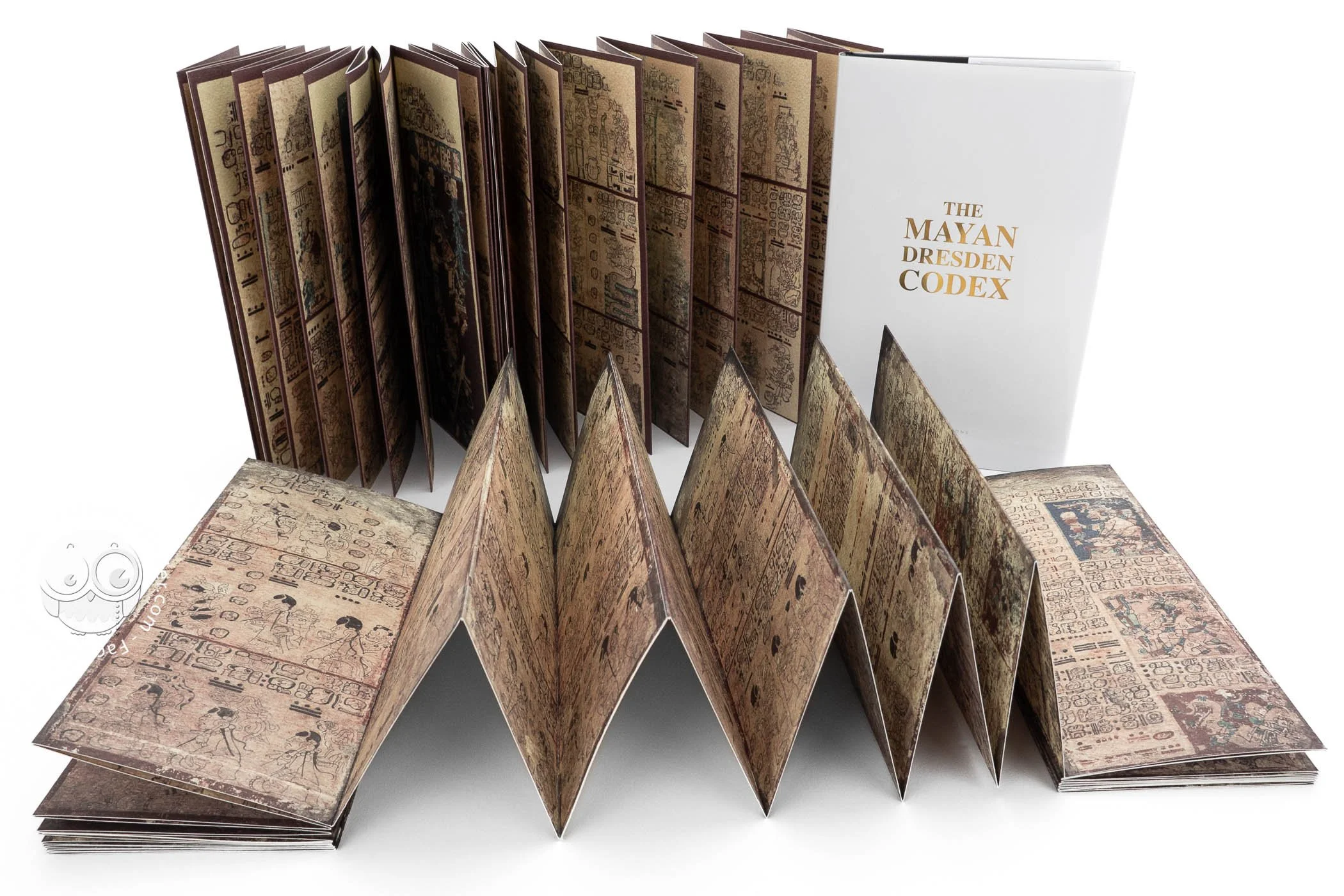
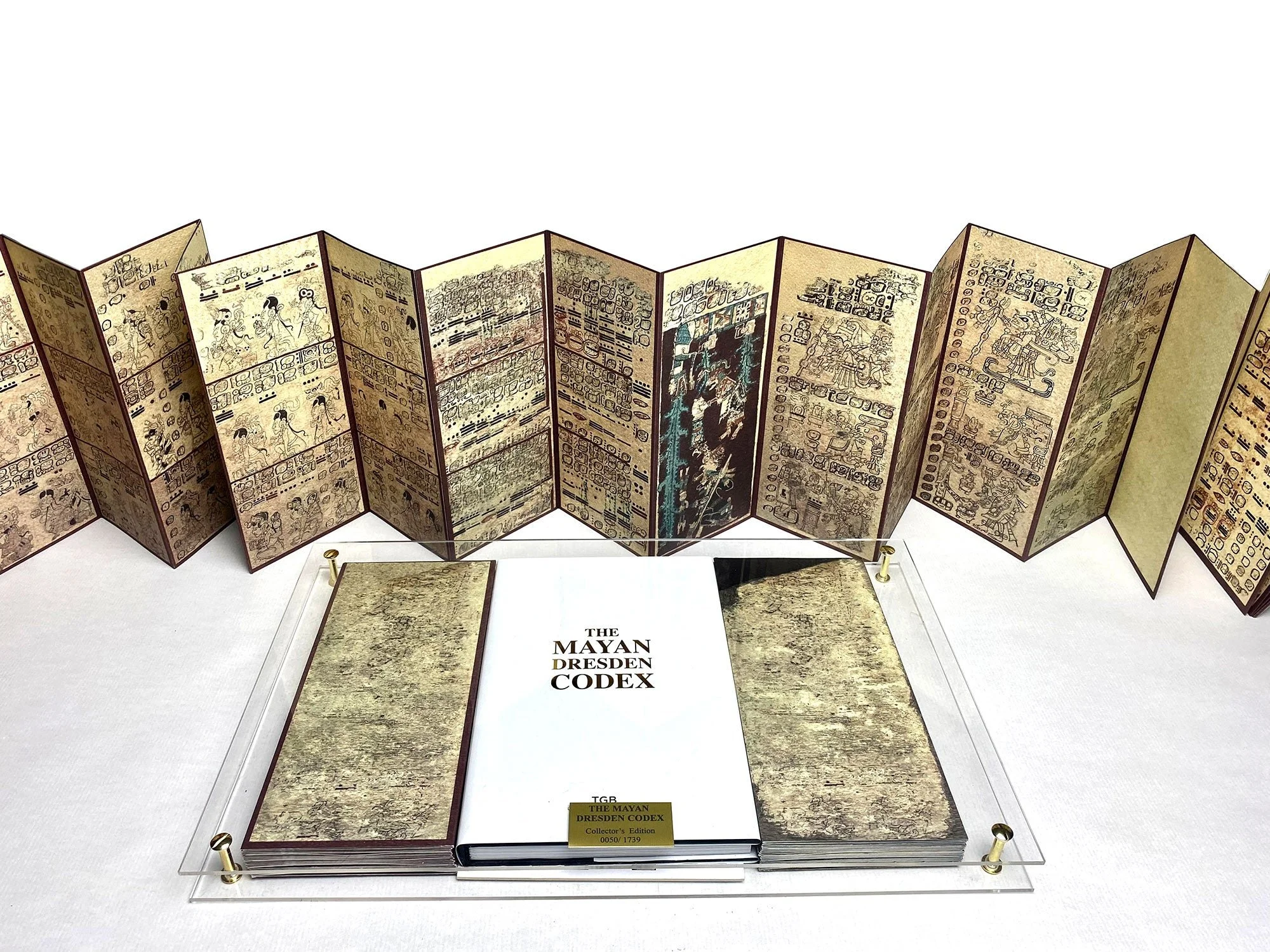
Collector’s facsimile. The complete screenfold, 3.56 meters extended, plus a second retouched color version. Hardcover with dust jacket and gold lettering, housed in a handmade methacrylate case with gold-plated screws. Limited edition, individually numbered from 0001 to 1739, the year the codex reached Dresden.
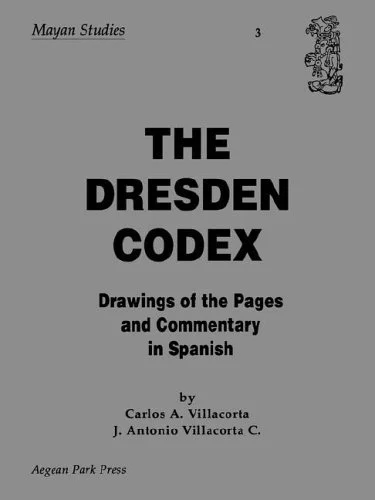
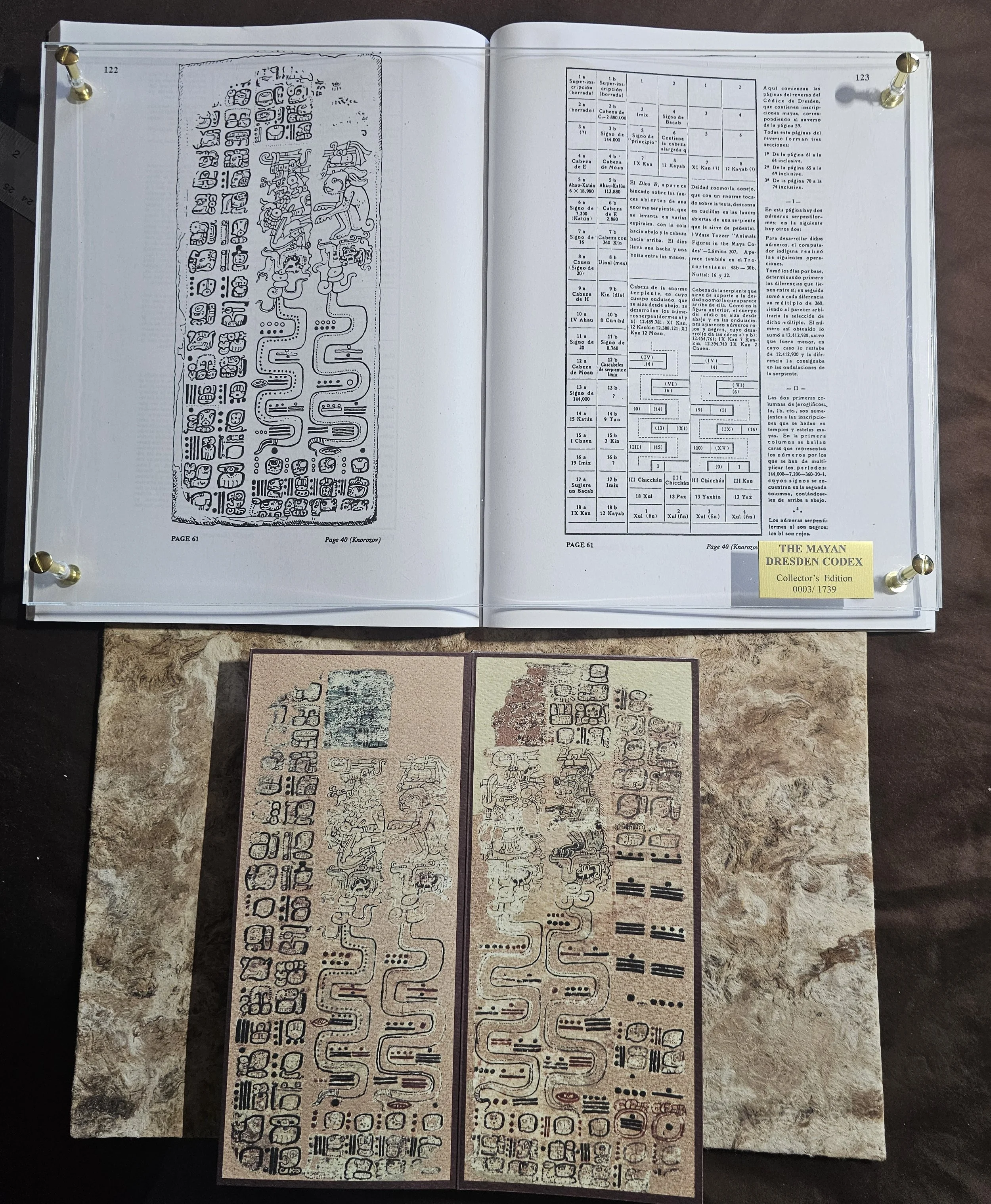
The Dresden Codex: Drawings of the Pages and Commentary in Spanish (Mayan Studies #3). Carlos A. Villacorta’s careful redrawings of all 74 painted pages, with commentary by J. Antonio Villacorta C. (Spanish). The key to reading the facsimile.
Arqueología Mexicana special editions, Parts 1 & 2 (Spanish). The full codex broken down page by page.
Astronomy and the Maya Calendar Correlation (English). Rare. Out of print. The publisher is out of business.
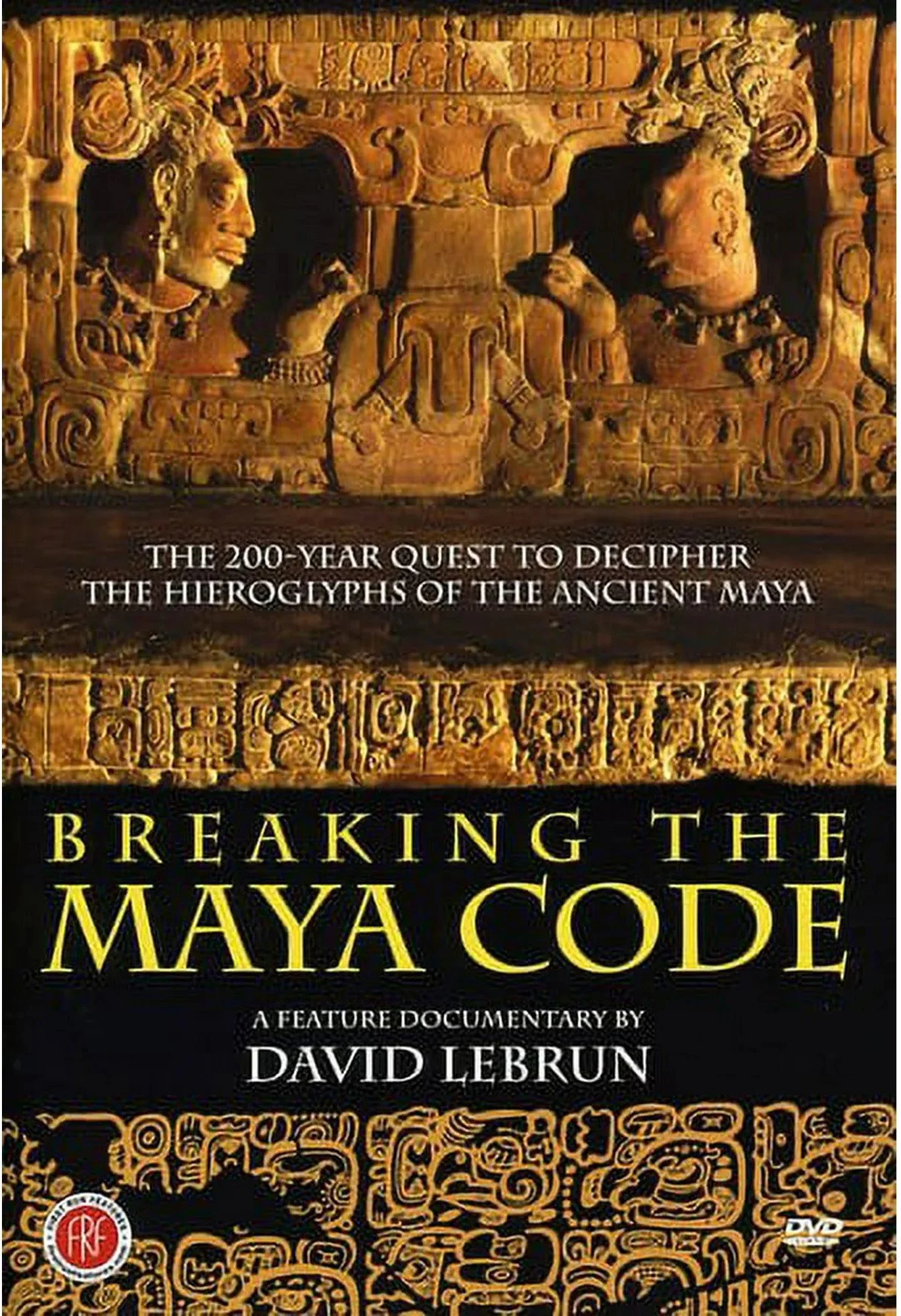
FREE DVD: Breaking the Maya Code (1 hr 56 min, English). The 200-year quest to read the Maya script again.
Free shipping. Signature required.
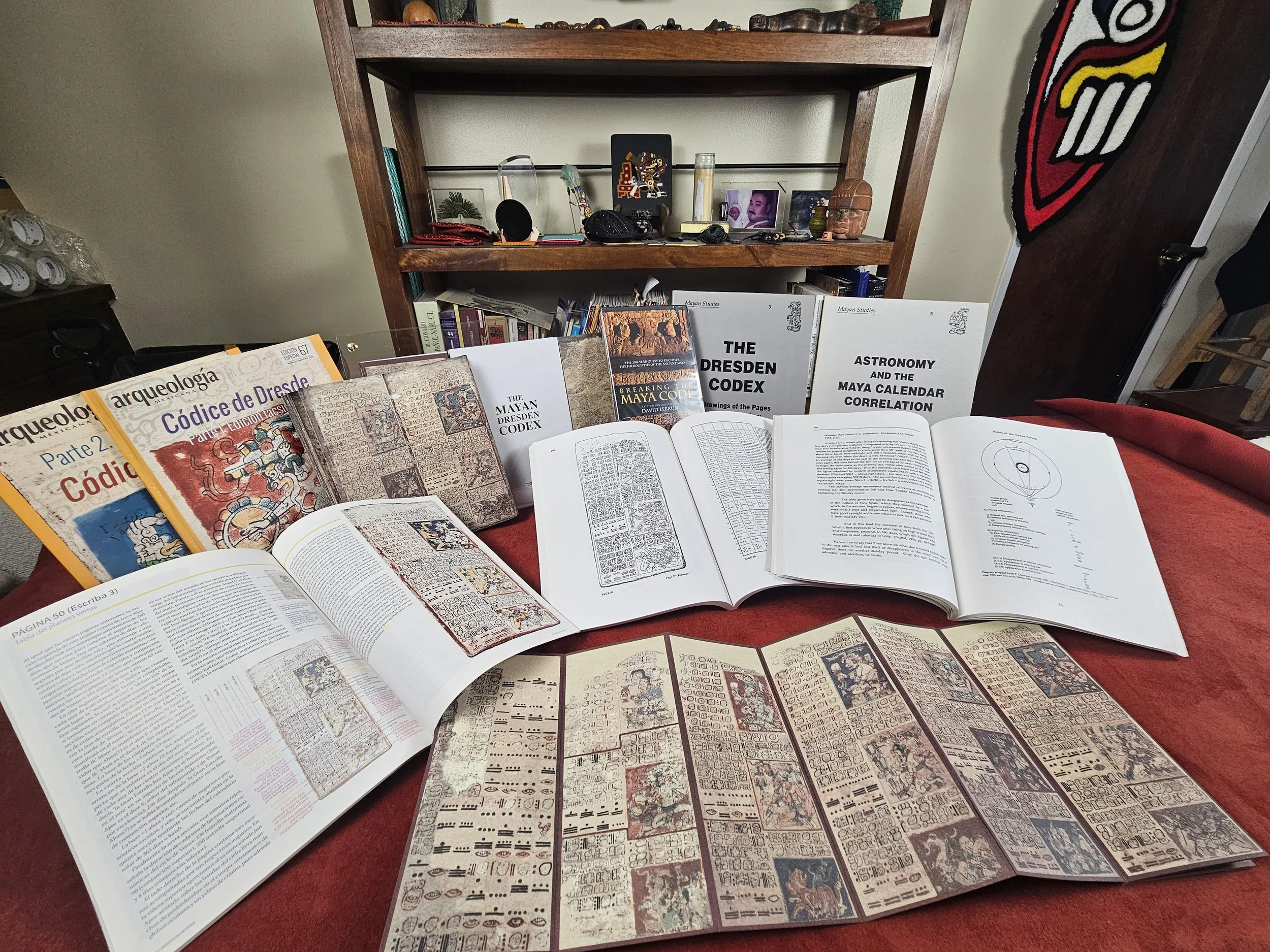
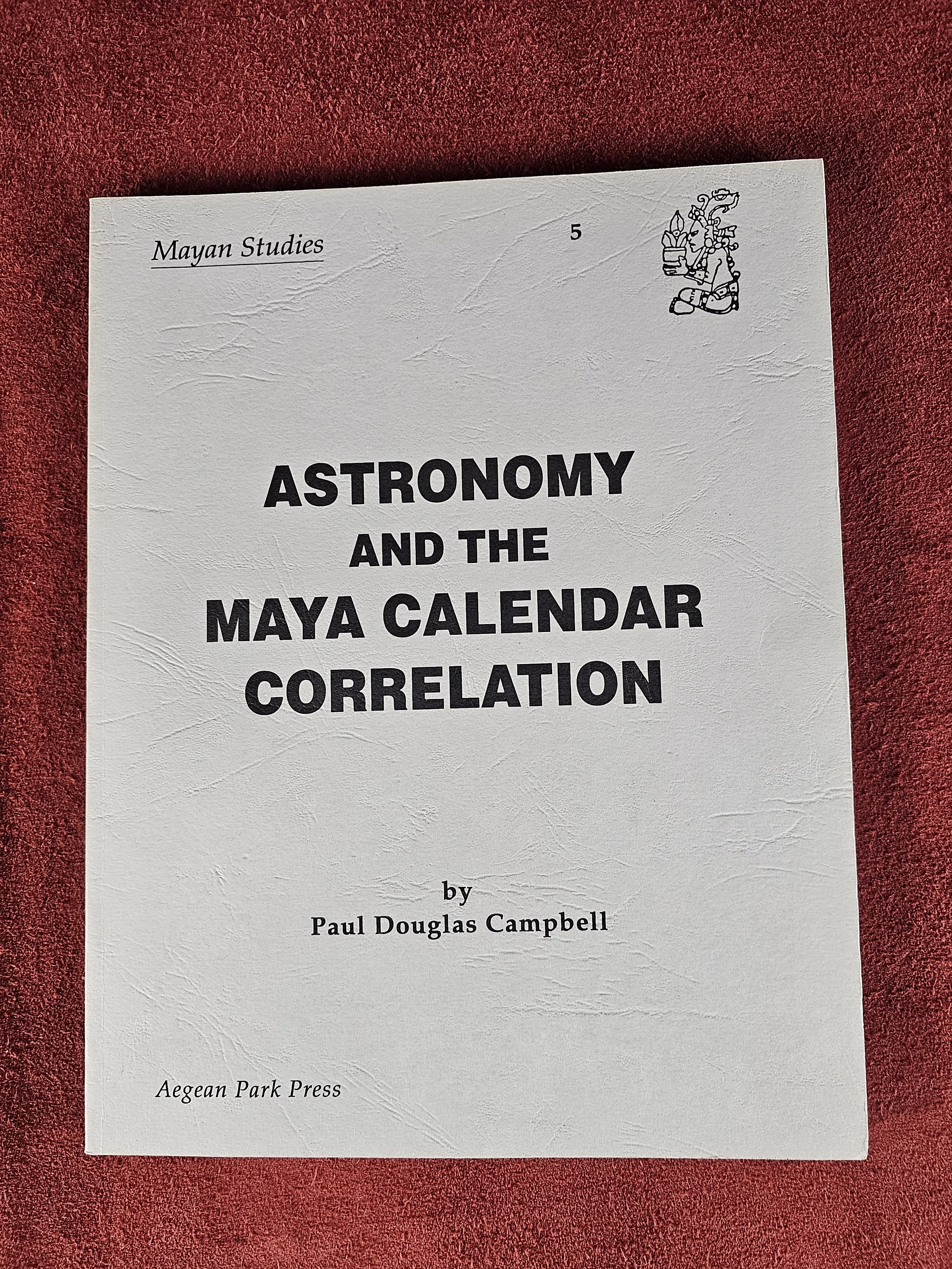
#4: Astronomy and the Maya Calendar Correlation by Paul Douglas Campbell (English)
The Dresden Codex — Collector’s Edition Set
The most sophisticated of the only four Maya books that survived the invasion: the 260-day count, the Venus table, the eclipse tables, and the great flood.
This set includes:
Collector’s facsimile, complete screenfold (3.56 m), plus a retouched color version, hardcover in a handmade numbered methacrylate case. Limited edition of 1,739.
The Dresden Codex: Drawings of the Pages and Commentary by Villacorta (Spanish)
Arqueología Mexicana special editions, Parts 1 & 2 (Spanish)
Astronomy and the Maya Calendar Correlation (English, rare, out of print)
FREE DVD: Breaking the Maya Code (1 hr 56 min)
Free shipping. Signature required.
NUMBERED LIMITED EDITION
COLLECTOR'S SET
The Dresden Codex — Collector’s Edition Set
The most sophisticated of the only four Maya books that survived the invasion: the 260-day count, the Venus table, the eclipse tables, and the great flood.
This set includes:
Collector’s facsimile, complete screenfold (3.56 m), plus a retouched color version, hardcover in a handmade numbered methacrylate case. Limited edition of 1,739.
The Dresden Codex: Drawings of the Pages and Commentary by Villacorta (Spanish)
Arqueología Mexicana special editions, Parts 1 & 2 (Spanish)
Astronomy and the Maya Calendar Correlation (English, rare, out of print)
FREE DVD: Breaking the Maya Code (1 hr 56 min)
Free shipping. Signature required.
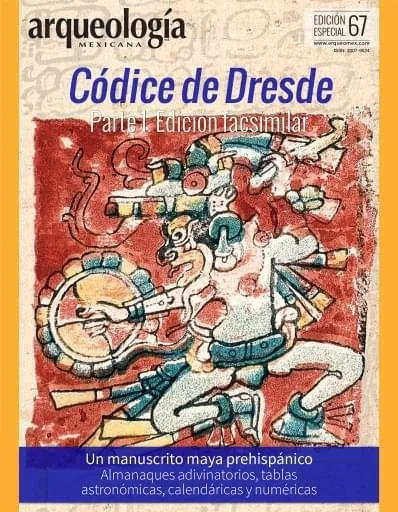
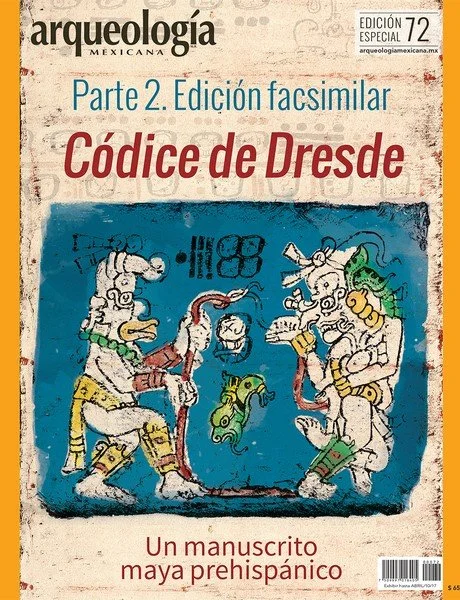
#3: Arqueología Mexicana Ediciones Especiales 67 & 72, Parts 1 & 2 (Spanish)
Codex Mendoza (Códice Mendocino)
with FREE DVD: Tlacuilo
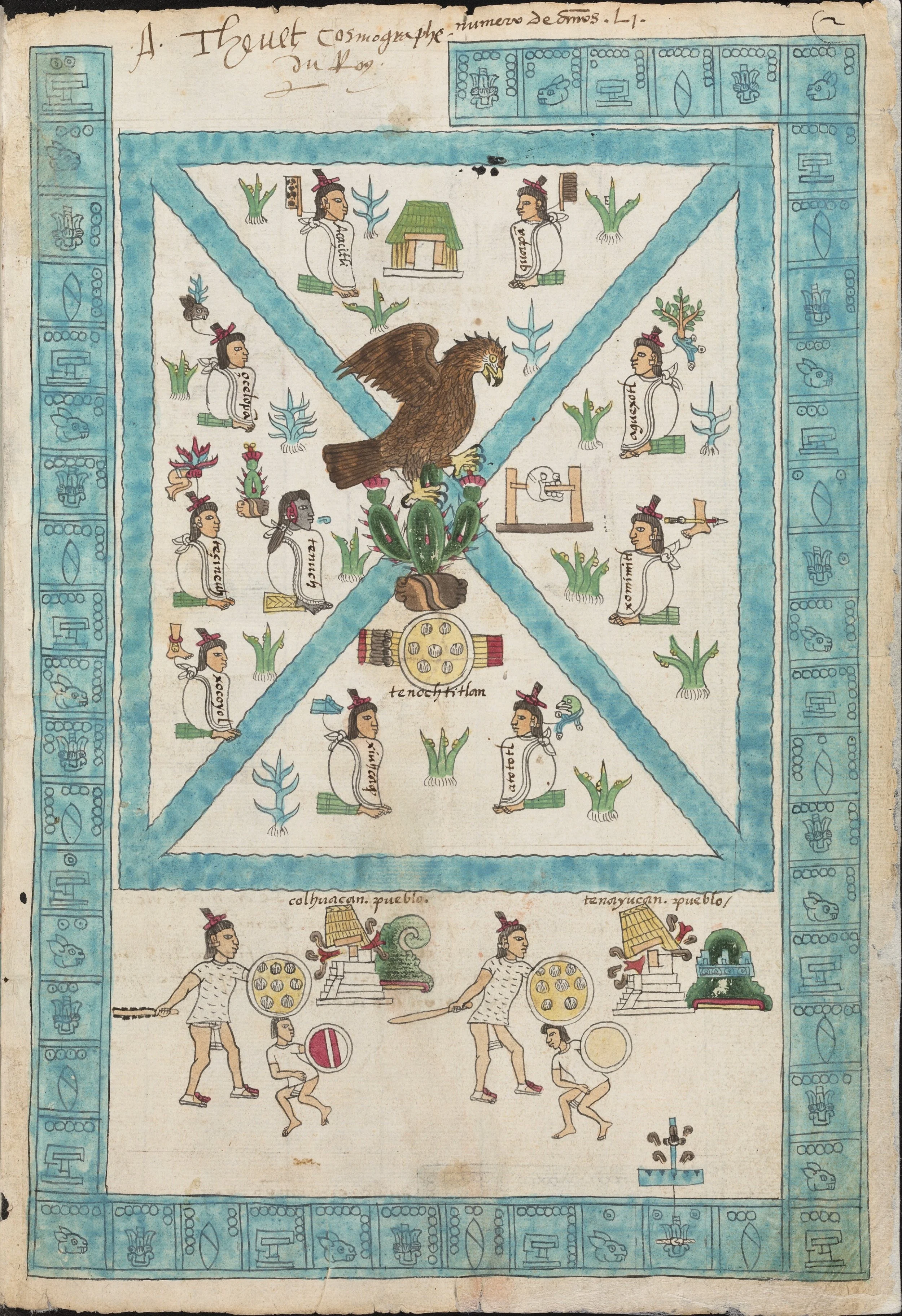
Codex Mendoza (Códice Mendocino) with FREE DVD: Tlacuilo
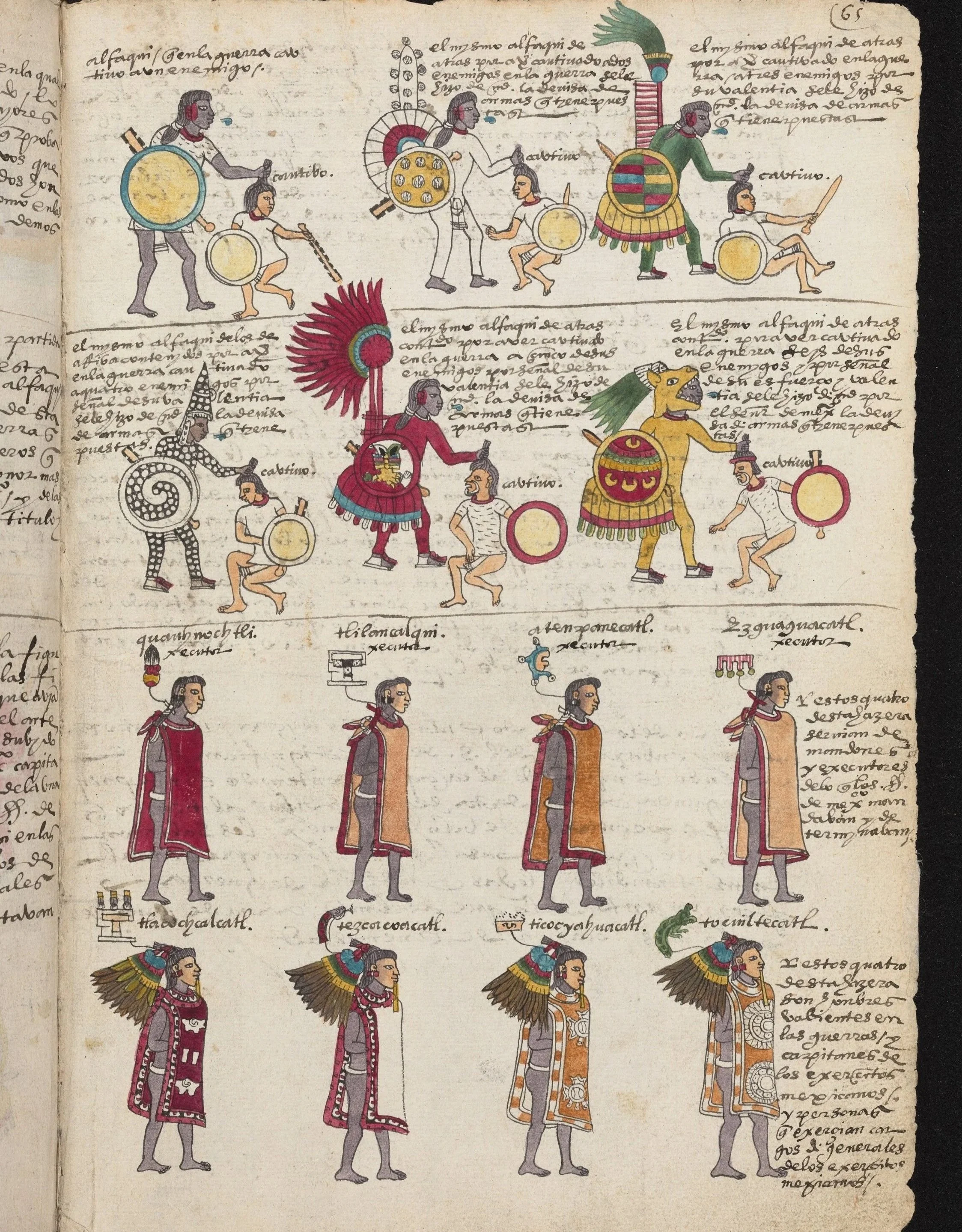
Painted around 1541, about twenty years after the Invasion, the Codex Mendoza was made by Mexihca tlacuiloque (painter-scribes) under orders from Antonio de Mendoza, the first Viceroy of New Spain. It was meant to be sent to Carlos V so the Crown could understand the world it had just Conquered and was now Taxing. Spanish glosses were written beside the images, but the painting itself is in the hand of our own people.
The codex has three parts:
History of Tenochtitlan. It opens with the famous founding scene, the eagle on the nopal in the middle of the lake, then records the reigns and conquests of the Huey Tlahtoque from Tenoch to Moctezuma Xocoyotzin.
Tribute. These pages give a province-by-province record of what flowed into Tenochtitlan: cotton mantas, cacao, feathers, jade, warrior suits, and more.
Daily Life. This is the rarest section of any surviving codex. It follows a Mexihca life from birth through childhood, education in the Telpochcalli and Calmecac, marriage, the path of the warrior and the priest, and the punishments and rewards of society.
The codex never reached Spain. French privateers captured the ship carrying it, and it passed through the hands of the French king’s cosmographer, then English collectors. It ended up at the Bodleian Library in Oxford, England, where it remains today, alongside the Codex Laud.
Included FREE: Tlacuilo (DVD documentary)
This film teaches the visual language of the tlacuilo, how meaning is built from glyphs, colors, numbers, and placement, using the Codex Mendoza as its guide. Watch it with the codex open in front of you and the pages start to speak.
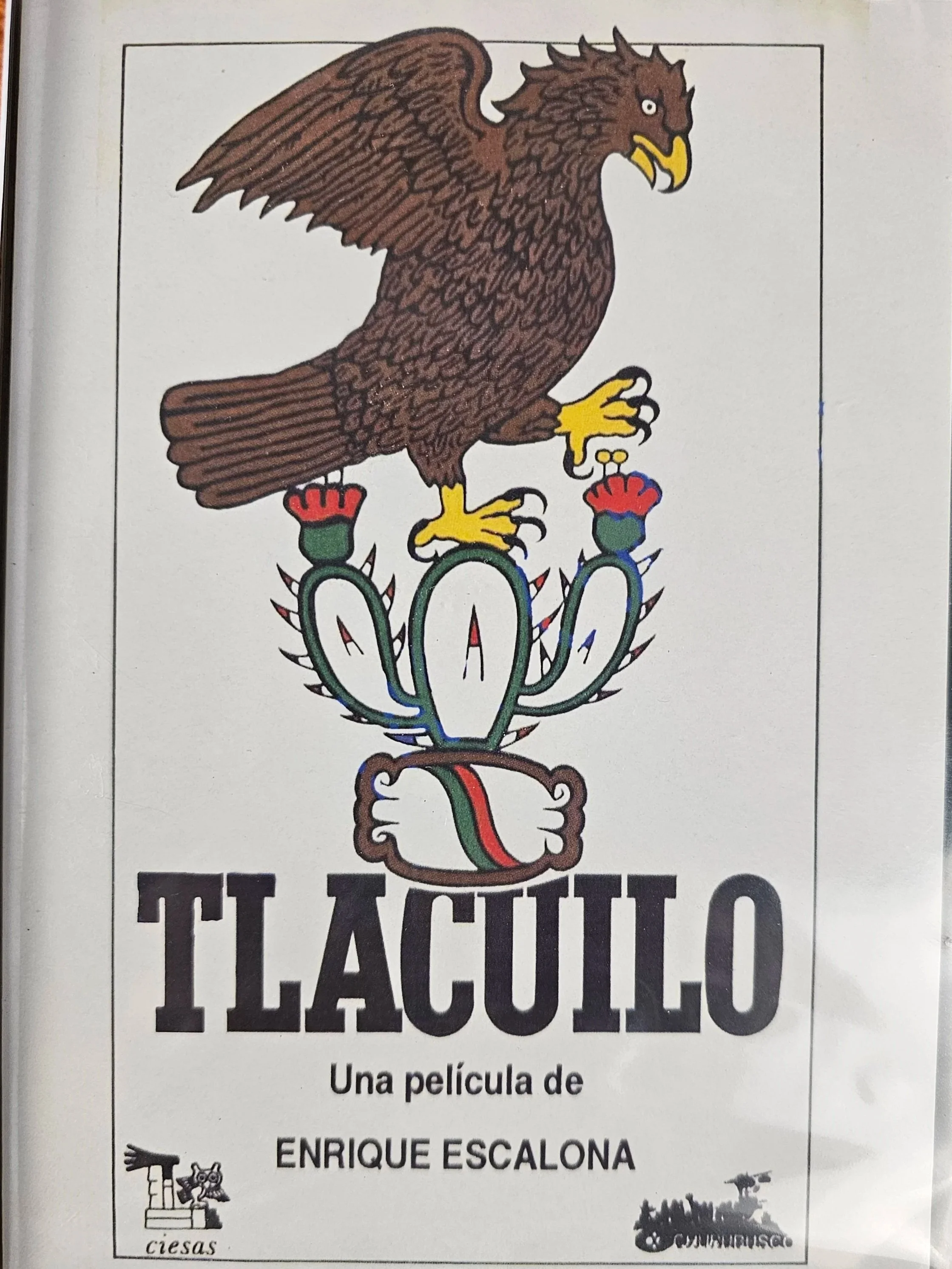
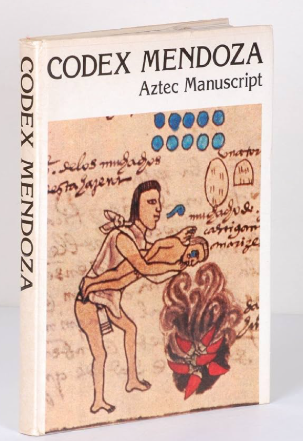
The most complete picture we have of daily life, tribute, and the rise of Mexihco-Tenochtitlan, painted by Mexihca tlacuiloque around 1541. Includes the documentary Tlacuilo, which teaches you how to read it.
Codex Tro-Cortesiano (Madrid Codex): Collector’s Facsimile & Free Companion Book
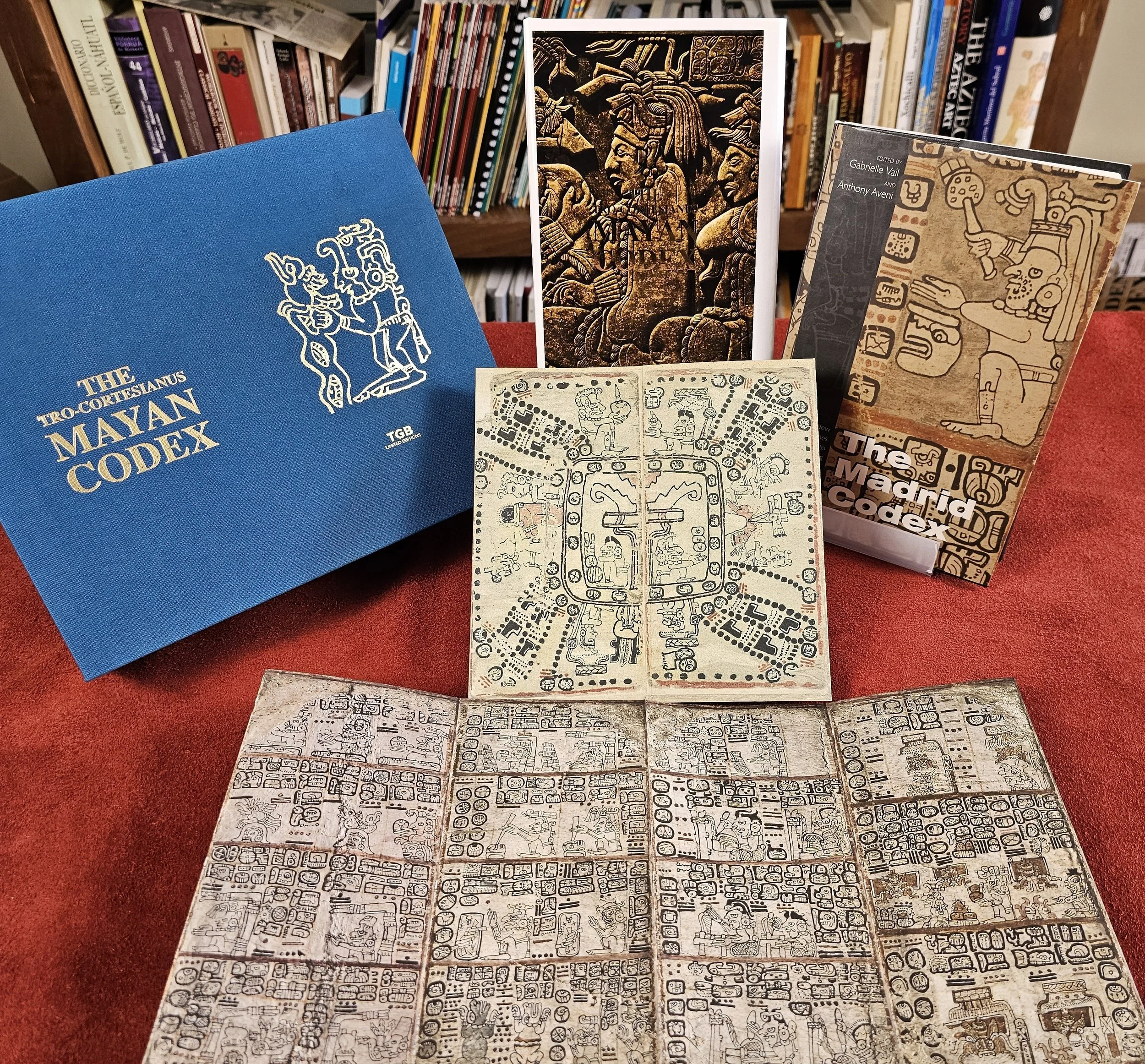
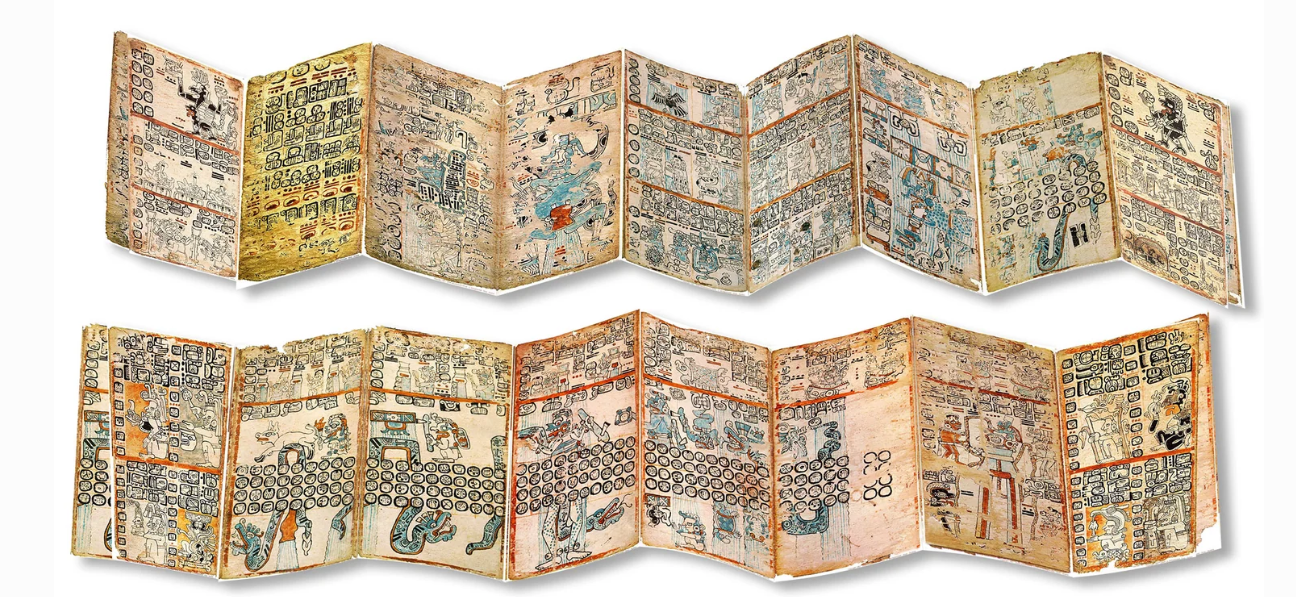
The Codex Tro-Cortesiano is the longest of the few Maya books that survived the Invasion. In 1562, Fray Diego de Landa Burned every Maya codex he could find at Maní, Yucatán. Only a handful made it through that and the centuries that followed, and this is the largest of them: 56 leaves painted on both sides, 112 pages in all.
Its name comes from its strange history. It surfaced in Spain in the 1860s in two separate pieces. One, the Troano, belonged to Juan Tro y Ortolano. The other, the Cortesianus, was believed to have been brought back by Hernán Cortés. In the 1880s, the French scholar Léon de Rosny showed they were two halves of the same book. Today it is held at the Museo de América in Madrid.
The codex is a working manual of the Maya calendar priests. It is built around the 260-day sacred count, the Tzolk’in, with almanacs for planting, rain, hunting, beekeeping, weaving, and the ceremonies of the New Year, along with the deities who governed each period. It is less polished than the Dresden Codex and was painted by several scribes over time, likely passed from priest to priest. It reads as a sacred tool that was meant to be used
This collector’s edition facsimile reproduces the codex in full, so you can study every page as the Maya priests did.
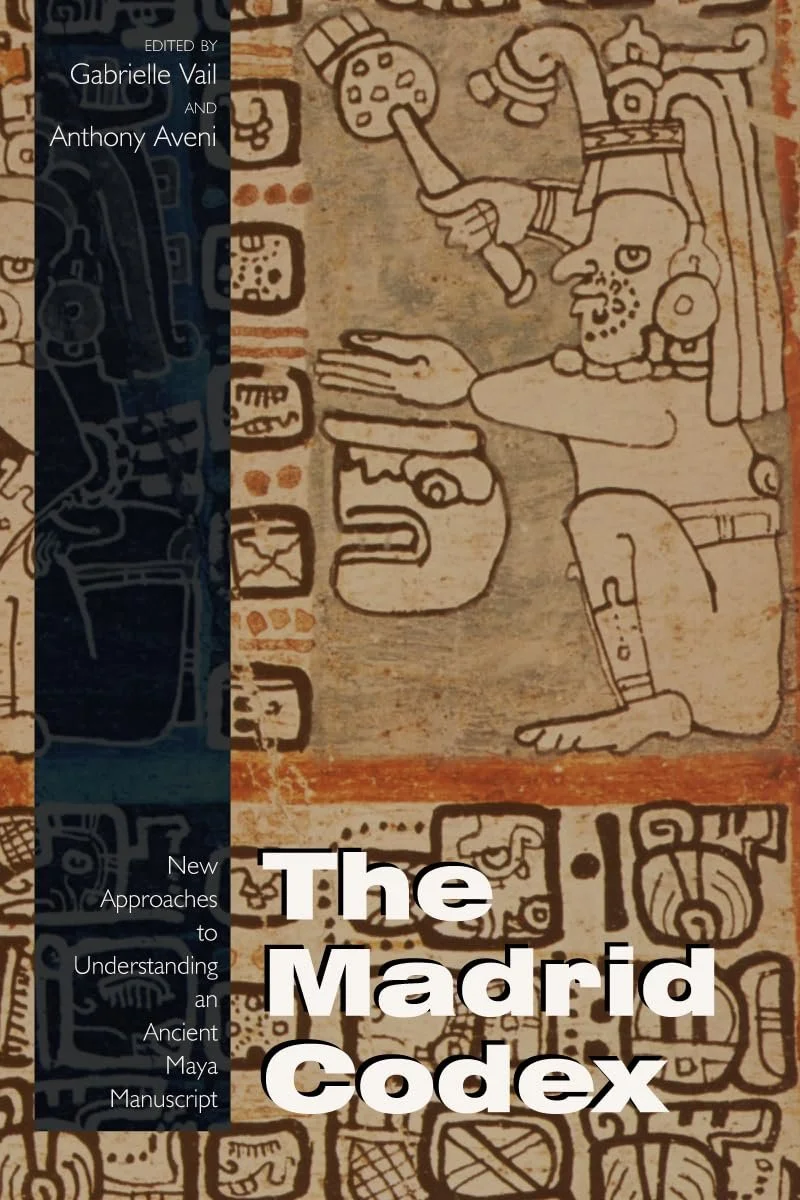
Included: The Madrid Codex: New Approaches to Understanding an Ancient Maya Manuscript,
edited by Gabrielle Vail and Anthony Aveni (in English)
Very little has ever been published on the Madrid Codex, in any language. This volume is the most complete study available in English and is increasingly hard to find. Leading Maya scholars examine the codex’s almanacs, astronomy, calendar structure, and the questions of when and where it was painted. Paired with the facsimile, this is a set most libraries don’t have.
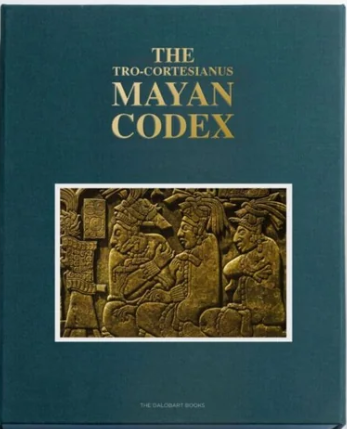
A collector’s edition facsimile of the longest surviving Maya book, with 112 painted pages of almanacs, rituals, and the 260-day sacred count, used by Maya calendar priests before the Invasion.
Includes: The Madrid Codex: New Approaches to Understanding an Ancient Maya Manuscript, edited by Gabrielle Vail and Anthony Aveni (in English), the most complete study of this codex available in English and increasingly hard to find.
MIXTECO CODEX SET
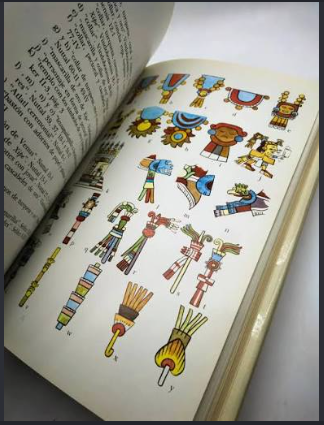
This is a Complete and Extremely Rare Mixtec Library Quality Set, and only two sets exist. It brings together five Mixtec codices in facsimile: the Bodley, the Tonindeye-Nuttall, the Colombino-Becker I, the Egerton, and the Becker II. Alongside them come the books that teach you to read them, including Alfonso Caso’s Reyes y Reinos de la Mixteca and the FCE study by Anders and Jansen. Several of these titles are out of print and nearly impossible to find, like the Dover Nuttall and the FCE Códices Mexicanos volumes. Most university libraries don’t hold this many Mixtec codices in one place. Once these three sets are gone, they can’t be rebuilt.
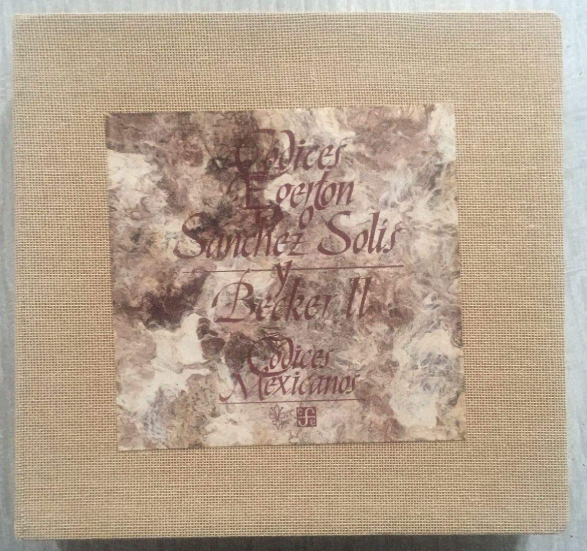
Video: the Becker codices in a full-size collector facsimile, the kind that sells for hundreds of Dollars. The Becker II in this set comes from the same tradition: the ADEVA/FCE Códices Mexicanos edition, printed in Austria and folded accordion-style like the original.
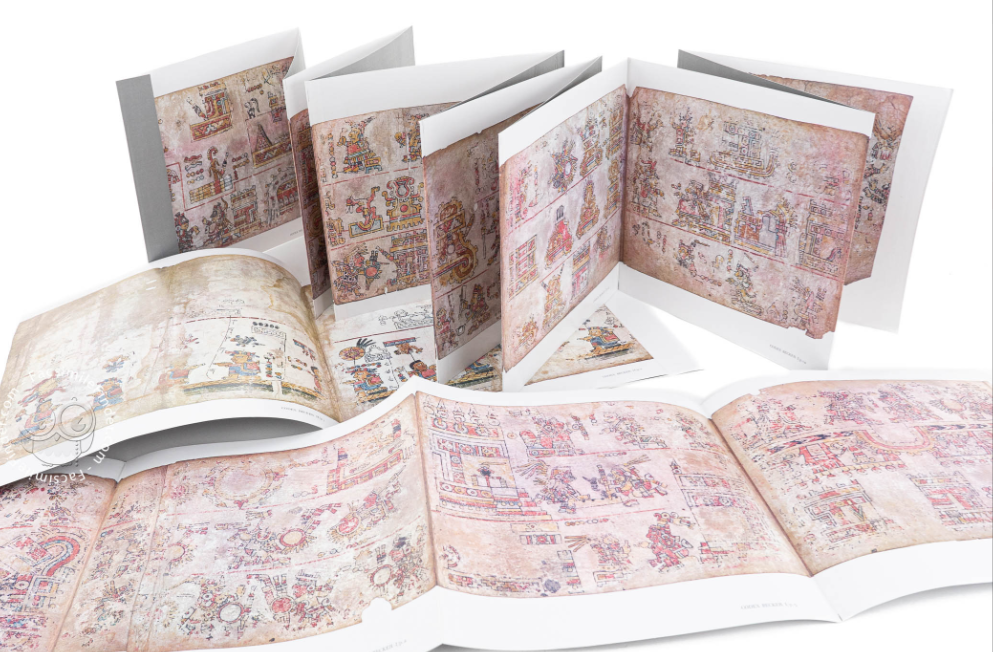
Codex Egerton (Sánchez Solís) and Codex Becker II
Códices Mexicanos IX: ADEVA/FCE Facsimile Edition (Out of Print)
Two Mixtec books, now held in two different countries, both written to answer the same question: who has the right to rule? In the Mixteca, power came through lineage and marriage, and these codices are the painted proof.
Codex Egerton (Sánchez Solís)
The Codex Egerton is a long strip of deerskin, made of six segments glued together and folded like a screen, painted on both sides. Page after page, it follows a Mixtec ruling dynasty through the generations. Each lord and lady are seated together on the mat of power, their names and birthdays written in glyphs, the place signs of their kingdom beside them. It is the yuhuitayu, the Mixtec kingdom built on the union of a royal couple, painted out across the centuries.
Later, alphabetic notes were added to the pages, showing the codex was still being read and used after the Invasion. Today the original is held at the British Library in London. The name “Sánchez Solís” comes from a 19th-century owner. Recent research working with Mixtec community elders has matched places in the codex to towns that still exist in Oaxaca today. The history it records never left the land.
Codex Becker II
The Becker II is a small fragment, only four painted pages, but it is one of the very few surviving genealogical codices of its kind. Scholars have traced it to the Mixteca Baja, possibly the town of Santos Reyes Yucuná. It records another Mixtec ruling line in the same tradition as the Egerton. It is held today at the Weltmuseum in Vienna, Austria. It is not related to the Colombino-Becker I despite the shared name, which comes from the same European collector.
This edition
This is the facsimile edition from the celebrated Códices Mexicanos series (Volume IX, 1994), co-published by Fondo de Cultura Económica and Akademische Druck- und Verlagsanstalt (ADEVA) of Graz, Austria, the house behind the world’s finest codex facsimiles. Both codices are reproduced in full color and folded accordion-style like the originals, presented in a cloth slipcase.
It includes the explanatory study La gran familia de los reyes mixtecos by Ferdinand Anders, Maarten Jansen, and Luis Reyes García, three of the leading scholars of Mesoamerican codices, who read the genealogies figure by figure and identify the people and places they record.
This edition is out of print and no longer available from the publisher. In Spanish.
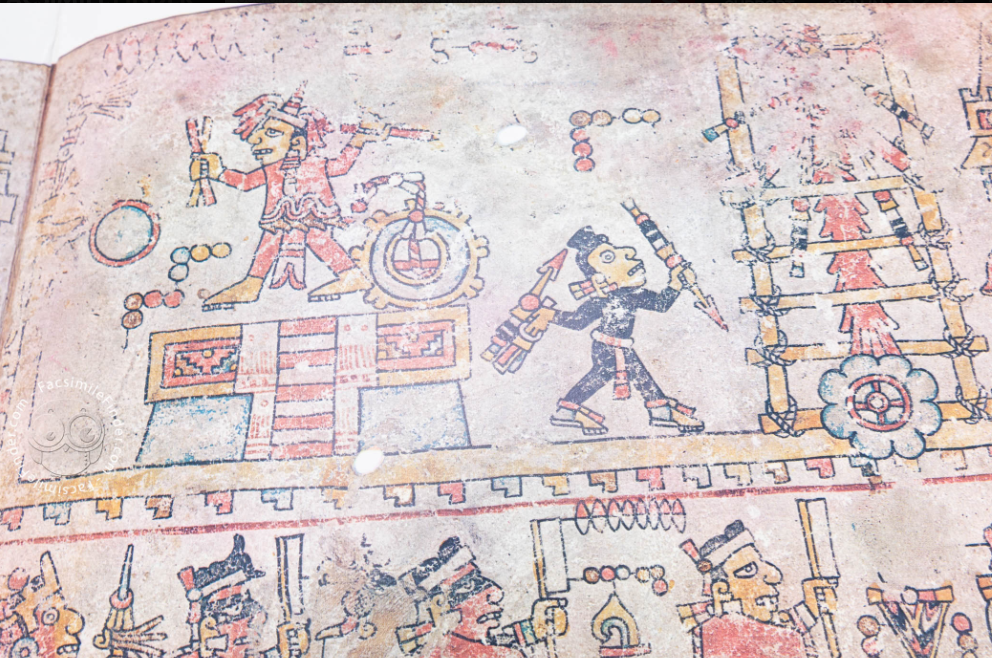
A complete Mixtec library. Only 3 sets available.
Five Mixtec codices in facsimile, together with the books that teach you to read them. All volumes are new.
The set includes:
Codex Bodley: hardcover facsimile with commentary by Maarten Jansen and Gabina Aurora Pérez Jiménez (English)
Codex Egerton (Sánchez Solís) and Codex Becker II: ADEVA/FCE Códices Mexicanos facsimile, folded like the originals, in its slipcase, with the study La gran familia de los reyes mixtecos by Anders, Jansen and Reyes García. Out of print. (Spanish)
Codex Tonindeye (Zouche-Nuttall): Dover facsimile edited by Zelia Nuttall, 86 full-color plates. Out of print. (English)
Codex Colombino-Becker I: Arqueología Mexicana special facsimile edition No. 74 (Spanish)
8 Venado, Garra de Jaguar: Arqueología Mexicana special edition No. 97 by Manuel A. Hermann Lejarazu (Spanish)
Ocho Venado, Garra de Jaguar: héroe de varios códices: Krystyna M. Libura, Ediciones Tecolote (Spanish)
Reyes y Reinos de la Mixteca: Alfonso Caso, Fondo de Cultura Económica (Spanish)
From the sacred dynasties of Tilantongo to the conquests of 8 Deer Jaguar Claw, these are the Mixtec people’s own painted histories, told in their own visual language.
New copies of the Codex Bodley alone sell for over $300. The ADEVA/FCE Egerton-Becker II is no longer available from the publisher. Once these three sets are gone, they can’t be rebuilt.
Free shipping. Ships via USPS with signature required.
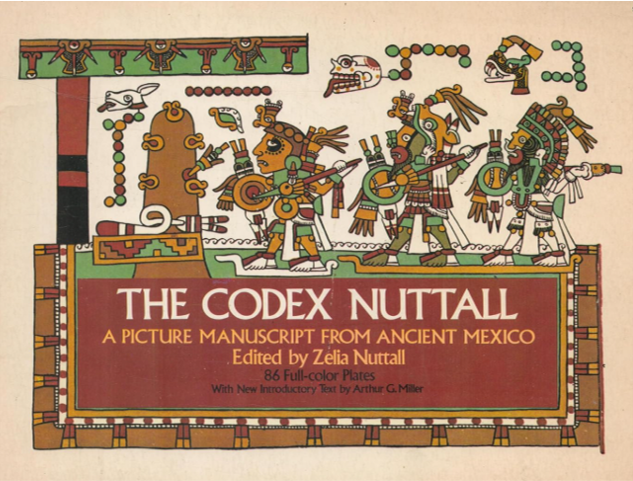
Codex Tonindeye (Zouche-Nuttall)
The Codex Tonindeye, better known as the Zouche-Nuttall, is one of the few Mixtec books that survived from before the Invasion, and it is one of the most beautiful codices ever painted. Tonindeye means “lineage history” in the Mixtec language. The name was restored by scholars to replace the names of the European owners it was given.
The codex has two sides. One records the genealogies and sacred histories of several Mixtec kingdoms. The other tells the life of 8 Deer Jaguar Claw: his rise, his alliances, his conquests, and his ceremonies, painted in vivid color with the energy of an epic.
The book traveled far from home. It turned up in a monastery in Florence, Italy, passed to the English Lord Zouche, and was first published by the archaeologist Zelia Nuttall in 1902. It is held today at the British Museum in London.
This edition: the Dover facsimile edited by Zelia Nuttall, with 86 full-color plates and an introduction by Arthur G. Miller. It is out of print and increasingly hard to find.
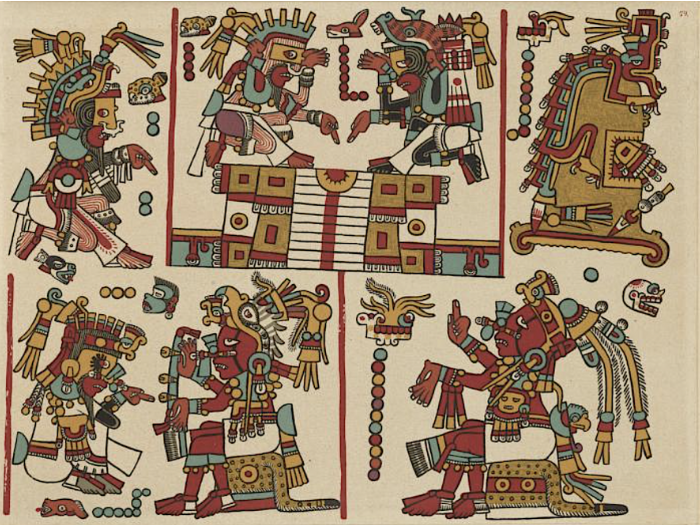
Video: the original codex in a full-size collector facsimile (not the edition included).
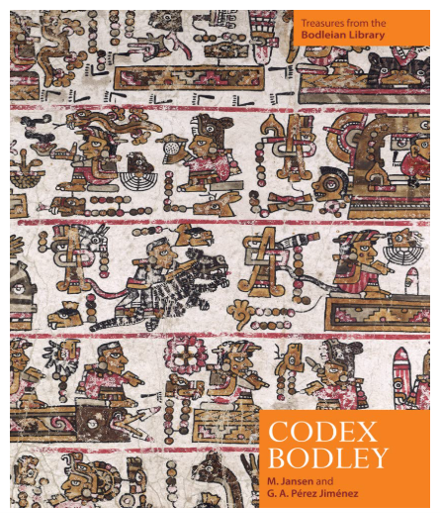
Codex Bodley
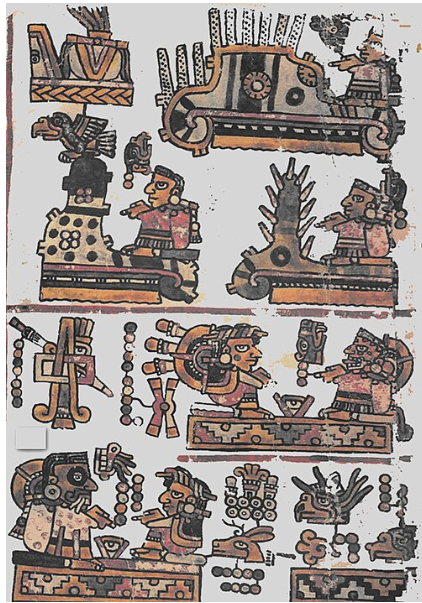
Spanning Mixtec history from 900 AD to 1521, the Codex Bodley is one of the most important Mixtec manuscripts in existence and a masterpiece of Ñuu Dzaui (Mixtec) history painting. It was painted on deerskin, folded like a screen, and read in a zigzag path across the page. It records the ruling dynasties of the Mixteca over centuries, centered on Tilantongo (Ñuu Tnoo), the most prestigious kingdom of the Mixteca Alta. The lineage runs from its sacred origins, through the era of 8 Deer Jaguar Claw, and down to the generations just before the Spanish Invasion.
Spanish chroniclers wrote from outside. The Bodley is the Mixtec nobility telling their own history in their own visual language: who married whom, which kingdoms were joined, who ruled, and who fell. It is held today at the Bodleian Library in Oxford, England.
This edition: the hardcover facsimile edited by Maarten Jansen and Gabina Aurora Pérez Jiménez. It presents the complete manuscript in a single illustrated volume for the first time, with commentary by two of the leading scholars of Mixtec writing. Pérez Jiménez is herself Ñuu Dzaui, so the reading comes from inside the culture.
A complete Mixtec library. Only 3 sets available.
Five Mixtec codices in facsimile, together with the books that teach you to read them. All volumes are new.
The set includes:
Codex Bodley: hardcover facsimile with commentary by Maarten Jansen and Gabina Aurora Pérez Jiménez (English)
Codex Egerton (Sánchez Solís) and Codex Becker II: ADEVA/FCE Códices Mexicanos facsimile, folded like the originals, in its slipcase, with the study La gran familia de los reyes mixtecos by Anders, Jansen and Reyes García. Out of print. (Spanish)
Codex Tonindeye (Zouche-Nuttall): Dover facsimile edited by Zelia Nuttall, 86 full-color plates. Out of print. (English)
Codex Colombino-Becker I: Arqueología Mexicana special facsimile edition No. 74 (Spanish)
8 Venado, Garra de Jaguar: Arqueología Mexicana special edition No. 97 by Manuel A. Hermann Lejarazu (Spanish)
Ocho Venado, Garra de Jaguar: héroe de varios códices: Krystyna M. Libura, Ediciones Tecolote (Spanish)
Reyes y Reinos de la Mixteca: Alfonso Caso, Fondo de Cultura Económica (Spanish)
From the sacred dynasties of Tilantongo to the conquests of 8 Deer Jaguar Claw, these are the Mixtec people’s own painted histories, told in their own visual language.
New copies of the Codex Bodley alone sell for over $300. The ADEVA/FCE Egerton-Becker II is no longer available from the publisher. Once these three sets are gone, they can’t be rebuilt.
Free shipping. Ships via USPS with signature required.
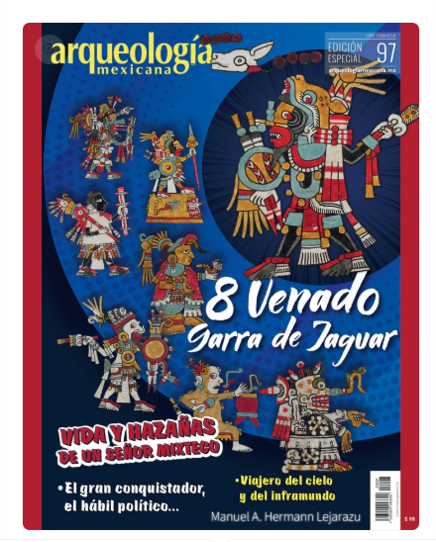
8 Deer Jaguar Claw ~ Companion Book
No figure in the Mixtec codices is better documented than 8 Deer Jaguar Claw. He was born to the second wife of a Tilantongo priest-lord, so he wasn’t first in line for anything. He made himself ruler of Tututepec on the coast, received a turquoise nose-piece from a Toltec ally that marked him as a supreme lord, and is credited with conquering around a hundred towns, uniting more of the Mixteca than anyone before him.
His rise came at a cost. He destroyed the family of Lady 6 Monkey of Jaltepec, one of the most powerful women in the codices, and then married her daughter, Lady 13 Serpent. Lady 6 Monkey’s surviving son, 4 Wind, grew up to avenge his family, and 8 Deer was captured and sacrificed in 1115. It is a story of ambition, alliance, betrayal, and revenge, told across several codices.
Included:
8 Venado, Garra de Jaguar, the Arqueología Mexicana special edition (No. 97) by Manuel A. Hermann Lejarazu, one of today’s leading specialists in Mixtec codices. It covers 8 Deer’s life, his journeys to the heavens and the underworld, and his career as conqueror and statesman.
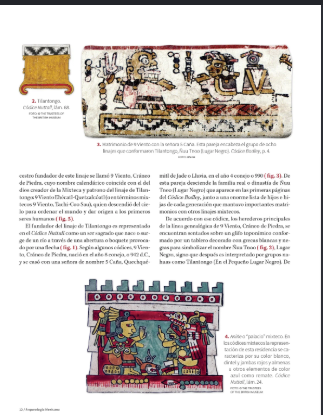
Prominent rulers
8 Deer Jaguar Claw: conqueror and unifier, whose biography fills the Tonindeye-Nuttall and the Colombino-Becker I.
Lady 6 Monkey of Jaltepec: a powerful ruler and warrior queen, and a rival to 8 Deer.
4 Wind: son of Lady 6 Monkey, who avenged his family and survived to rule.
Centers of power
Tilantongo (Ñuu Tnoo): the most prestigious kingdom of the Mixteca Alta, the highlands of Oaxaca.
Tututepec (Yucu Dzaa): the great kingdom of the Mixteca de la Costa, the Pacific coast, and 8 Deer’s first seat of power.
Ñuiñe (Mixteca Baja): the lowland region to the north and west, with its own kingdoms and its own writing tradition.
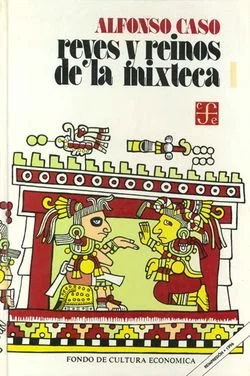
Reyes y Reinos de la Mixteca: Alfonso Caso
Alfonso Caso is the scholar who unlocked the Mixtec codices. In 1932 he excavated Tomb 7 at Monte Albán, the richest burial ever found in the Americas. He then proved that the Mixtec codices were real dynastic histories, not myths, by matching the rulers and places in the codices to known towns and colonial records. He also built the chronology that dates 8 Deer to 1063–1115.
Reyes y Reinos de la Mixteca (Fondo de Cultura Económica) is his life’s work. It is a comprehensive study of the kings, queens, and kingdoms recorded across the Mixtec codices, with a guide to reading their glyphs, names, dates, and place signs. It ties the whole set together. With it, the Bodley, Nuttall, and Colombino-Becker stop being beautiful pictures and become history you can read.
The Mixteca: Kingdoms and Rulers
The Mixtec world was not one empire. It was a network of independent kingdoms called yuhuitayu, a word that refers to the royal couple seated together on the mat of power. A kingdom was founded on the marriage of a lord and a lady, which is why women rulers appear so often in the codices. Marriage, alliance, and rivalry between these kingdoms drive the stories the codices tell.
A complete Mixtec library. Only 3 sets available.
Five Mixtec codices in facsimile, together with the books that teach you to read them. All volumes are new.
The set includes:
Codex Bodley: hardcover facsimile with commentary by Maarten Jansen and Gabina Aurora Pérez Jiménez (English)
Codex Egerton (Sánchez Solís) and Codex Becker II: ADEVA/FCE Códices Mexicanos facsimile, folded like the originals, in its slipcase, with the study La gran familia de los reyes mixtecos by Anders, Jansen and Reyes García. Out of print. (Spanish)
Codex Tonindeye (Zouche-Nuttall): Dover facsimile edited by Zelia Nuttall, 86 full-color plates. Out of print. (English)
Codex Colombino-Becker I: Arqueología Mexicana special facsimile edition No. 74 (Spanish)
8 Venado, Garra de Jaguar: Arqueología Mexicana special edition No. 97 by Manuel A. Hermann Lejarazu (Spanish)
Ocho Venado, Garra de Jaguar: héroe de varios códices: Krystyna M. Libura, Ediciones Tecolote (Spanish)
Reyes y Reinos de la Mixteca: Alfonso Caso, Fondo de Cultura Económica (Spanish)
From the sacred dynasties of Tilantongo to the conquests of 8 Deer Jaguar Claw, these are the Mixtec people’s own painted histories, told in their own visual language.
New copies of the Codex Bodley alone sell for over $300. The ADEVA/FCE Egerton-Becker II is no longer available from the publisher. Once these three sets are gone, they can’t be rebuilt.
Free shipping. Ships via USPS with signature required.
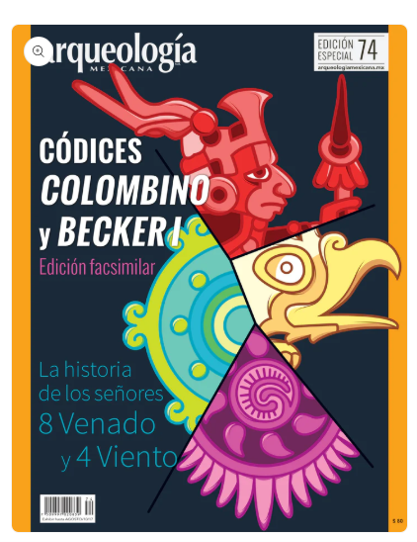
Codex Colombino-Becker I
The Colombino and the Becker I are two pieces of the same codex, torn apart and scattered across the ocean. The Colombino is held at the Museo Nacional de Antropología in Mexico City. The Becker I is in Vienna, Austria. Read together, they tell the story of 8 Deer Jaguar Claw (Iya Nacuaa Teyusi Ñaña, 1063–1115) from the perspective of the coast. 8 Deer first rose to power on the coast as ruler of Tututepec (Yucu Dzaa), then expanded inland to claim Tilantongo.
The codex records his alliances, his conquests, and the ceremony that made him a lord of the highest rank. The Becker I also carries the story past his death, showing the era that followed the fall of the greatest Mixtec conqueror.
The codex also carries the scars of its own history. During the colonial period, Mixtec towns brought the Colombino into land disputes as legal evidence, and scribes wrote place names over the ancient paintings to stake their claims. Parts of the original were scraped away. Even after the Invasion, the Mixtec people still knew how to read these books and used them to defend their land. The Colombino got its name centuries later, when it was shown at the 1892 exhibition commemorating Columbus. A sacred history of 8 Deer was renamed for the man whose arrival began the destruction of the world that made it.
This edition: the Arqueología Mexicana special facsimile edition (No. 74), Códices Colombino y Becker I, which reunites both pieces in one volume with commentary.
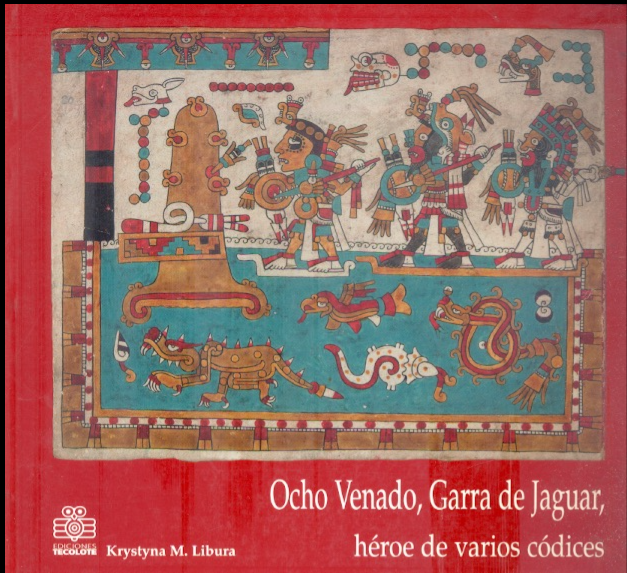
Ocho Venado, Garra de Jaguar: héroe de varios códices
Krystyna M. Libura (Ediciones Tecolote) ~
COMPANION BOOK
No single codex tells the whole story of 8 Deer Jaguar Claw. His life is scattered across several books, each painted by a different hand for a different kingdom. One shows his birth, another his conquests, another his death. Krystyna Libura puts the pieces back together. Using images taken directly from the codices, she follows 8 Deer from his birth in Tilantongo, through his rise on the coast at Tututepec, his alliance with the Toltec lord who pierced his nose and made him a supreme ruler, his conquests across the Mixteca, his war with the family of Lady 6 Monkey, and finally his capture and sacrifice. Each scene is shown in full color with a clear explanation of what is happening and how to read it: the names, the dates, the place signs, and the gestures. It’s the ideal companion to the Nuttall and the Colombino-Becker I. Read it first, then open the codices, and you’ll recognize 8 Deer, his allies, and his enemies as they move across the pages. It’s written in an accessible style without losing the scholarship, so it works for first-time readers of the codices and longtime students alike. In Spanish.
A complete Mixtec library. Only 3 sets available.
Five Mixtec codices in facsimile, together with the books that teach you to read them. All volumes are new.
The set includes:
Codex Bodley: hardcover facsimile with commentary by Maarten Jansen and Gabina Aurora Pérez Jiménez (English)
Codex Egerton (Sánchez Solís) and Codex Becker II: ADEVA/FCE Códices Mexicanos facsimile, folded like the originals, in its slipcase, with the study La gran familia de los reyes mixtecos by Anders, Jansen and Reyes García. Out of print. (Spanish)
Codex Tonindeye (Zouche-Nuttall): Dover facsimile edited by Zelia Nuttall, 86 full-color plates. Out of print. (English)
Codex Colombino-Becker I: Arqueología Mexicana special facsimile edition No. 74 (Spanish)
8 Venado, Garra de Jaguar: Arqueología Mexicana special edition No. 97 by Manuel A. Hermann Lejarazu (Spanish)
Ocho Venado, Garra de Jaguar: héroe de varios códices: Krystyna M. Libura, Ediciones Tecolote (Spanish)
Reyes y Reinos de la Mixteca: Alfonso Caso, Fondo de Cultura Económica (Spanish)
From the sacred dynasties of Tilantongo to the conquests of 8 Deer Jaguar Claw, these are the Mixtec people’s own painted histories, told in their own visual language.
New copies of the Codex Bodley alone sell for over $300. The ADEVA/FCE Egerton-Becker II is no longer available from the publisher. Once these three sets are gone, they can’t be rebuilt.
Free shipping. Ships via USPS with signature required.
Codex Telleriano-Remensis Ritual, Divination & History Facsimile Edition
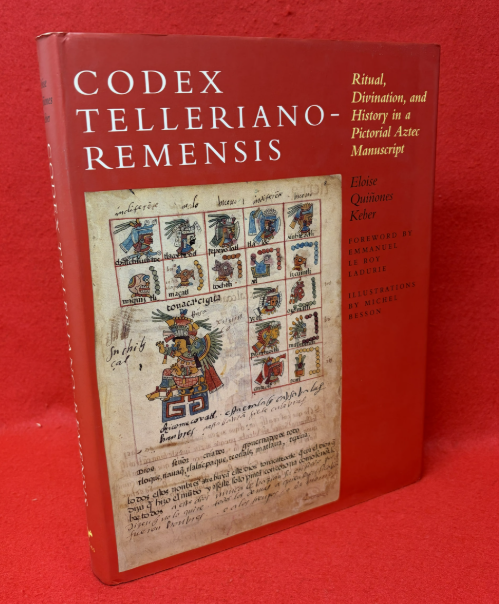
One of the finest surviving examples of Mexihca manuscript painting. It holds the Xiuhpohualli (the 18 veintenas), the Tonalamatl, and a pictorial history of Mexihca migration and settlement. Full facsimile with English translation of the Spanish glosses and scholarly commentary. Original held at the Bibliothèque nationale de France, Paris.
The Codex Telleriano-Remensis was painted in Mexihco in the mid-16th century, in the decades after the Invasion. Tlacuiloque trained in the Indigenous painting tradition made it on European paper, and Spanish friars later added notes in the margins. That makes it a rare record of both worlds: Indigenous knowledge set down in Indigenous images, with the colonizers’ attempts to explain it written alongside.
It’s named after Charles-Maurice Le Tellier, Archbishop of Reims, who owned it in the late 1600s. The original is now held at the Bibliothèque nationale de France in Paris as Manuscrit Mexicain 385.
Three sections, three layers of knowledge:
The Xiuhpohualli. The 365-day count and its eighteen veintenas (20-day periods), with the ceremonies tied to each.
The Tonalamatl. The 260-day count, organized by trecenas, with the Symbols and guardian forces of each 13-day period.
The Annals. A year-by-year pictorial history covering the Mexihca migration, the founding of Tenochtitlan, the succession of Tlahtoqueh, and the arrival of the Spanish. Events are recorded in Mexihca glyphs. Among them are the earliest written records of earthquakes in the Americas.
About this edition:
A complete full-color facsimile of the codex, with a full English translation of its Spanish annotations and extensive commentary by art historian Eloise Quiñones Keber (University of Texas Press, Austin, 1995). It’s a large, heavy hardcover, long out of print and hard to find.
Good for: students of the Tonalamatl and Xiuhpohualli, researchers, educators, danzantes, and anyone serious about Mexihca knowledge in its own visual language.
Limited availability. Ships free, signature required.
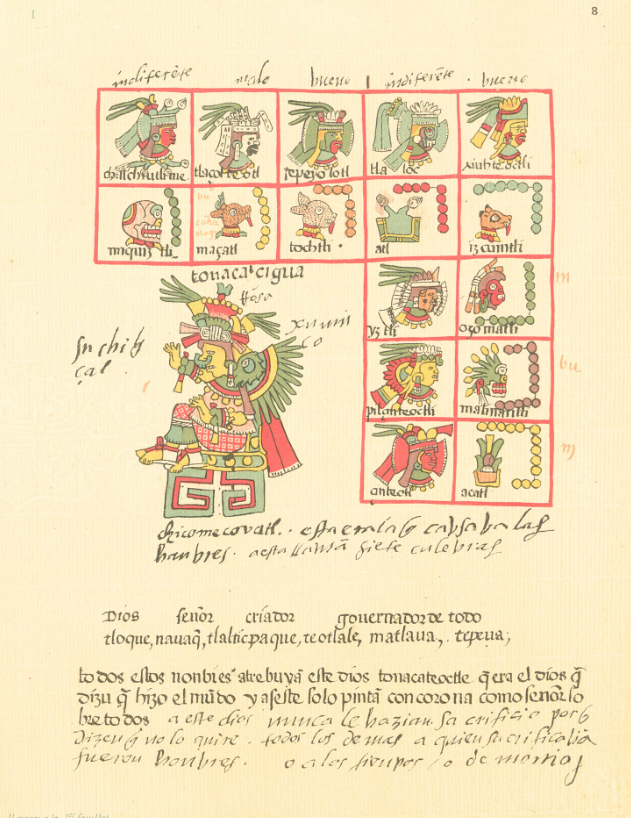
1. Tonacatecuhtli The First Trecena
Tonacatecuhtli opens the Tonalamatl at Ce (1) Cipactli. Below, the friars labeled him “creator and governor of all,” forcing him into their idea of God.
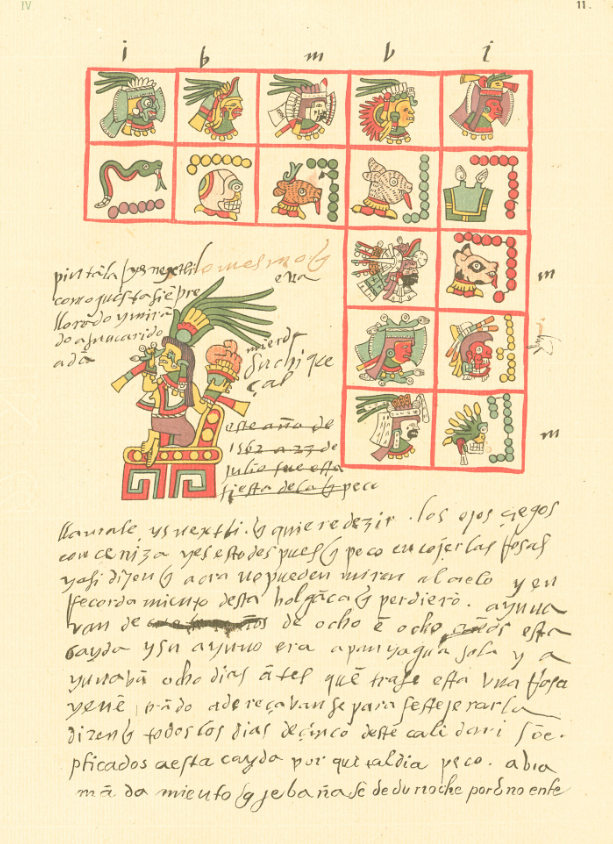
2. Xochiquetzal Trecena— Recast by the Friars
Xochiquetzal presides over this trecena. A Spanish friar glossed her as “Ixnextli,” eyes blinded with ash, and tried to recast her as the Biblical Eve, a clear example of the colonizers forcing Mexihca knowledge into their own framework. A note dated 1562 appears beneath her.
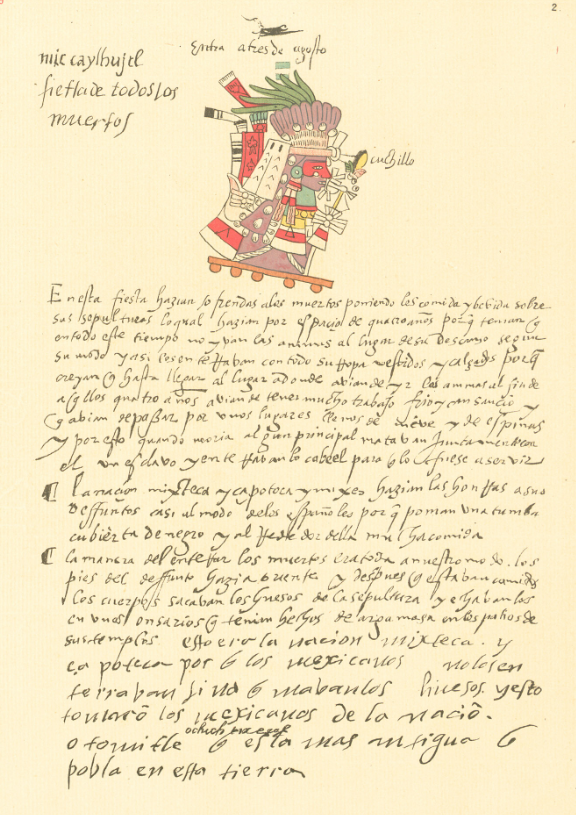
3. Miccailhuitl — The Feast of the Dead
Xiuhpohualli: Miccailhuitl, the feast of the dead, when offerings of food and drink were placed on graves. These are the roots of honoring our dead, long before the Invasion.
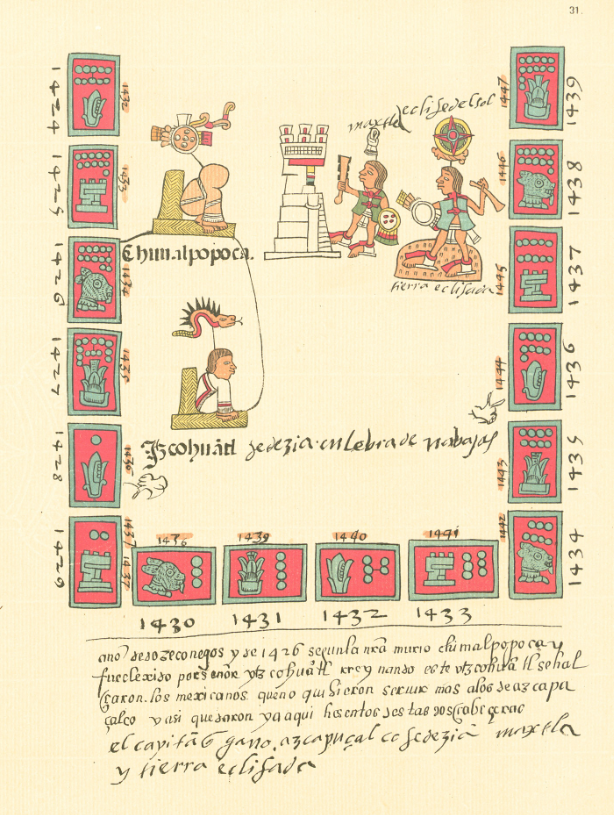
4.The Annals — Itzcoatl Rises in Tenochtitlan
The Annals: the years 1430s in Mexihca year glyphs, recording Chimalpopoca and Itzcoatl’s rise as Tlahtoani of Tenochtitlan.