🔴 TLATLAUHQUI TEZCATLIPOCA — XIPE TOTEC
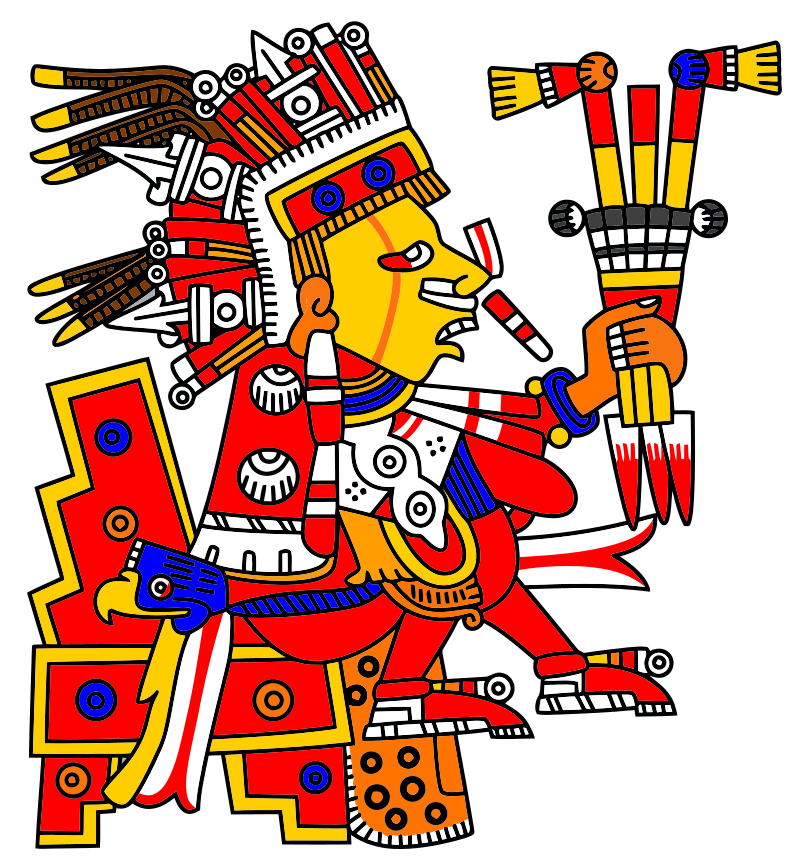
XIPE TOTEC CODEX BORGIA
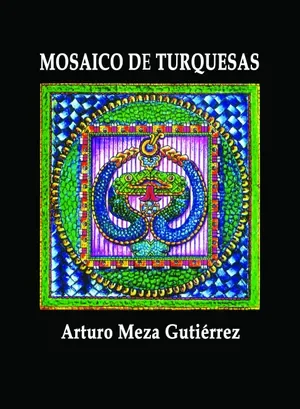
THIS BOOK IS WRITTEN IN SPANISH. WORKING ON ENGLISH TRANSLATION.
Huey Tlahtokan Notes
Mosaico de Turquesas is the foundational text of Mexica philosophical and scientific thought in the modern era. In twenty rigorously researched chapters, Maestro Arturo Meza Gutiérrez dismantles five centuries of colonial mistranslation and reveals the authentic cosmological framework of the ancient Mexica — not as mythology or religion, but as a complete and sophisticated science of existence. At its core is Ometeotl, the dual generating principle, and the Nahui Tezcatlipoca — the four cosmic functions that ancient Mesoamerican civilization studied, encoded, and applied across every field of human knowledge, from psychology and medicine to astronomy and mathematics.
The chapters move through this system piece by piece: the dual expression of Huehuetlahtolli (the ancient word), Tlaltecuhtli and Tlalcihuatl as Father-Mother Earth, the transmuting nature of duality itself, Mictlan and Moyocoyani as expressions of Ometeotl, Tloquenahuaque as the ordering of time and space, and the feminine essence carried through Xochiquetzalli, Chantico, and Mayahuel — closing on the mosaic of turquoise itself as the ancestral thread binding the whole system together. Written as a direct companion to Meza's earlier Cauhpohualli, the two works together form the fuller architecture underlying everything he wrote afterward, including Mosaico de Jade.
This is not an introductory text — it rewards the serious reader who is ready to encounter one of the most profound knowledge systems ever developed by human civilization, presented in its own language, its own logic, and its own scientific precision. Required reading for anyone seeking to understand the true intellectual heritage of Indigenous Mexico beyond the distortions of conquest.
From the Publisher
Mosaico de Turquesas reveals the essence of Nature and of the Human Being from the perspective of the native Philosophy of Duality. From this, Ometeotl is recognized as the Supreme Principle, masculine and feminine, the Father and Mother of all that exists, giving rise to the Laws of the Universe and the Laws of Life of the Prehispanic Peoples. From Ometeotl unfold the four Tezcatlipocas: the Dark, the Red, the Blue called Huitzilopochtli, and the White called Quetzalcoatl.
272 páginas.
Descripción (Español):
Notas de Huey Tlahtokan (Heading 4)
Mosaico de Turquesas es el texto fundacional del pensamiento filosófico y científico mexica en la era moderna. En veinte capítulos rigurosamente investigados, el Maestro Arturo Meza Gutiérrez desmonta cinco siglos de mala traducción colonial y revela el auténtico marco cosmológico de los antiguos mexicas — no como mitología ni religión, sino como una ciencia completa y sofisticada de la existencia. En su núcleo está Ometeotl, el principio dual generador, y el Nahui Tezcatlipoca — las cuatro funciones cósmicas que la antigua civilización mesoamericana estudió, codificó y aplicó a través de todos los campos del conocimiento humano, desde la psicología y la medicina hasta la astronomía y las matemáticas.
Los capítulos recorren este sistema pieza por pieza: la expresión dual del Huehuetlahtolli (la palabra antigua), Tlaltecuhtli y Tlalcihuatl como Padre-Madre Tierra, la naturaleza transmutadora de la dualidad misma, Mictlan y Moyocoyani como expresiones de Ometeotl, Tloquenahuaque como el ordenamiento del tiempo y el espacio, y la esencia femenina presente en Xochiquetzalli, Chantico y Mayahuel — cerrando con el mosaico de turquesas mismo como el hilo ancestral que une todo el sistema. Escrito como complemento directo del Cauhpohualli anterior de Meza, ambas obras forman en conjunto la arquitectura más completa que sustenta todo lo que escribió después, incluyendo Mosaico de Jade.
Este no es un texto introductorio — recompensa al lector serio que está listo para encontrarse con uno de los sistemas de conocimiento más profundos jamás desarrollados por la civilización humana, presentado en su propio idioma, su propia lógica y su propia precisión científica. Lectura obligada para quien busca comprender la verdadera herencia intelectual del México indígena más allá de las distorsiones de la conquista.
De la Editorial
La obra Mosaico de Turquesas revela la esencia de la Naturaleza y del Ser Humano desde el punto de vista de la Filosofía autóctona de la Dualidad. De ello, se reconoce que Ometeotl es el Principio Supremo masculino y femenino, es el Padre y la Madre de todo lo existente, dando origen a las Leyes del Universo y a las Leyes de la Vida de los Pueblos Prehispánicos. De Ometeotl se desdoblan los cuatro Tezcatlipoca: el Obscuro, el Rojo, el Azul llamado Huitzilopochtli y el Blanco llamado Quetzalcoatl.
NEW INVENTORY COMING SOON
MEDICINE
The Red Tezcatlipoca is not a god of war or sacrifice. He is the force that brings order and coherence to everything that takes form in the universe — from the largest stellar structures to the smallest particle of matter. Tlatlauhqui is the science of cycles, transformation, and renewal.
Every tree sheds its bark. Every season turns. Every human being carries the capacity to shed what no longer serves and emerge renewed. Xipe Totec — Our Lord Who Changes Skin — is not a flaying ritual. It is the most universal law in nature encoded as science.

ACER GRISEUM THE PAPERBARK PEELING MAPLE TREE
The outer bark peels away revealing living bark beneath — the same cyclical renewal that Xipe Totec encodes. This is not mythology.
This is biology.
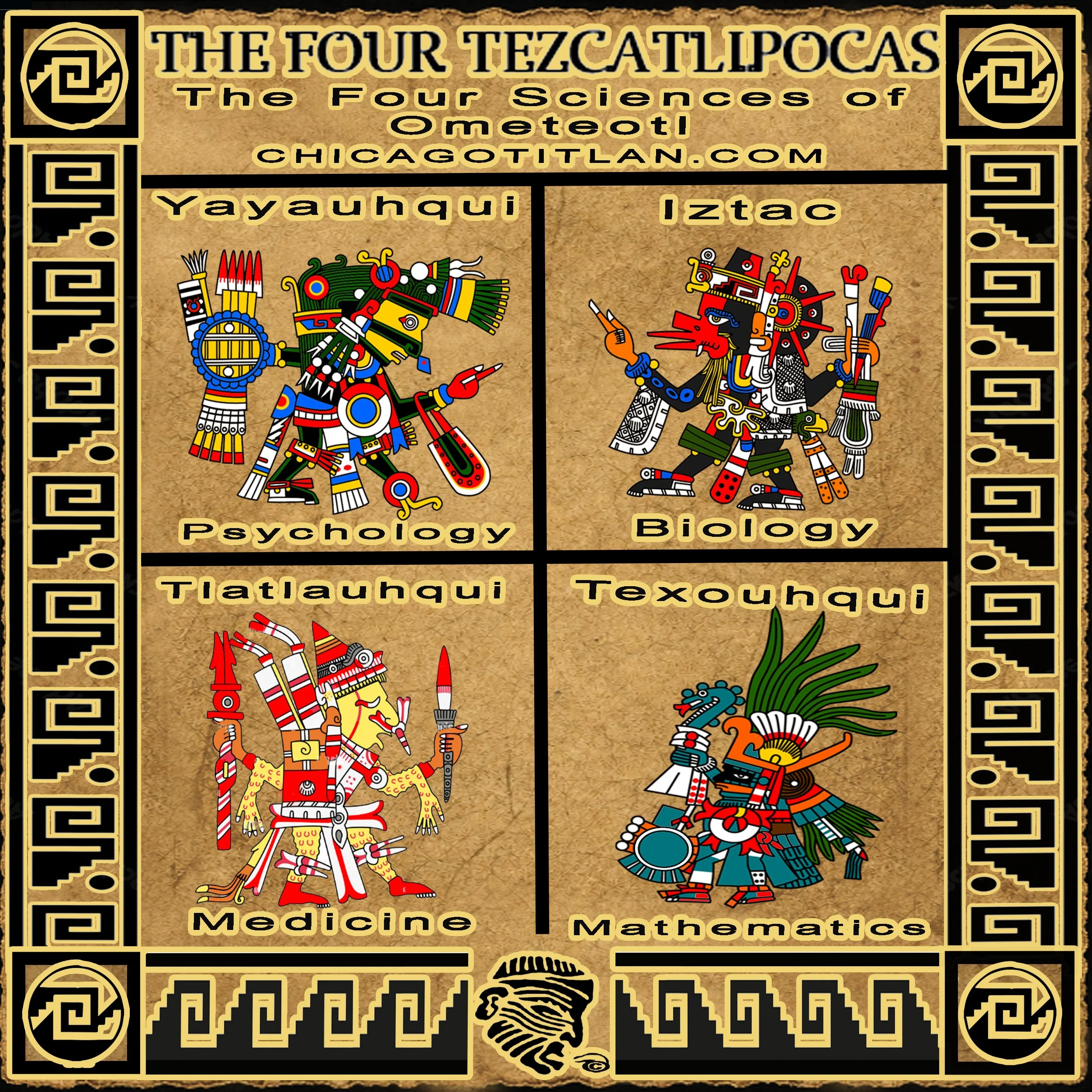
Biology, Psychology, Medicine, and Mathematics — the four sciences the Mexihca encoded into every direction of life, expanded far beyond what any single page can hold.
This booklet is the full research behind the Four Tezcatlipocas: Iztac (Biology), Yayauhqui (Psychology), Tlatlauhqui (Medicine), and Texouhqui (Mathematics). Drawing on the scholarship of Maestro Meza Gutiérrez and cross-referenced against the codices — Borgia, Borbónico, Vaticano B, Cospi — this is the source material, not a summary of it.
Inside, each Symbol gets its own deep breakdown: its color, its direction, its function, and the science behind it — from the biology of Quetzalcoatl to the astronomy of Mixcoatl to the birth of dentistry under Tlatlauhqui. No mistranslations, no "gods" — this is the scientific framework as the Mexihca built it, restored.
Delivered instantly as a PDF download. 38 pages. ENGLISH VERSION. Download and save your file right away. Your link expires 24 hours after your first download.
By Alberto A. Cuauhtlequezqui Lopez, Huey Tlahtokan · La Gran Palabra · ChicagoAztlan © 2004–2026
THIS BOOK IS WRITTEN IN SPANISH. WORKING ON ENGLISH TRANSLATION.
Huey Tlahtokan Notes
Mosaico de Turquesas is the foundational text of Mexica philosophical and scientific thought in the modern era. In twenty rigorously researched chapters, Maestro Arturo Meza Gutiérrez dismantles five centuries of colonial mistranslation and reveals the authentic cosmological framework of the ancient Mexica — not as mythology or religion, but as a complete and sophisticated science of existence. At its core is Ometeotl, the dual generating principle, and the Nahui Tezcatlipoca — the four cosmic functions that ancient Mesoamerican civilization studied, encoded, and applied across every field of human knowledge, from psychology and medicine to astronomy and mathematics.
The chapters move through this system piece by piece: the dual expression of Huehuetlahtolli (the ancient word), Tlaltecuhtli and Tlalcihuatl as Father-Mother Earth, the transmuting nature of duality itself, Mictlan and Moyocoyani as expressions of Ometeotl, Tloquenahuaque as the ordering of time and space, and the feminine essence carried through Xochiquetzalli, Chantico, and Mayahuel — closing on the mosaic of turquoise itself as the ancestral thread binding the whole system together. Written as a direct companion to Meza's earlier Cauhpohualli, the two works together form the fuller architecture underlying everything he wrote afterward, including Mosaico de Jade.
This is not an introductory text — it rewards the serious reader who is ready to encounter one of the most profound knowledge systems ever developed by human civilization, presented in its own language, its own logic, and its own scientific precision. Required reading for anyone seeking to understand the true intellectual heritage of Indigenous Mexico beyond the distortions of conquest.
From the Publisher
Mosaico de Turquesas reveals the essence of Nature and of the Human Being from the perspective of the native Philosophy of Duality. From this, Ometeotl is recognized as the Supreme Principle, masculine and feminine, the Father and Mother of all that exists, giving rise to the Laws of the Universe and the Laws of Life of the Prehispanic Peoples. From Ometeotl unfold the four Tezcatlipocas: the Dark, the Red, the Blue called Huitzilopochtli, and the White called Quetzalcoatl.
272 páginas.
Descripción (Español):
Notas de Huey Tlahtokan (Heading 4)
Mosaico de Turquesas es el texto fundacional del pensamiento filosófico y científico mexica en la era moderna. En veinte capítulos rigurosamente investigados, el Maestro Arturo Meza Gutiérrez desmonta cinco siglos de mala traducción colonial y revela el auténtico marco cosmológico de los antiguos mexicas — no como mitología ni religión, sino como una ciencia completa y sofisticada de la existencia. En su núcleo está Ometeotl, el principio dual generador, y el Nahui Tezcatlipoca — las cuatro funciones cósmicas que la antigua civilización mesoamericana estudió, codificó y aplicó a través de todos los campos del conocimiento humano, desde la psicología y la medicina hasta la astronomía y las matemáticas.
Los capítulos recorren este sistema pieza por pieza: la expresión dual del Huehuetlahtolli (la palabra antigua), Tlaltecuhtli y Tlalcihuatl como Padre-Madre Tierra, la naturaleza transmutadora de la dualidad misma, Mictlan y Moyocoyani como expresiones de Ometeotl, Tloquenahuaque como el ordenamiento del tiempo y el espacio, y la esencia femenina presente en Xochiquetzalli, Chantico y Mayahuel — cerrando con el mosaico de turquesas mismo como el hilo ancestral que une todo el sistema. Escrito como complemento directo del Cauhpohualli anterior de Meza, ambas obras forman en conjunto la arquitectura más completa que sustenta todo lo que escribió después, incluyendo Mosaico de Jade.
Este no es un texto introductorio — recompensa al lector serio que está listo para encontrarse con uno de los sistemas de conocimiento más profundos jamás desarrollados por la civilización humana, presentado en su propio idioma, su propia lógica y su propia precisión científica. Lectura obligada para quien busca comprender la verdadera herencia intelectual del México indígena más allá de las distorsiones de la conquista.
De la Editorial
La obra Mosaico de Turquesas revela la esencia de la Naturaleza y del Ser Humano desde el punto de vista de la Filosofía autóctona de la Dualidad. De ello, se reconoce que Ometeotl es el Principio Supremo masculino y femenino, es el Padre y la Madre de todo lo existente, dando origen a las Leyes del Universo y a las Leyes de la Vida de los Pueblos Prehispánicos. De Ometeotl se desdoblan los cuatro Tezcatlipoca: el Obscuro, el Rojo, el Azul llamado Huitzilopochtli y el Blanco llamado Quetzalcoatl.
NEW INVENTORY COMING SOON
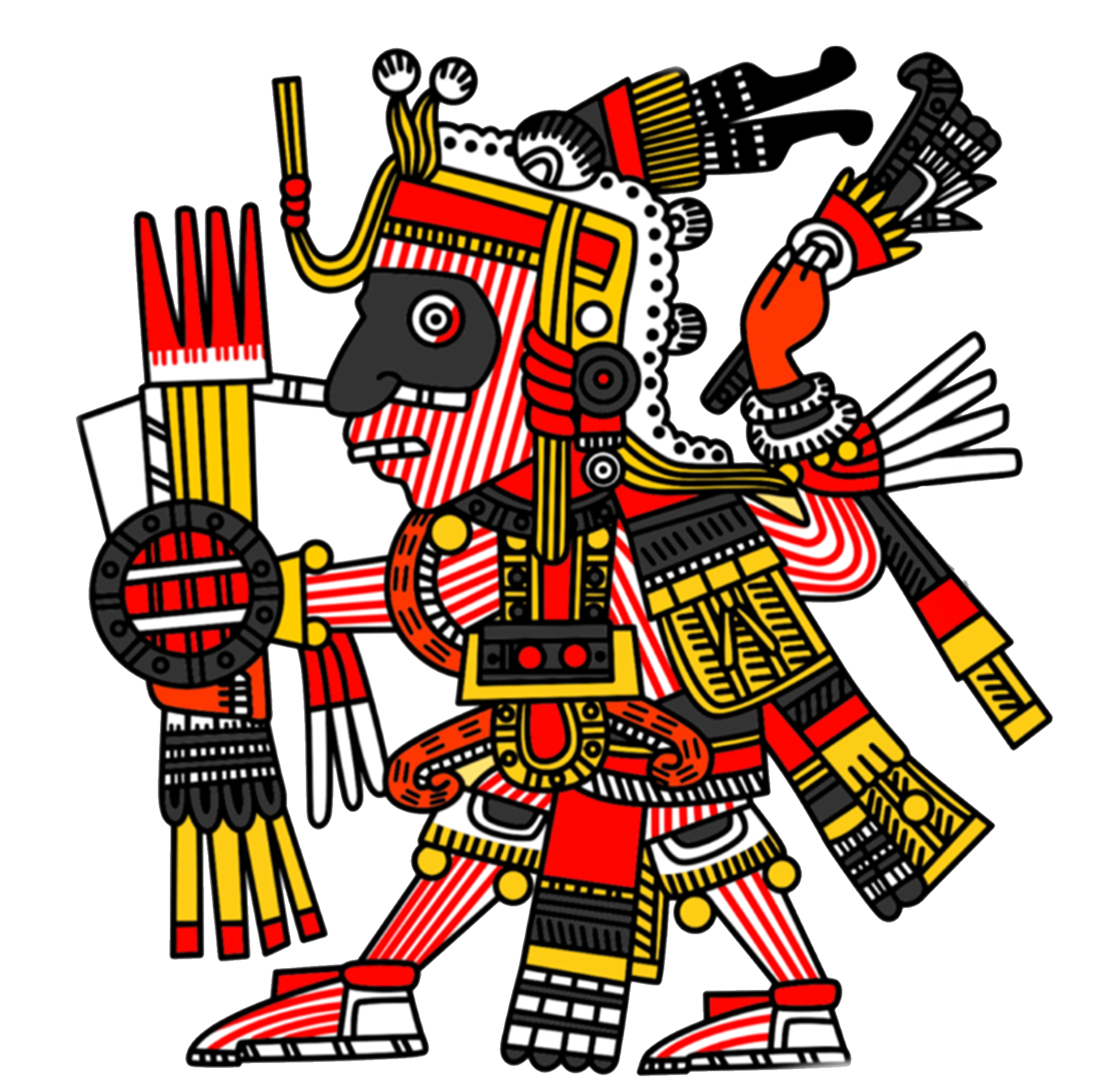
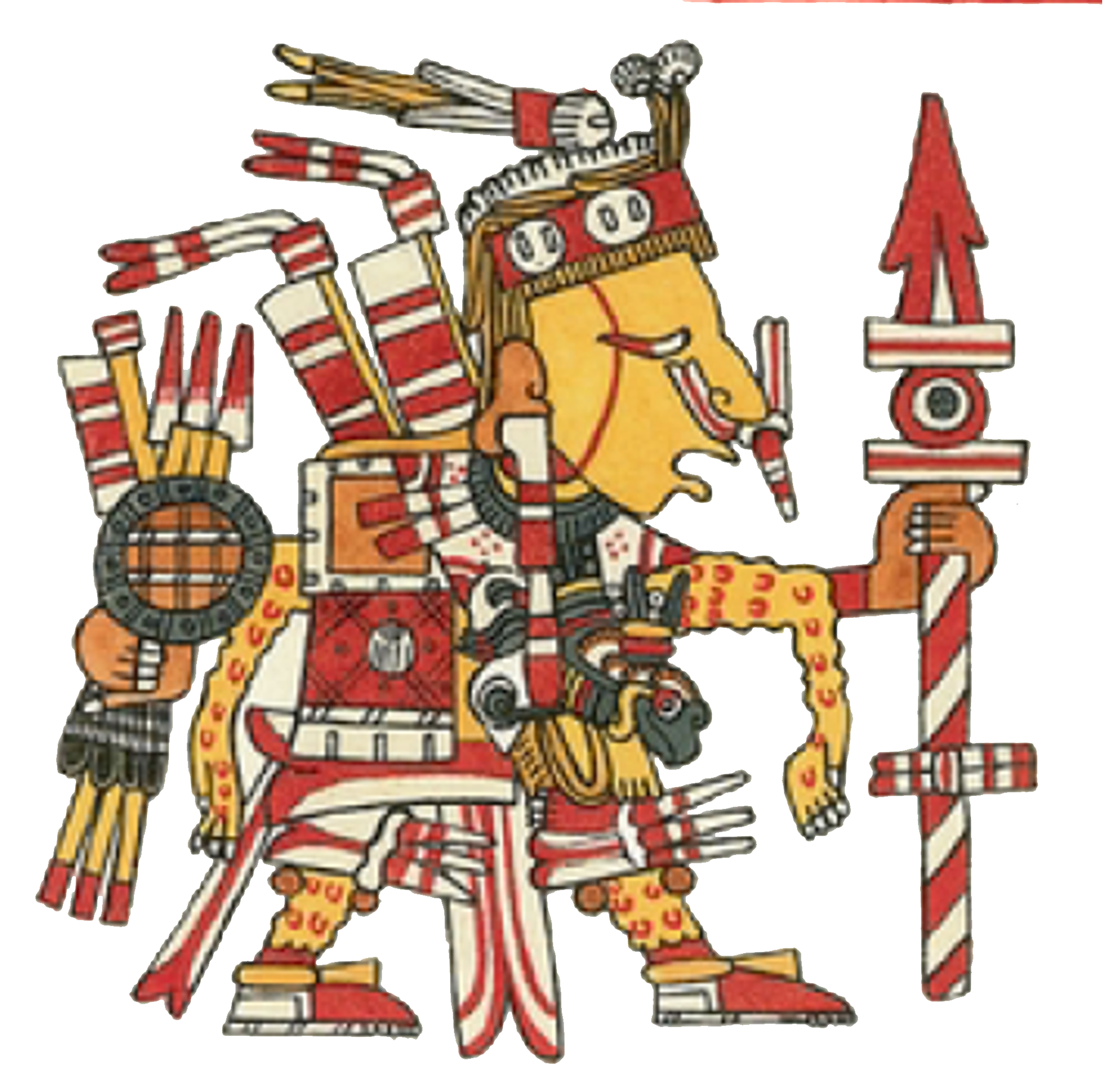
MIXCOATL CODEX BORGIA
-
Tlatlauhqui Tezcatlipoca is the second son of Ometeotl — the Red Tezcatlipoca — the force of order, coherence, and cyclical transformation. Where Yayauhqui holds the infinite obscure time of Omeyocan, Tlatlauhqui is the force that takes what exists in that infinite space and gives it form, structure, and location throughout the universe.
His cosmic function is precise: he is the Organizer — of all that acquires form and takes its place in existence. He contains within himself the mathematical cycles of all visible changes in the Milky Way or Jicara Celeste — the celestial bowl — and all the changes in the body of Tlaltecuhtli-Tlalcihuatl — the Earth in both its masculine and feminine aspects.
The Connection to Medicine
At the human level Tlatlauhqui's ordering and cyclical transformation principle is the direct foundation of medicine — the understanding that the human body, like nature, operates in continuous cycles of renewal, regeneration, and purification. Health is not a static condition. It is a living process — the constant shedding of what no longer serves and the continuous generation of new life beneath.
The Ticitl-Tepahtiani — the health scientists of the Mexica — practiced within this framework. Their medicine was not separate from the cycles of nature. It was an expression of them. The same force that turns seasons, sheds bark from trees, and renews the Earth's skin every spring — operates within every human body every moment of every day.
What modern medicine calls cellular regeneration, wound healing, seasonal biology, and the body's natural cycles of renewal — the Mexica encoded in the principle of Tlatlauhqui hundreds of years ago. The body that heals is expressing the Red Tezcatlipoca principle. The body that cannot shed what no longer serves — stagnates. The body that renews — lives.
Tlatlauhqui as Organizer
The Red Tezcatlipoca orders and concretizes everything that goes acquiring form — existing and materializing within Yayauhqui's dark infinite time in Omeyocan. Without Tlatlauhqui matter has no coherence. Forms cannot hold. Structures collapse. The universe remains potential without becoming actual.
This ordering principle operates at every scale simultaneously:
Cosmic — the mathematical cycles of celestial bodies in the Jícara Celeste
Terrestrial — the seasonal cycles of the Earth's body
Biological — the regenerative cycles of every living organism
Psychological — the capacity of the mind to order ideas and realize intentions
Social — the purification of community through the removal of what no longer serves
Tlatlauhqui is also known as Tezcatlipoca Colorado — whose sub-branches include Xipe Totec, Mixcoatl, Iztlapaltotec, and Camaztli. Each one is a specialized expression of the same root principle — order, cycles, and transformation across nature, medicine, and human society.
-
Mixcoatl — The Cloud Serpent — is the first and most important sub-branch of Tlatlauhqui. The name comes from two roots: Mixtli = cloud/nebula, and Coatl = serpent/essence. Together: The Nebulous Serpent — the celestial cloud visible on clear nights that we now call the Milky Way.
The Astronomical Identification
The Mexica identified the Milky Way as the great celestial structure that gives order and orientation to the night sky. What the Greeks called the Via Láctea — named for the whiteness of the nebula — the Mexica observed, named, and studied through their own independent centuries of precise sky observation. Two civilizations. Same phenomenon. Same conclusion. Because it is true.
The Observatory at Mixcoac
Mixcoac — El lugar de la Serpiente Nebulosa — was a dedicated pre-Hispanic city whose precinct included a specially built facility for astronomical observation and recording exclusively for this purpose. This was not a temple. It was a research institution.
Mixcoac still exists today — as a neighborhood in what is now Mexico City. The ancient observatory site is now urban Mexico. The knowledge that was practiced there for centuries was never replaced — it was buried under concrete and colonial architecture. But the place remembers its name. Mixcoac. The place of the Cloud Serpent.
What the Mixcoatl Scientists Studied
Those who achieved the grade of Mixcoatl studied with extraordinary precision:
The position of the Milky Way in the sky at different times of year
The cyclical relationship between the Milky Way and the moving celestial bodies that join with it seasonally
The influence of these positions on the conduct of beings — human behavioral patterns correlated with celestial cycles
This is behavioral astronomy — the systematic study of how celestial cycles influence living beings. What modern science calls chronobiology, circadian rhythm research, and seasonal behavioral science — the Mixcoatl practitioners were documenting hundreds of years ago.
Women Scientists of Mixcoatl
Maestro Meza explicitly documents that men AND women achieved the grade of Mixcoatl. Women who reached this grade studied the influence on human conduct according to the sky's position and the time of year — in relation to the moving celestial bodies that join with the Milky Way cyclically.
This was not a male-only science. The Mexica astronomical tradition trained both men and women as dedicated lifetime observers and recorders of celestial phenomena. The erasure of this fact by colonial historians is itself a distortion — replacing a complete human scientific tradition with a gendered mythology.
The Connection to Tlatlauhqui
The Milky Way as the most visible large-scale ordering structure in the night sky is the perfect cosmic expression of Tlatlauhqui's function — coherence, order, and orientation at the grandest scale the human eye can perceive without instruments. When you look up on a clear night and see the Milky Way stretching across the sky — you are seeing Tlatlauhqui's ordering principle written in stars.
-
Perhaps no image in Mesoamerican iconography has been more deliberately distorted than Xipe Totec. The figure wearing a skin became the centerpiece of the human sacrifice narrative — used for centuries to justify the destruction of an entire civilization and paint its people as savage and bloodthirsty.
The name Xipe Totec means literally Our “Lord” Who Changes Skin — Nuestro señor que cambia de piel. In him are recorded the cyclical changes of nature. He is represented with a dry yellowed skin peeling from his body — revealing new skin full of life beneath.
Look at the Paperbark Maple — Acer griseum. peels away its outer bark every year in curling strips revealing the living vibrant bark beneath. This is Xipe Totec. Not a human being. A tree. A season. A biological law.
The science is precise: in nature there is a cyclical change. Therefore society and the thoughts of human beings must also change toward constructive rejuvenation. Xipe Totec symbolizes social purification and the positive mutation of human beings — because what happens in nature must also happen in the human being.
Xipe Totec — Regenerative Medicine
The shedding of skin is cellular regeneration — the biological process of renewal at the cellular level. What modern medicine calls:
Wound healing
Cell regeneration
Dermatology
Seasonal medicine — how the body responds to seasonal cycles
The Mexica understood cellular regeneration — that the living body continuously sheds and renews itself at every level. Xipe Totec encodes this biological truth. The science of medicine in the Mexica tradition was the science of facilitating that renewal — removing what is dead, damaged, or no longer serving — so that new life can emerge beneath.
The image of a figure wearing skin is not a person wearing a flayed human skin. It is the personification of cyclical natural renewal — the same process by which a snake sheds its skin, a tree sheds its bark, the trees sheds their leaves in the fall only to reveal the green abundance beneath in the spring. Once Mother Earth sheds her old skin for her new.
What the colonial chroniclers saw as evidence of barbarism was actually one of the most sophisticated ecological and psychological principles ever encoded — the universe perpetually renews itself and so must the human being.
-
Iztlapaltotec — Nuestro señor de las lajas pintadas o veteadas — Our Lord of the Painted or Veined Slabs — is another important function of Tlatlauhqui Tezcatlipoca. He serves as regent of a group of 13 days in the indigenous calendar.
The image of the veined slab is precise and deliberate. A slab of stone with natural veins running through it — lajas veteadas — shows order made visible. The veins are not random. They follow lines of formation, pressure, and time. To read the veins is to read the hidden order within solid matter. This is the perfect symbol for what Iztlapaltotec governs: the capacity of the mind to perceive order and bring ideas into structured form.
The Function
Iztlapaltotec represents the capacity of the mind to order ideas and create the optimal conditions for realization. This is the direct expression of Tlatlauhqui's cosmic ordering function operating at the level of human thought.
Just as Tlatlauhqui orders matter throughout the universe — giving coherence and location to all forms — Iztlapaltotec is that same ordering principle operating within the human mind. The thought that finds its proper sequence. The plan that holds together. The intention that moves from idea to completed reality.
Why This Matters
A mind in disorder produces nothing. Ideas without structure scatter and dissolve. Intentions without sequence never reach realization. The person who cannot order their thinking — who cannot prioritize, sequence, and follow through — remains trapped in potential, never reaching the actual.
This is the human reflection of the cosmic principle: just as the universe remains mere potential without Tlatlauhqui's ordering force to give it form, the human being remains mere potential without the capacity to order thought into action. Iztlapaltotec is the grade of those who mastered this — who could take the raw material of ideas and give it structure, coherence, and completion.
The 13-Day Regency
As regent of 13 days in the Tonalmachiotl, Iztlapaltotec governed a specific period understood to favor mental clarity, planning, and the bringing of projects to realization. The calendar was not superstition — it was the observation that human cognitive capacity, like everything else in nature, moves in cycles. There are times that favor beginning, times that favor ordering, and times that favor completion. Iztlapaltotec marked the conditions optimal for the ordering and realization of intention.
The Modern Equivalent
What modern cognitive science calls executive function — the mental capacity to plan, organize, sequence, prioritize, and execute — the Mexica encoded in Iztlapaltotec and placed within a complete cosmological framework. The disordered mind and the ordered mind were not moral categories. They were understood as states that could be cultivated, trained, and aligned with the natural cycles that govern all ordering throughout the universe.
-
Camaztli is a regional concept from the communities of Huejotzingo and Tlaxcallan — another expression of the Tlatlauhqui principle recorded in local tradition.
The name is partially untranslatable: Aztli = instrument, Camatl = the mouth of something. Together suggesting the instrument that produces — the tool that generates.
The story recorded in Tlaxcalteca and Huexotzinca tradition is precise and beautiful: Camaztli is a hunter who in a moment of inventive lucidity — lucidez inventiva — takes his hunting bow and transforms it into an instrument to produce fire.
But this transformation goes far beyond fire-making. The instrument he created has a name: the Mamahuaztli — the bow-drill.
The Birth of Dentistry
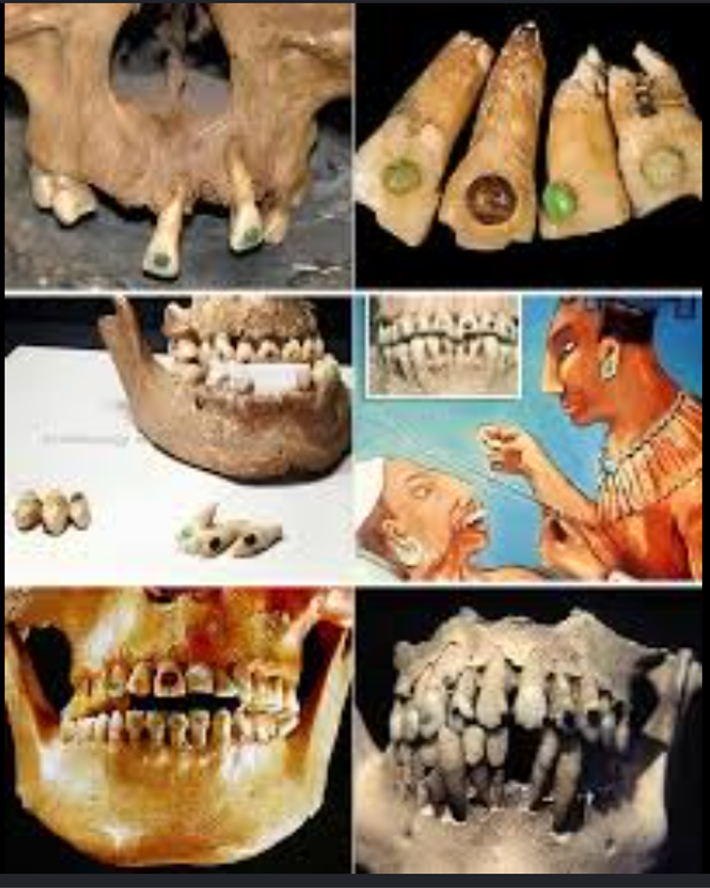
The Mamahuaztli — the same bow-drill principle that produces fire through friction — became one of the most sophisticated medical instruments in the ancient world. The Mexica and their predecessors used the bow-drill to perform precise dental work thousands of years before European dentistry existed.
With the Mamahuaztli, Mexica dental practitioners drilled exact holes into living teeth and placed incrustations of:
Jade — the precious green stone of life
Amber — fossilized resin from Simojovel
Obsidian — volcanic glass
Turquoise — xihuitl
Iron pyrite — the mirror stone
These were not crude procedures. The drilling was precise, symmetrical, and aligned — requiring deep knowledge of tooth anatomy, exact control of the instrument, and an understanding of how deep to drill without killing the tooth. Archaeological evidence across Mesoamerica confirms these dental incrustations survive intact in skulls thousands of years old — the work so precise that modern dentists study it with admiration.
Anesthesia — Pain Management Before Europe
The sophistication went further. Mexica medical practitioners used medicinal plants to create anesthesia — managing pain during these dental procedures. Using the deep botanical knowledge of the Tlatlauhqui medical tradition, they could numb the patient and perform the drilling and incrustation without the suffering that European dentistry would inflict for centuries afterward.
This is dentistry — anesthetized, precise, aesthetic, and medical — practiced in Mesoamerica thousands of years before Europe developed anything comparable. While European "dentistry" still meant violent extraction with no pain management well into the modern era, the Mexica were placing jade into living teeth with anesthetized precision.
The Tlatlauhqui Connection
This is the perfect expression of the Red Tezcatlipoca principle. Camaztli shows the complete arc:
The creative mind sees an existing tool — the hunting bow — in a new way (inventive lucidity)
The reordering transforms it into the Mamahuaztli — fire-maker and medical drill
The application becomes medicine — dentistry, precision, healing
The botanical knowledge adds anesthesia — pain management through plant science
The same object — the bow — transformed by an ordering, inventive intelligence into fire, then into one of the foundational instruments of medicine itself. This is Tlatlauhqui: order, transformation, and the cyclical renewal of the human being — applied directly to the healing arts.
What modern science calls innovation, biomedical engineering, and cosmetic dentistry — the Mexica encoded in the figure of Camaztli and the instrument of the Mamahuaztli thousands of years ago.
-
Xipe Totec cannot function alone. The outer transformation he represents requires the inner work of Yayauhqui first. These two principles — the Black and the Red — work as a single complete system of human transformation.
Stage 1 — Yayauhqui: The Mirror
First you go inward. You face what Yayauhqui holds: your subconscious, your shadow, your inner enemy Yaotl, the genetic memory, what you carry within you that you cannot see but cannot escape. This is the honest self-assessment — looking into the smoking mirror and seeing yourself exactly as you are, including what you would rather not see.
Stage 2 — Xipe Totec: The Skin
Then comes the shedding. Think of the Paperbark Maple — the dry outer bark peeling away to reveal the living bark beneath. Think of what happens to a wound: after the injury, after the healing beneath the surface, the scab must come off so the new skin can finally be seen.
This is the precise relationship between the two principles. Yayauhqui is the wound looked at honestly — the self-examination, the difficult inner work, the healing that happens in the dark beneath the surface. Xipe Totec is the moment you metaphorically peel away the scab — the old self, the dead protective layer that formed over your wounds — so that the new skin, the renewed self, can finally emerge into the light.
You cannot rush it. Peel a scab too early and you reopen the wound — the inner work with Yayauhqui was not complete. But leave the dead skin on too long and you stagnate — you never allow the new self to emerge. The science is in the timing — the natural cycle of when the old must be shed for the new to live.
The Complete Sequence
After honest self-assessment — after looking into the mirror and doing the inner work — you bring forth your new self. The dead protective layers of habit, fear, and limitation that formed over your old wounds peel away. Beneath them: new skin, full of life. This is not metaphor for metaphor's sake. It is the precise biological and psychological truth of how genuine human transformation actually works.
Every real change in a human life follows this exact sequence:
The wound — what happened to you
The honest look — Yayauhqui — seeing it clearly in the mirror
The healing beneath — the inner work in the dark
The shedding — Xipe Totec — peeling away the dead protective layer
The new self — the renewed skin emerging into the light
The Mexica encoded this complete cycle of human healing and renewal in two cosmic principles — the Black and the Red — thousands of years before modern psychology arrived at the same understanding.
Yayauhqui is the mirror. Xipe Totec is what emerges after you look into it — once you peel away the old skin that has done its work, and let the new self be seen
-
Tlacaxipehualiztli — El cambio en las personas — The Change in the People — is the second veintena of the indigenous calendar. It is the living community expression of everything Tlatlauhqui and Xipe Totec teach.
The Name and Its Variants:
Coailhuitl — Fiesta de la Serpiente — a ceremony alluding to the fecundation of the Earth, carried out in the fields of Tlaxcala
Xilopehualiztli — when the jilotes begin at the end of the month — the first corn seedlings of the season
These variant names confirm the agricultural and ecological foundation of this veintena — it marks the precise moment when the Earth begins its annual renewal.
Xipe Totec in the Ceremony: The change is represented by Xipe Totec — the “Lord” Who Changes Skin — with the qualities of beings who do not stagnate but know how to transform their activities and their environment positively.
The equinoctial influence is felt in the environment. In all living beings a rejuvenation takes effect when the Earth is fecundated by the celestial Coa — represented in the Chicahuaztli, the rattle staff of Xipe Totec. The entire landscape turns green — la nueva piel de la Tierra — the new skin of the Earth — appearing gradually as the dry covering of winter is shed.
People transfigure — feeling that a vivifying and fecundating energy metaphorically peels their skin — and new cells cover them with vigor and youth.
The Ceremonies: People gathered after their labors to sing and dance to the fecundation — all with rattles — while others dressed as Xipe with strips of paper representing the old skin peeling away to reveal the new covering full of life and green abundance beneath.
The Social Purification: During this veintena a social purification also took place. For the change to be complete — principal figures who had violated the ancient strict laws were brought to justice — given the opportunity to defend themselves — to die fighting tied to a great round stone dressed in the garments representative of Xipe.
The Closing Principle:
"Si la naturaleza desecha lo que ya no sirve, también la sociedad se depura en un cambio positivo — los hombres deben renovarse para integrarse al Principio Supremo de la Dualidad en el que se conjugan los conceptos de Tloque Nahuaque e Ipalnemohuani."
"If nature discards what no longer serves — so must society purify itself in positive change. Human beings must renew themselves to integrate into the Supreme Principle of Duality — where Tloque Nahuaque and Ipalnemohuani are joined."
This is not a religious ceremony. It is a community-wide application of the same biological principle — cyclical renewal — applied simultaneously to the Earth, to individual human beings, and to society as a whole. The same law. Three scales. One ceremony.
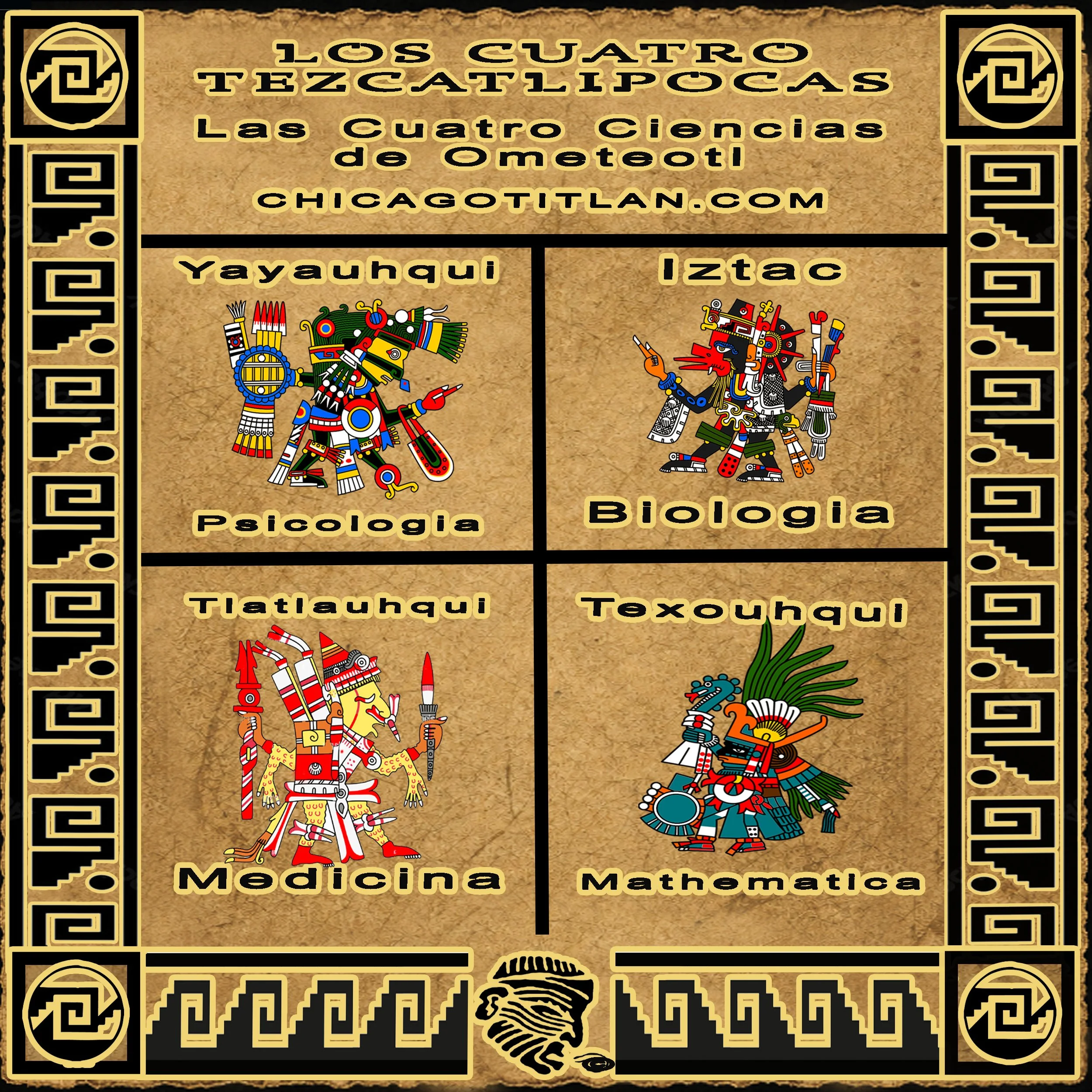
Biología, Psicología, Medicina y Matemáticas — las cuatro ciencias que los Mexihcas codificaron en cada dirección de la vida, ampliadas mucho más allá de lo que cabe en una sola página.
Este folleto es la investigación completa detrás de los Cuatro Tezcatlipocas: Iztac (Biología), Yayauhqui (Psicología), Tlatlauhqui (Medicina) y Texouhqui (Matemáticas). Basado en la erudición del Maestro Meza Gutiérrez y contrastado con los códices — Borgia, Borbónico, Vaticano B, Cospi — este es el material fuente, no un resumen del mismo.
Adentro, cada Símbolo tiene su propio desglose profundo: su color, su dirección, su función y la ciencia detrás de él — desde la biología de Quetzalcoatl hasta la astronomía de Mixcoatl y el nacimiento de la odontología bajo Tlatlauhqui. Sin traducciones erróneas, sin "dioses" — este es el marco científico tal como lo construyeron los Mexihcas, restaurado.
Entrega instantánea como descarga en PDF. 38 páginas. VERSIÓN EN ESPAÑOL.
Descarga y guarda tu archivo de inmediato. Tu enlace vence 24 horas después de la primera descarga.
Por Alberto A. Cuauhtlequezqui Lopez, Huey Tlahtokan · La Gran Palabra · ChicagoAztlan © 2004–2026