THE WHITE TEZCATLIPOCA
THE PRECIOUS KNOWLEDGE
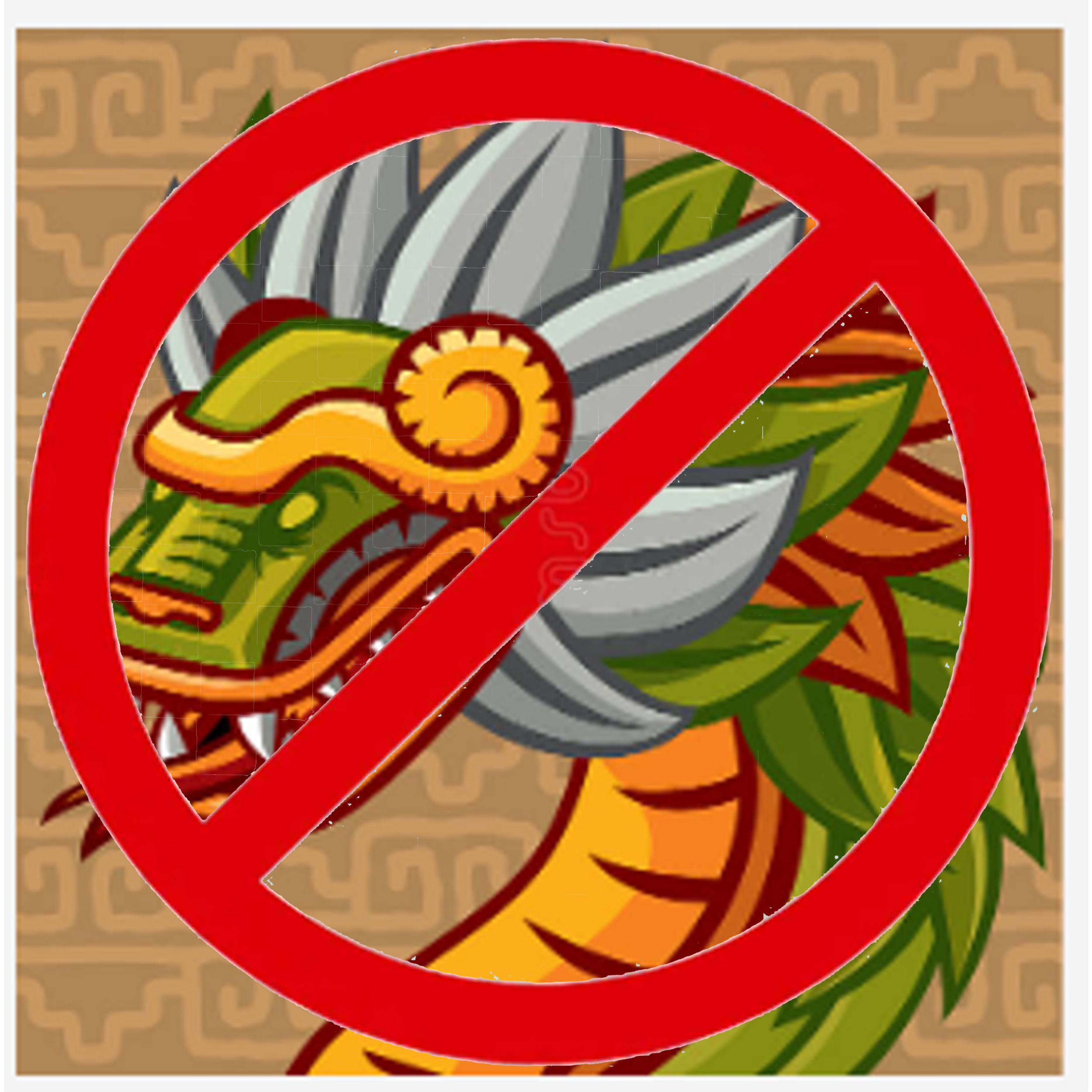
Quetzalcoatl is NOT a Feathered Serpent. That translation is wrong and it was never an accident.
Quetzalcoatl is The Precious Knowledge ~ The Highest Expression of The Science of Life in ancient Mesoamerica.
Quetzalcoatl is the fourth son of Ometeotl. The most complex of the four generating forces because he could not exist without the other three. He is not a god, a king, or a myth. He is the scientific principle of life itself. Fire, Air, Water, and Earth — when these four forces unite, Quetzalcoatl emerges. When Quetzalcoatl emerges, life begins.
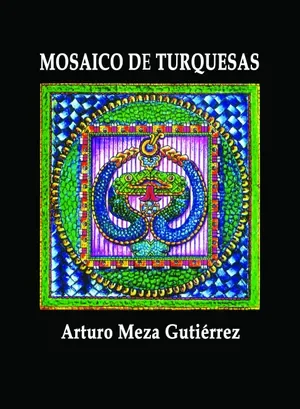
THIS BOOK IS WRITTEN IN SPANISH. WORKING ON ENGLISH TRANSLATION.
Huey Tlahtokan Notes
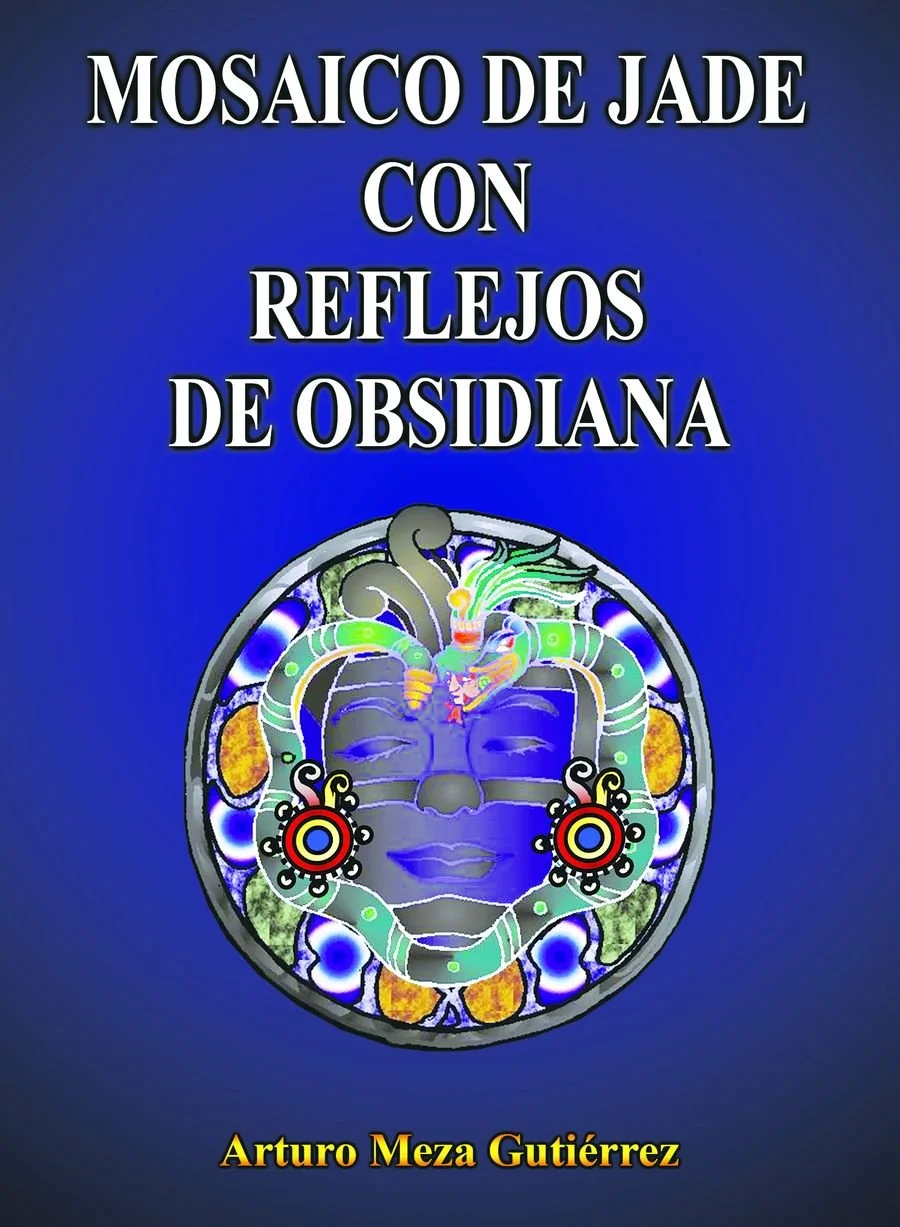
Mosaico de Turquesas is the foundational text of Mexica philosophical and scientific thought in the modern era. In twenty rigorously researched chapters, Maestro Arturo Meza Gutiérrez dismantles five centuries of colonial mistranslation and reveals the authentic cosmological framework of the ancient Mexica — not as mythology or religion, but as a complete and sophisticated science of existence. At its core is Ometeotl, the dual generating principle, and the Nahui Tezcatlipoca — the four cosmic functions that ancient Mesoamerican civilization studied, encoded, and applied across every field of human knowledge, from psychology and medicine to astronomy and mathematics.
The chapters move through this system piece by piece: the dual expression of Huehuetlahtolli (the ancient word), Tlaltecuhtli and Tlalcihuatl as Father-Mother Earth, the transmuting nature of duality itself, Mictlan and Moyocoyani as expressions of Ometeotl, Tloquenahuaque as the ordering of time and space, and the feminine essence carried through Xochiquetzalli, Chantico, and Mayahuel — closing on the mosaic of turquoise itself as the ancestral thread binding the whole system together. Written as a direct companion to Meza's earlier Cauhpohualli, the two works together form the fuller architecture underlying everything he wrote afterward, including Mosaico de Jade.
This is not an introductory text — it rewards the serious reader who is ready to encounter one of the most profound knowledge systems ever developed by human civilization, presented in its own language, its own logic, and its own scientific precision. Required reading for anyone seeking to understand the true intellectual heritage of Indigenous Mexico beyond the distortions of conquest.
From the Publisher
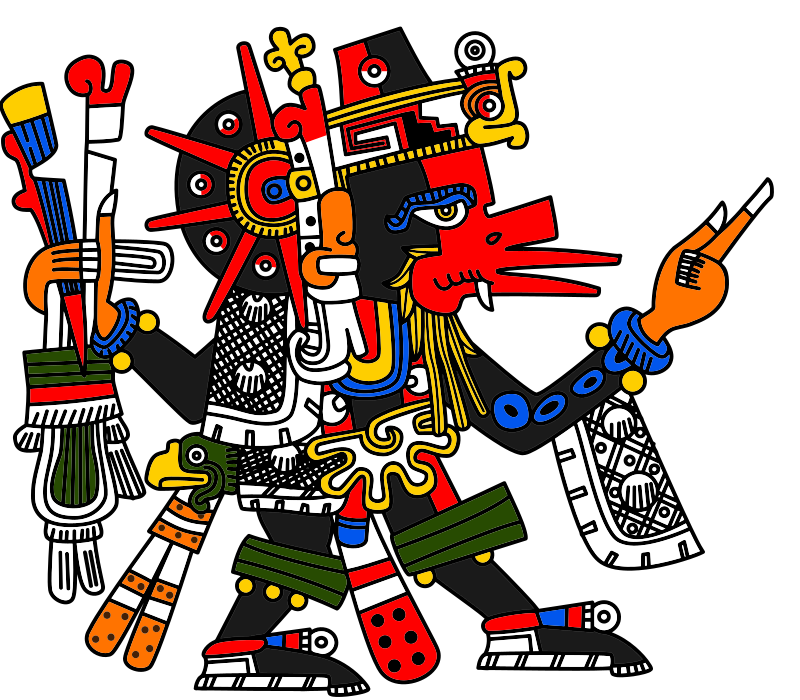
Mosaico de Turquesas reveals the essence of Nature and of the Human Being from the perspective of the native Philosophy of Duality. From this, Ometeotl is recognized as the Supreme Principle, masculine and feminine, the Father and Mother of all that exists, giving rise to the Laws of the Universe and the Laws of Life of the Prehispanic Peoples. From Ometeotl unfold the four Tezcatlipocas: the Dark, the Red, the Blue called Huitzilopochtli, and the White called Quetzalcoatl.
272 páginas.
Descripción (Español):
Notas de Huey Tlahtokan (Heading 4)
Mosaico de Turquesas es el texto fundacional del pensamiento filosófico y científico mexica en la era moderna. En veinte capítulos rigurosamente investigados, el Maestro Arturo Meza Gutiérrez desmonta cinco siglos de mala traducción colonial y revela el auténtico marco cosmológico de los antiguos mexicas — no como mitología ni religión, sino como una ciencia completa y sofisticada de la existencia. En su núcleo está Ometeotl, el principio dual generador, y el Nahui Tezcatlipoca — las cuatro funciones cósmicas que la antigua civilización mesoamericana estudió, codificó y aplicó a través de todos los campos del conocimiento humano, desde la psicología y la medicina hasta la astronomía y las matemáticas.
Los capítulos recorren este sistema pieza por pieza: la expresión dual del Huehuetlahtolli (la palabra antigua), Tlaltecuhtli y Tlalcihuatl como Padre-Madre Tierra, la naturaleza transmutadora de la dualidad misma, Mictlan y Moyocoyani como expresiones de Ometeotl, Tloquenahuaque como el ordenamiento del tiempo y el espacio, y la esencia femenina presente en Xochiquetzalli, Chantico y Mayahuel — cerrando con el mosaico de turquesas mismo como el hilo ancestral que une todo el sistema. Escrito como complemento directo del Cauhpohualli anterior de Meza, ambas obras forman en conjunto la arquitectura más completa que sustenta todo lo que escribió después, incluyendo Mosaico de Jade.
Este no es un texto introductorio — recompensa al lector serio que está listo para encontrarse con uno de los sistemas de conocimiento más profundos jamás desarrollados por la civilización humana, presentado en su propio idioma, su propia lógica y su propia precisión científica. Lectura obligada para quien busca comprender la verdadera herencia intelectual del México indígena más allá de las distorsiones de la conquista.
De la Editorial
La obra Mosaico de Turquesas revela la esencia de la Naturaleza y del Ser Humano desde el punto de vista de la Filosofía autóctona de la Dualidad. De ello, se reconoce que Ometeotl es el Principio Supremo masculino y femenino, es el Padre y la Madre de todo lo existente, dando origen a las Leyes del Universo y a las Leyes de la Vida de los Pueblos Prehispánicos. De Ometeotl se desdoblan los cuatro Tezcatlipoca: el Obscuro, el Rojo, el Azul llamado Huitzilopochtli y el Blanco llamado Quetzalcoatl.
NEW INVENTORY COMING SOON
⚪ IZTAC TEZCATLIPOCA ~ QUETZALCOATL
-
THE PRECIOUS KNOWLEDGE
The name Quetzalcoatl has been mistranslated for five centuries. The most common error — "The Feathered Serpent" — is not only linguistically incorrect but deliberately reductive. The Nahuatl word for feather is ihuitl. A feathered serpent would be Ihuicoatl — a different word entirely. This mistranslation did not happen by accident.
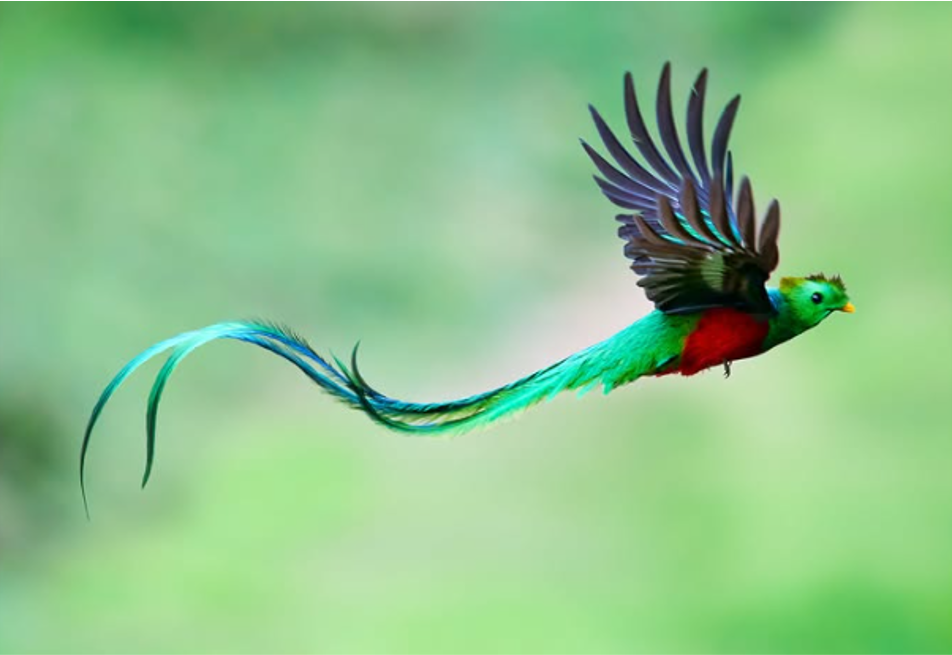
Quetzalli does not mean feather. It means precious, beautiful, and rare — embodied in the resplendent Quetzal bird, one of the most extraordinary creatures in the natural world. Its long iridescent tail feathers — brilliant emerald and gold — undulate in flight mimicking the sinuous movement of a serpent. The ancient Mexica were precise observers of nature. They saw in the Quetzal's flight the living image of vibrant, precious, undulating energy.
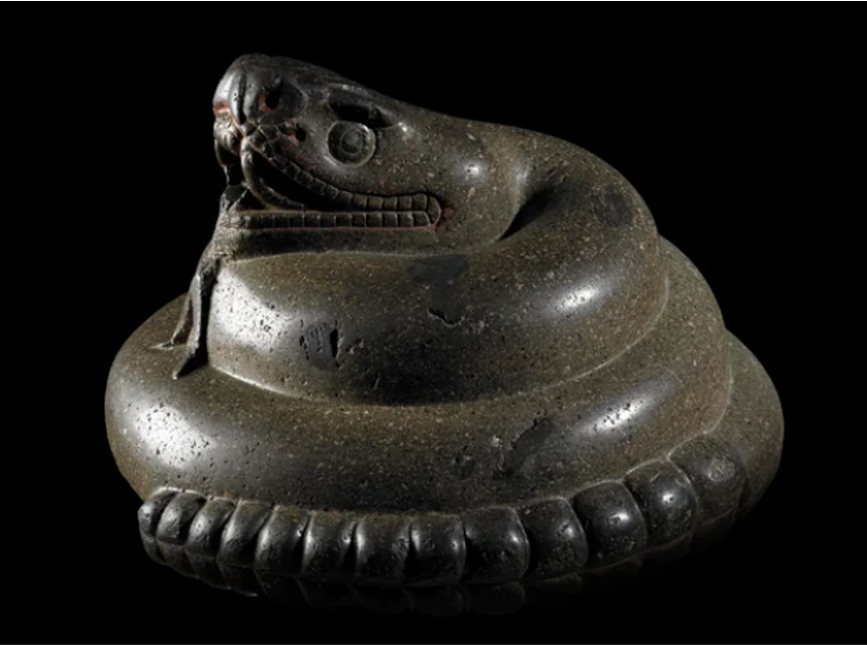
Coatl does not simply mean serpent. In Nahuatl coatl carries deeper meanings — it represents the Earth and it represents Knowledge. The serpent moves along the earth, close to the ground, connected to everything beneath the surface. It is the creature that knows what lies hidden.
Therefore Quetzalcoatl is not a feathered serpent. Quetzalcoatl is The Precious Knowledge — the beautiful, vibrant, living understanding of the Earth and all that sustains life upon it. Not a creature. Not a king. Not a myth. A scientific principle — the highest expression of the knowledge system of ancient Mesoamerica.
This distinction matters enormously. A feathered serpent is a decorative image. A precious vibrant essence that produces life is a scientific principle. The mistranslation reduced a cosmological framework to a fantasy creature.
Quetzalcoatl is the fourth and final son of Ometeotl — the most complex of the four generating forces because he could not exist without the other three. He is not a god, a king, or a myth. He is the scientific principle of life itself.
The Quetzal is one of the most resplendent birds in the natural world — its long iridescent tail feathers, brilliant emerald and gold, undulate in flight mimicking the sinuous movement of a serpent. The ancient Mexica were precise observers of nature: Quetzalcoatl is not a mythological hybrid creature — it is a scientific metaphor drawn directly from the living world, describing a vibrant, undulating, precious energy that moves like the Quetzal's tail and generates life like the earth itself.
Without Yayauhqui there is no space-time. Without Tlatlauhqui there is no ordered matter. Without Texouhqui there is no movement. Only when all three unite does Quetzalcoatl emerge — and with him, life.
-
THE LIFE FORMULA
All Prehispanic Cultures identified four indispensable elements for life to exist on Earth. These were not worshipped as gods — they were studied as scientific principles:
Tonatiuh — the Sun — solar energy that drives all biological processes
Ehecatl — the Wind — the atmosphere that carries breath, sound, and seed
Tlaloc — the Rain — the water cycle that feeds all living systems
Tlaltecuhtli ~ the Earth — the dual foundation. Solid matter, minerals, and carbon below. Living fertile soil and biological abundance above.
Fire + Air + Water + Earth = Quetzalcoatl = This is not mythology. This is Ecology. The very definition of life. Understood and encoded thousands of years before the word existed. This is Mesoamerican science. Before Europe thought of the word. The Olmeca, Zapoteca, Maya, Mixteco, Purepecha, or the Mexica did not borrow it — they arrived at it through their own rigorous observation of the natural world. The same truth reached through different paths — because it is true.
As a cosmic concept Quetzalcoatl extends beyond Earth — wherever these conditions exist in the universe, life can emerge. The Mexica framework was never Earth-centric.
-
Tonatiuh is the Sun — but in the Mexica scientific tradition he represents far more than a celestial body. His functions were divided among specialized grades of knowledge each representing a distinct field of solar science:
Xochipilli — the action of the Sun on plants — what we now call photosynthesis. The Mexica understood that solar energy transforms into biological life through plant matter. The gardens of Nezahualcoyotl in Oaxtepec, Tepetzinco, Tulantzinco, Huauchinango, and Xicotepec in the state of Puebla were not ornamental — they were botanical research stations studying solar influence on plant life. The memory of the Xochipilli Tetzcocanos has never been lost in those places.
Piltzintecuhtli — the reflection of light on objects — the science of optics and color perception. How the Sun illuminates and reveals the visible world. The study of light, shadow, and color as scientific phenomena.
Huitzilopochtli — the Morning Sun — feeds the force of willpower and decision into all living beings at dawn. Every morning the rising Sun activates biological drive and human potential. This is not poetry — it is the observation that solar cycles directly influence human energy, mood, and capacity for action. What modern science now calls circadian rhythm and chronobiology.
Those who achieved the grade of Tonatiuh dedicated their entire lives to observing and recording the Sun's movements on its celestial path — tracking the annual cycle from verdor to drought and back to verdor. This was solar astronomy in its most applied form — directly connected to agricultural planning, social organization, and the calendar system.
The names of the different solar functions were grades of knowledge — each specializing in one function. What colonial chroniclers called gods of the Sun were in reality specialized scientists — each dedicated to one aspect of solar science for their entire lifetime.
-
Ehecatl is the Wind — generated when two air masses of different temperature meet. Farmers called him the sower of Tonatiuh because wind carries the seeds of drying plants across the fields every year — a precise observation of botanical seed dispersal.
In living beings Ehecatl is the Ihiyotl — the breath of life. The primary sustenance of all living beings — we can go days without food or water but we cannot survive without breath. This is respiratory biology.
Without Ehecatl there are no sounds, no words, no songs. He is the communicator — producing everything from the whisper of a gentle breeze to the thunder of a hurricane. This is the physics of sound and acoustics.
The Ehecatl Tlamacazque — specialists in wind science — recorded the direction, force, and seasonal behavior of winds and tracked where and when they conducted rain clouds. This was organized meteorology. They also used specialized masks similar to the pic above to assess the climate
What were called ceremonial objects were in reality scientific tools — the material evidence of an organized atmospheric science practiced across all of Mesoamerica.
The round platforms found throughout Mesoamerican archaeological zones were not shrines to a wind god. They were aerodynamic instruments for measuring wind force and direction — strategically placed in the corridors where strong air currents entered prehispanic cities. Science disguised as religion by those who could not understand what they were looking at. And many still don’t know to this day.
-
Tlaloc is the Rain — literally the liquor of the Earth. The complete water cycle was understood precisely: the Sun heats the water of rivers and lakes, raises it as vapor, forms clouds, and returns it as rain to the fields. This is Meteorology — observed, recorded, and applied to agriculture thousands of years ago.
The Quetzalcoatl Tlaloc Tlamacazque — the rainfall scientists — held high positions in the Grand Council of Government of the Anahuac. Studying rainfall behavior and its relation to all other natural elements was a lifetime discipline. Their knowledge was critical at every agricultural production point wherever advanced civilization existed.
The faces of Chac among the Maya, Cocijo among the Zapotec, Tajin among the Totonac, and Tlaloc among the Mexica — these are not four different gods. They are the same scientific principle expressed in four different languages across all of Mesoamerica. One unified understanding of the water cycle — shared by every major civilization of ancient Mexico.
-
The Earth is dual — masculine and feminine. Tlaltecuhtli is the solid foundation beneath everything — carbon, minerals, rock, and matter. Tlalcihuatl is the living generative surface above — fertile soil, the biological medium in which all life takes root.
Together they are Tonantzin Tlalli Coatlicue — Our Sacred Mother.
Not a religious figure. The scientific principle of the living Earth itself. When the Spanish replaced Tonantzin with the Virgin of Guadalupe at Tepeyac — they didn't replace a goddess. They replaced a science.
TLALTECUHTLI ~ TLALCIHUATL — THE COMPLETE STORY
The dual Earth principle is one of the most profound concepts in the entire Mexica knowledge system. Tlaltecuhtli — Lord of the Earth — represents the masculine structural foundation of the planet: solid matter, mineral composition, carbon cycles, the geological substrate that supports all life. He is represented beneath the great monolith — the hidden base, the foundation that holds everything above it.
Tlalcihuatl — Lady of the Earth — is his feminine counterpart: the living, breathing, generative surface of the Earth. Fertile soil, the carbon-rich biological medium, the layer where seeds take root and life emerges. She is also known as Tonantzin — Our Sacred Mother — and as Coatlicue — She of the Serpent Skirt — the Earth in its most powerful regenerative expression.
The serpent skirt of Coatlicue is not decoration. Serpents moving along the Earth — coatl, the creature that knows what lies hidden — represent the living knowledge encoded in the soil itself. The biological intelligence of the Earth. What modern science calls the microbiome, the mycorrhizal network, the living web beneath our feet — the ancient Mexica encoded this understanding in the image of Coatlicue thousands of years ago.
When the Spanish arrived at Tepeyac — the sacred site of Tonantzin Coatlicue— and replaced her sculpture with a PAINTING (done by Marco Cipactli or Marco Cipac de Aquino called the virgin of guadalupe), they were not simply replacing one religious figure with another. They were replacing a scientific principle — the living Earth, the generative soil, the carbon cycle, the biological fertility of the land — with a passive icon of submission. The people kept coming to Tepeyac for centuries because something in their genetic memory knew what was really there. The Spanish never understood what they were looking at. And almost no one has to this day.
-
Venus appears twice in the sky — as the Morning Star before sunrise (Tlahuizcalpantecuhtli — Lord of the Dawn) and as the Evening Star after sunset (Xolotl). These are not two separate beings — they are two faces of the same planet, sometimes traveling ahead of the Sun and sometimes behind it.
The peculiar cycles of Venus — combined with the movements of the Sun and Moon — were the determining factors in the creation of the ancestral calendar system. Those who achieved these grades were excellent astronomers keeping meticulous records of Venus' displacements across the sky. They were also knowers of human behavior — tracking how Venusian cycles influenced living beings.
These records are preserved in carved calendar discs like the TONALMACHIOTL ~ erroneously named the Aztec Calendar. Which is neither Aztec or a Calendar.
Plus the, Piedra de Tizoc — showing the passage of Tlahuizcalpantecuhtli-Xolotl across the solar disc in recurring cycles. Venus, Moon, and Sun together created the necessary conditions for life on Earth — with rhythms recorded in the counts of destiny.
COMPLETE YOUR LIBRARY
Everything on this page comes from the original research of Maestro Arturo Meza Gutierrez.
Learn the Real Truth — available exclusively through Chicagotitlan.com
THIS BOOK IS WRITTEN IN SPANISH. WORKING ON ENGLISH TRANSLATION.
Huey Tlahtokan Notes
Mosaico de Turquesas is the foundational text of Mexica philosophical and scientific thought in the modern era. In twenty rigorously researched chapters, Maestro Arturo Meza Gutiérrez dismantles five centuries of colonial mistranslation and reveals the authentic cosmological framework of the ancient Mexica — not as mythology or religion, but as a complete and sophisticated science of existence. At its core is Ometeotl, the dual generating principle, and the Nahui Tezcatlipoca — the four cosmic functions that ancient Mesoamerican civilization studied, encoded, and applied across every field of human knowledge, from psychology and medicine to astronomy and mathematics.
The chapters move through this system piece by piece: the dual expression of Huehuetlahtolli (the ancient word), Tlaltecuhtli and Tlalcihuatl as Father-Mother Earth, the transmuting nature of duality itself, Mictlan and Moyocoyani as expressions of Ometeotl, Tloquenahuaque as the ordering of time and space, and the feminine essence carried through Xochiquetzalli, Chantico, and Mayahuel — closing on the mosaic of turquoise itself as the ancestral thread binding the whole system together. Written as a direct companion to Meza's earlier Cauhpohualli, the two works together form the fuller architecture underlying everything he wrote afterward, including Mosaico de Jade.
This is not an introductory text — it rewards the serious reader who is ready to encounter one of the most profound knowledge systems ever developed by human civilization, presented in its own language, its own logic, and its own scientific precision. Required reading for anyone seeking to understand the true intellectual heritage of Indigenous Mexico beyond the distortions of conquest.
From the Publisher
Mosaico de Turquesas reveals the essence of Nature and of the Human Being from the perspective of the native Philosophy of Duality. From this, Ometeotl is recognized as the Supreme Principle, masculine and feminine, the Father and Mother of all that exists, giving rise to the Laws of the Universe and the Laws of Life of the Prehispanic Peoples. From Ometeotl unfold the four Tezcatlipocas: the Dark, the Red, the Blue called Huitzilopochtli, and the White called Quetzalcoatl.
272 páginas.
Descripción (Español):
Notas de Huey Tlahtokan (Heading 4)
Mosaico de Turquesas es el texto fundacional del pensamiento filosófico y científico mexica en la era moderna. En veinte capítulos rigurosamente investigados, el Maestro Arturo Meza Gutiérrez desmonta cinco siglos de mala traducción colonial y revela el auténtico marco cosmológico de los antiguos mexicas — no como mitología ni religión, sino como una ciencia completa y sofisticada de la existencia. En su núcleo está Ometeotl, el principio dual generador, y el Nahui Tezcatlipoca — las cuatro funciones cósmicas que la antigua civilización mesoamericana estudió, codificó y aplicó a través de todos los campos del conocimiento humano, desde la psicología y la medicina hasta la astronomía y las matemáticas.
Los capítulos recorren este sistema pieza por pieza: la expresión dual del Huehuetlahtolli (la palabra antigua), Tlaltecuhtli y Tlalcihuatl como Padre-Madre Tierra, la naturaleza transmutadora de la dualidad misma, Mictlan y Moyocoyani como expresiones de Ometeotl, Tloquenahuaque como el ordenamiento del tiempo y el espacio, y la esencia femenina presente en Xochiquetzalli, Chantico y Mayahuel — cerrando con el mosaico de turquesas mismo como el hilo ancestral que une todo el sistema. Escrito como complemento directo del Cauhpohualli anterior de Meza, ambas obras forman en conjunto la arquitectura más completa que sustenta todo lo que escribió después, incluyendo Mosaico de Jade.
Este no es un texto introductorio — recompensa al lector serio que está listo para encontrarse con uno de los sistemas de conocimiento más profundos jamás desarrollados por la civilización humana, presentado en su propio idioma, su propia lógica y su propia precisión científica. Lectura obligada para quien busca comprender la verdadera herencia intelectual del México indígena más allá de las distorsiones de la conquista.
De la Editorial
La obra Mosaico de Turquesas revela la esencia de la Naturaleza y del Ser Humano desde el punto de vista de la Filosofía autóctona de la Dualidad. De ello, se reconoce que Ometeotl es el Principio Supremo masculino y femenino, es el Padre y la Madre de todo lo existente, dando origen a las Leyes del Universo y a las Leyes de la Vida de los Pueblos Prehispánicos. De Ometeotl se desdoblan los cuatro Tezcatlipoca: el Obscuro, el Rojo, el Azul llamado Huitzilopochtli y el Blanco llamado Quetzalcoatl.
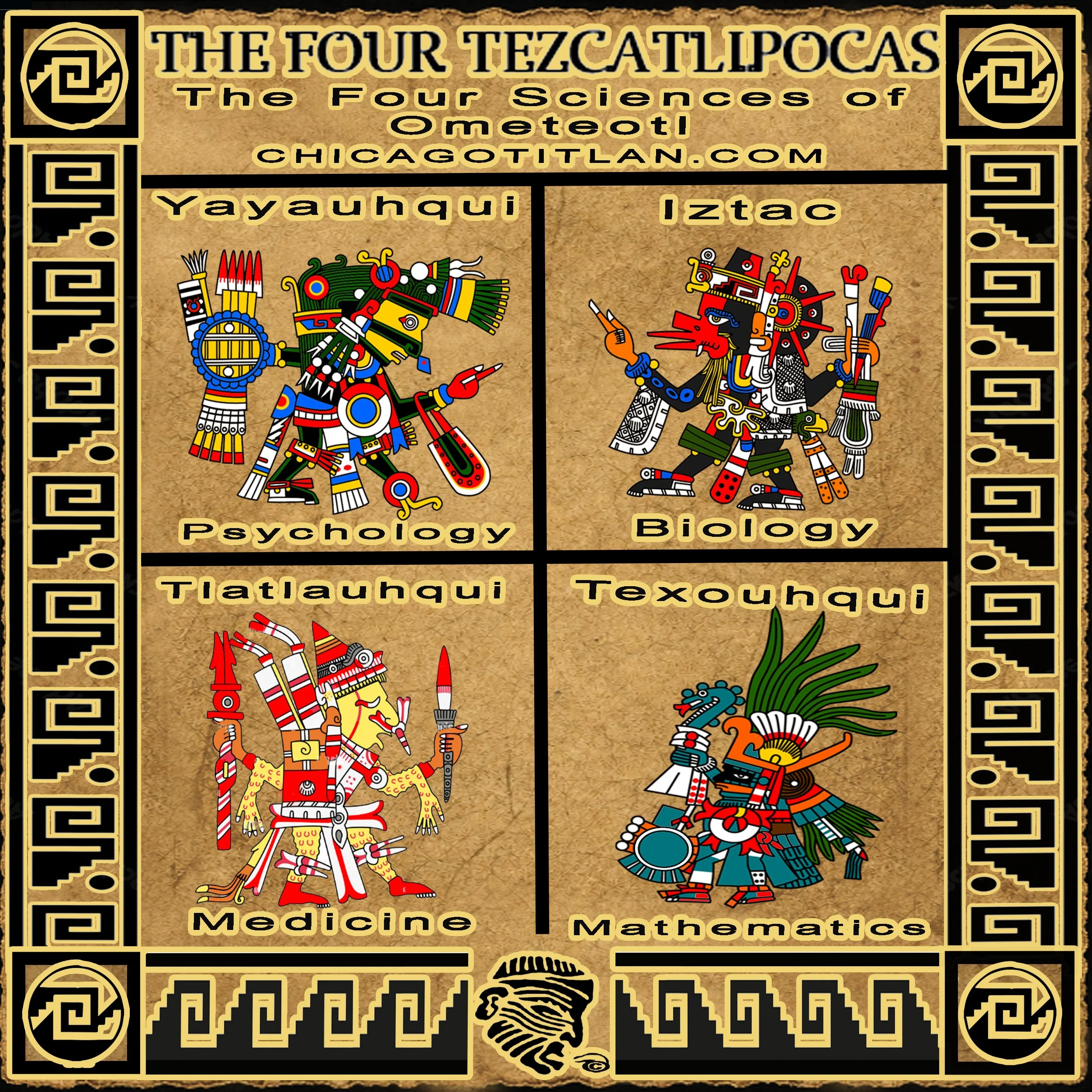
Biology, Psychology, Medicine, and Mathematics — the four sciences the Mexihca encoded into every direction of life, expanded far beyond what any single page can hold.
This booklet is the full research behind the Four Tezcatlipocas: Iztac (Biology), Yayauhqui (Psychology), Tlatlauhqui (Medicine), and Texouhqui (Mathematics). Drawing on the scholarship of Maestro Meza Gutiérrez and cross-referenced against the codices — Borgia, Borbónico, Vaticano B, Cospi — this is the source material, not a summary of it.
Inside, each Symbol gets its own deep breakdown: its color, its direction, its function, and the science behind it — from the biology of Quetzalcoatl to the astronomy of Mixcoatl to the birth of dentistry under Tlatlauhqui. No mistranslations, no "gods" — this is the scientific framework as the Mexihca built it, restored.
Delivered instantly as a PDF download. 38 pages. ENGLISH VERSION. Download and save your file right away. Your link expires 24 hours after your first download.
By Alberto A. Cuauhtlequezqui Lopez, Huey Tlahtokan · La Gran Palabra · ChicagoAztlan © 2004–2026
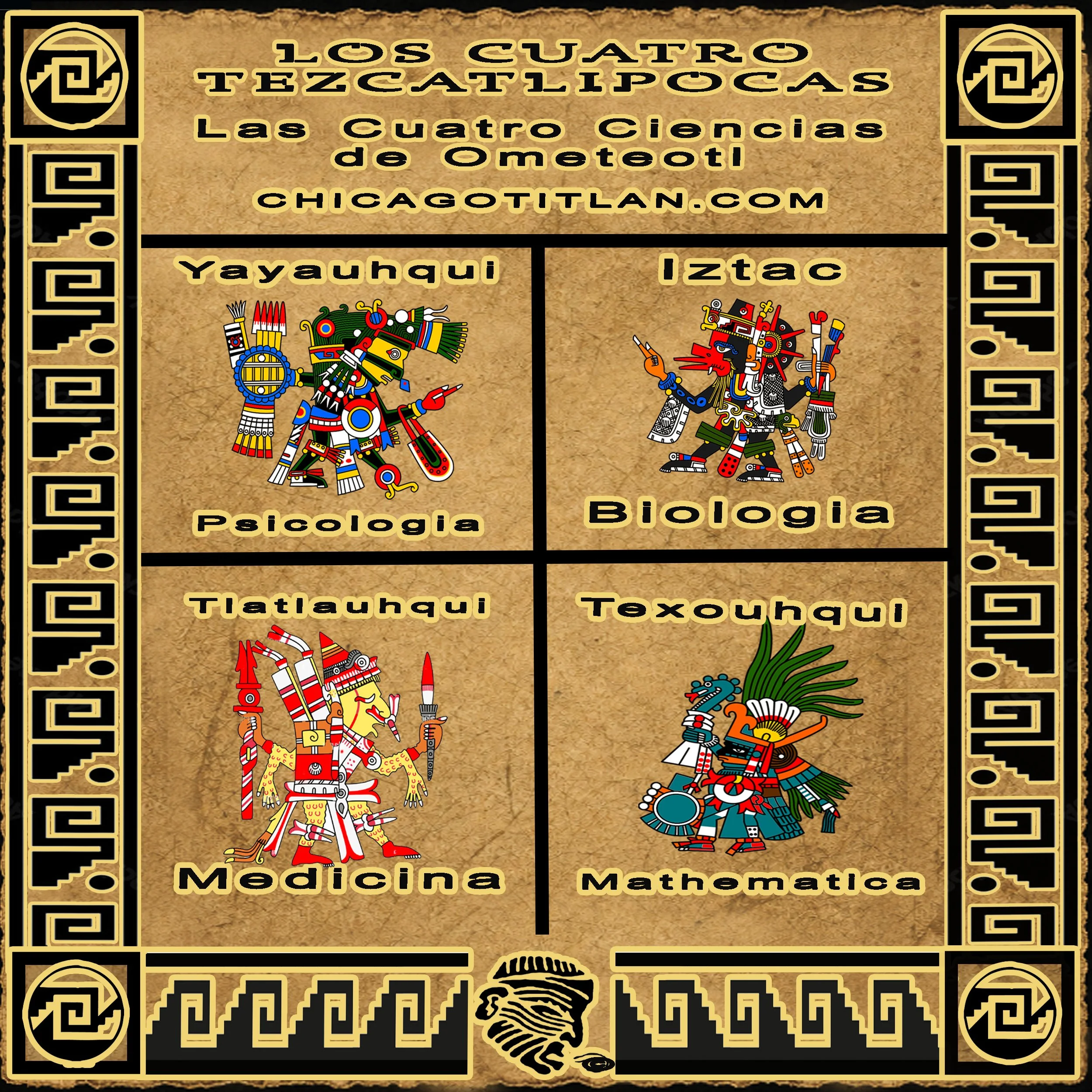
Biología, Psicología, Medicina y Matemáticas — las cuatro ciencias que los Mexihcas codificaron en cada dirección de la vida, ampliadas mucho más allá de lo que cabe en una sola página.
Este folleto es la investigación completa detrás de los Cuatro Tezcatlipocas: Iztac (Biología), Yayauhqui (Psicología), Tlatlauhqui (Medicina) y Texouhqui (Matemáticas). Basado en la erudición del Maestro Meza Gutiérrez y contrastado con los códices — Borgia, Borbónico, Vaticano B, Cospi — este es el material fuente, no un resumen del mismo.
Adentro, cada Símbolo tiene su propio desglose profundo: su color, su dirección, su función y la ciencia detrás de él — desde la biología de Quetzalcoatl hasta la astronomía de Mixcoatl y el nacimiento de la odontología bajo Tlatlauhqui. Sin traducciones erróneas, sin "dioses" — este es el marco científico tal como lo construyeron los Mexihcas, restaurado.
Entrega instantánea como descarga en PDF. 38 páginas. VERSIÓN EN ESPAÑOL.
Descarga y guarda tu archivo de inmediato. Tu enlace vence 24 horas después de la primera descarga.
Por Alberto A. Cuauhtlequezqui Lopez, Huey Tlahtokan · La Gran Palabra · ChicagoAztlan © 2004–2026